Scandinavian Rosettes
from The Gourmet Cookie Book
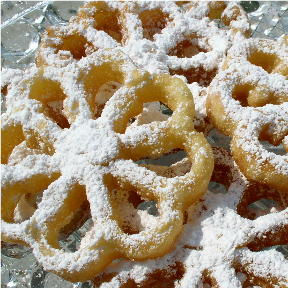
A rosette (called struva in Swedish) is a thin, cookie-like deep-fried pastry of Scandinavian (Swedish and Norwegian) origin. Rosettes are traditionally made during Christmas time. They are made using intricately designed irons. The iron is heated to a very high temperature in oil, dipped into the batter, then re-immersed in the hot oil to create a crisp shell around the metal. Usually, the rosette are dusted with sugar. Rosette recipes are popular in the United States among families with Scandinavian ancestry. In Finland, rosettes may be served at May Day (Vappu) celebrations as an alternative to funnel cakes (tippaleipä).
2 large eggs
2 tablespoons granulated sugar
1 cup whole milk
1 teaspoon vanilla
1 cup all-purpose flour
1/4 teaspoon salt
1 1/2 quarts (6 cups) vegetable oil
1/4 cup confectioners’ sugar (powdered sugar) for dusting
Special equipment: a rosette iron
Whisk together eggs, granulated sugar, milk, and vanilla in a large bowl, then add flour and salt, whisking until combined.
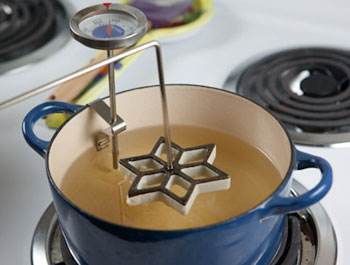
Heat oil in a 3- to 4-quart heavy saucepan with rosette iron in it until thermometer registers 370 to 375 degrees F.
Carefully lift out iron, letting oil drip off into pan. Dip all but top edge of iron into batter for 3 seconds, then submerge iron in oil and fry (batter adhering to iron) until golden, 35 to 40 seconds (do not let iron hit the bottom of the pan).
Lift out iron, letting oil drip off, and, working over paper towels, carefully pry off rosette with a fork. Let rosette drain, hollow side down, on paper towels, then make more rosettes in the same manner, heating iron in oil 10 seconds before dipping into batter each time.
Dust rosettes with powdered sugar before serving.
Makes about 2 1/2 dozen cookies
