How to Make a Special Edge on a Piecrust
from Better Homes and Gardens
A pretty edge puts the ideal finishing touch on your favorite pie recipe. Here we show you how to do 7 different edgings, with recipe recommendations for each one.
Other Instructions pages:
Making a Pie Crust, Step by Step
Making a Lattice-Top Pie Crust
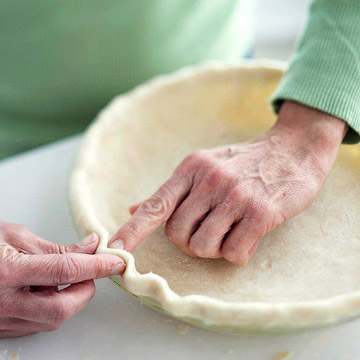
Fluted-Edge Piecrust
Many recipes for single-crust pies, especially ones with a generous amount of filling, call for a pie shell with a fluted edge. For a double-crust pie, fluting the edge helps secure the top crust to the bottom crust.
To flute pie pastry:
Place a finger against the inside edge of the pastry.
Using the thumb and index finger of the other hand, press the pastry around the finger.
Continue around the rest of the pastry's edge
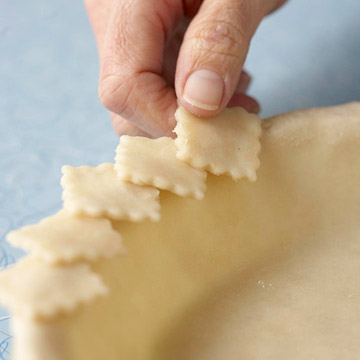
Cutout-Edge Piecrust
For a decorative pie edge, save the pastry scraps and use them to make cutouts
To make the cutouts:
Roll out the pastry scraps until the dough is very thin.
Use a fluted pastry wheel to cut the pastry into tiny squares, or use an hors d'oeuvre cutter to cut the pastry into desired shapes.
Flatten the edges of the pastry shell slightly and brush them with water.
Arrange the cutouts on the edge of the pastry shell and press lightly to adhere; continue around the edges of the piecrust.
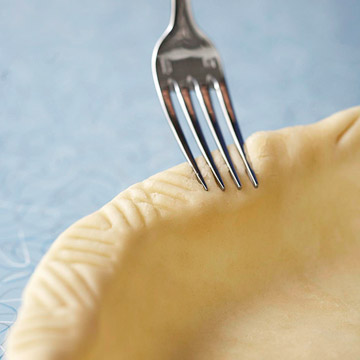
Crisscross-Edge Piecrust
The crisscross edge is one of the easiest to make and works well for both single- and double-crust pie recipes.
After trimming the pastry:
Flatten the edges slightly.
Hold a fork at a slight angle to the edge of the pie.
Lightly press the tines into the pastry.
Continue around the pie, switching angles with every other pressing.
For a variation on the crisscross edge, hold the fork perpendicular to the edge of the pie instead of at an angle when pressing the tines into the pastry. This simple edge works nicely with nut pies.
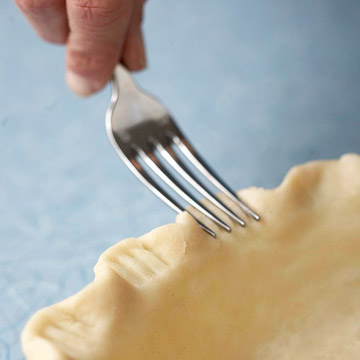
Petal-Edge Piecrust
You can use the petal edge for any pie, but it's especially pretty with single-crust pies where the filling looks like the center of a flower.
To make a petal edge:
Follow the steps above for a fluted-edge pastry, but make the flutes a tiny bit larger than you would for a simple fluted edge.
Press the tines of a fork lightly into the center of each flute
Scallop-Edge Piecrust
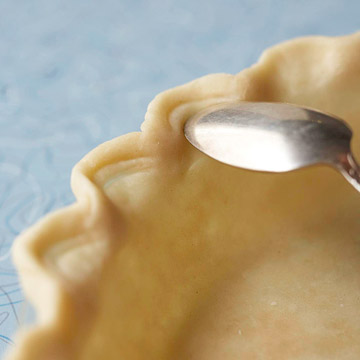
The scallop edge is ideal for old-fashioned, classic double-crust fruit and single-crust custard pies. The scallop edge starts with a fluted edge, but the flutes are rounder, which gives a softer, more casual look to the pie.
To make a scallop edge:
Follow the steps above for a fluted-edge pastry, but make the flutes a bit larger than you would for a simple fluted edge.
Press the bowl of a spoon lightly into the center of each flute.
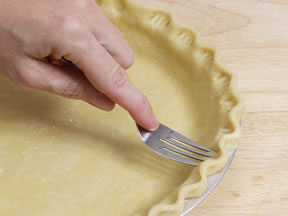
Variation (picture to the right): After the scalloped edge is finished press a fork in the center of each scallop for additional decoration.
Tabbed-Edge Piecrust
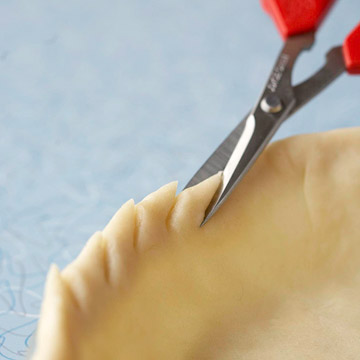
A tabbed edge is an easy way to give a professional-looking finish to pies. Use kitchen scissors to snip 1/2-inch slits into pastry about 1/2 inch apart along edge.
For a tabbed edge with a slightly different look, press every other tab in the opposite direction.
Rope-Edge Piecrust
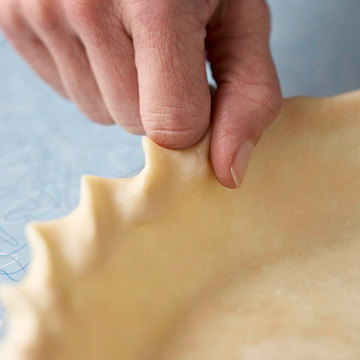
The rope edge is a variation of the traditional fluted edge and gives a down-home, country-style look to any double-crust fruit pie.
To make a rope edge:
Crimp around edge of pastry by pinching it.
When pinching, push forward on a slant with a bent finger and pull back with your thumb.
