Sabayon/Zabaglione
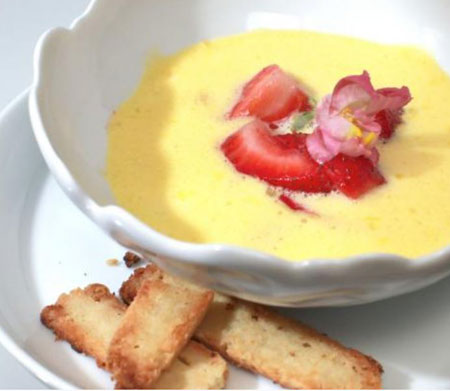
Sabayon is the French name for the Italian dessert zabaglione (or zabaione). It is a light, frothy sauce made by whisking egg yolks with sugar and wine and adds a creamy complement to other foods. Its primary ingredients are egg yolk, sugar and wine. Typically sabayon is found in a pudding like dessert but can also be found in other forms.
Traditionally, zabaglione, the Italian version of sabayon, is made with Marsala – and to make it, all that’s really needed is a bowl, a pot of water, and a whisk. In terms of ingredients, you can use any sweet or dry white wine, even sparkling wine, as a base.
Any kind of white wine that you like will work well for sabayon; dry, sweet, or sparkling. Some tend to prefer sweeter dessert wines because their flavor is a little more concentrated. Wines like late-harvest Riesling, Sauternes, Muscat, or a wine that is richly flavored is good. You can use Marsala if you want to make traditional zabaglione. Teetotalers may want to try this version with coffee—or you could go the tiramisu route and combine the two.
Sabayon and Zabaglione are lovely spooned over any kind or mix of juicy berries; you can toss the berries in a bit of sugar and let them sit for an hour or so, turning them gently to encourage the juices to really start flowing. Sabayon can also be used in place of whipped cream alongside a wedge of moist Almond Cake.
Recipe
The standard ratio for sabayon is equal parts egg yolk to liquid to sugar, but you can adjust the amount of liquid based on how thick you'd like your sabayon to be. A good rule of thumb when measuring your ingredients is to assume you have one egg yolk for every person.
Sabayon needs constant whisking so that it doesn't overcook or turn into scrambled eggs, and it will only hold for a few minutes before it starts to deflate and develop a wrinkly skin on the surface. If you're using the sabayon to top fish or meat, it should already be resting in a warm place so that all you have to do is put it on plates and spoon the sabayon over the top. If you're assembling a multi-component Italian dessert, make sure everything else is ready to go before you turn on the stove.
4 egg yolks
4 tablespoons water
4 tablespoons Marsala, Madeira or other wine
4 tablespoons white sugar
Bring an inch or two of water to a simmer in a shallow saucepan. Place a heatproof bowl, such as glass Pyrex, that rests easily in your saucepan and make sure that it doesn’t touch the surface of the water. Whisk together the egg yolks and sugar, if you're using it. When the yolks are pale yellow, whisk in the liquid and any other ingredients, then set the bowl over the simmering water, whisking constantly.
The mixture will quickly begin to froth and expand in the bowl. Whisk vigorously for several minutes, making sure the water in the saucepan never gets above a simmer, until the sabayon is thick and ribbony and at least doubled in volume (the temperature should reach about 150º F). If you have any uncertainty, use a candy thermometer to check the temperature.
Once you've made sabayon a few times, you can experiment with cooking it over direct heat. The chef at Demeyere told us he demonstrates the quality of their stainless steel cookware by wowing his audience with a sabayon made directly on the burner. Use a good quality saucepan with even heat distribution and rounded base and cook the sabayon over a medium flame, moving the pan on and off the heat as you whisk to keep it from boiling…or worse, burning.
4 servings
Champagne Sabayon
from https://www.foodandwine.com/, December 2005 issue
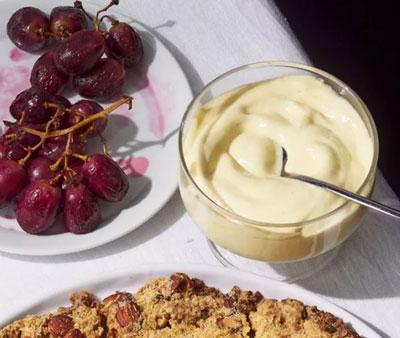
Champagne Sabayon
Sabayon is a light, frothy sauce made by whisking egg yolks with sugar and wine. This sabayon is made using Champagne, and includes the unusual step of folding whipped cream in at the end, which gives it a light and airy texture.
Sabayon can be a dessert on its own, or incorporated into other desserts like a Trifle, topping for cheesecake or other dessert. The sabayon is also delicious over fresh fruit, crêpes, or pancakes.
1 (6 1/2-inch) vanilla bean pod
1/2 cup granulated sugar
1/2 cup water
1 2/3 cups brut Champagne (from 1 [750-milliliter] bottle)
6 large egg yolks
1 cup heavy cream
Cut vanilla bean pod in half crosswise, reserving one half for another use. Cut remaining half of pod in half lengthwise. Using back of a paring knife, scrape vanilla seeds from pod. Place scraped pod and seeds in a medium saucepan; stir in sugar and 1/2 cup water. Bring to a boil over medium-high, and boil, undisturbed, until sugar mixture is a light golden caramel color, about 10 minutes, gently swirling pan as needed. Add Champagne, and return to a simmer over medium-high. Simmer, stirring occasionally, until mixture is reduced to about 1 cup, 10 to 12 minutes. Remove from heat, and set aside.
Fill a medium saucepan with 1 inch of water. Bring to a simmer over medium-high. Meanwhile, use a whisk to lightly beat egg yolks in a large heatproof metal bowl that will fit over pan of simmering water. Gradually whisk about 1/4 cup warm Champagne mixture into egg yolks until incorporated. Slowly whisk in remaining Champagne mixture.
Reduce heat under simmering water to low. Set bowl with egg mixture over pan, making sure bottom of bowl does not touch water. Cook, whisking constantly, until egg mixture thickens enough to fall in a thin ribbon from whisk, 10 to 15 minutes. Remove pan from heat. Remove bowl from pan, and discard vanilla bean pod. Transfer egg mixture to a large heatproof bowl; place plastic wrap directly on surface to prevent a skin from forming. Refrigerate mixture until completely chilled, about 1 hour.
Using an electric mixer, beat cream on medium-high speed in a medium bowl until stiff peaks form, about 3 minutes. Fold whipped cream into chilled egg mixture just until combined. Transfer mixture to a bowl. Serve cold.
Sabayon can be prepared up to 2 days in advance.
12 servings
