Yoga Exercise - Sun Salutation (Surya Namaskar)
from http://www.abc-of-yoga.com/
The Sun Salutation, or Surya Namaskar, is a classic vinyasa flow that acts both as a warm-up for a full yoga class or can be practiced on its own for a complete practice. It is a graceful sequence of twelve postures or asanas performed as one continuous exercise that aims to awaken the body physically, mentally, and energetically. It is often performed in the morning facing the sunrise, but it can be done at any time of day. The movements flow together fluidly and bring awareness to the entire body. It helps improve strength and flexibility of the muscles and spinal column, warms up the body and tones the abdominal muscles. Physically, it targets just about every part of the body so that you’re prepared for a longer practice involving more poses. Learn how to practice Sun Salutation.
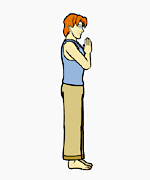
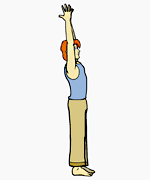
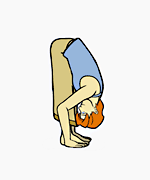
Breathing is an important aspect of the sun salutation. The sequence starts with Mountain Pose (Tadasana), the transition to Upward Salute (Urdhva Hastasana) is accompanied by an inhalation. The next transition to Forward Fold (Uttanasana) occurs with and exhalation. Alternate between inhalation and exhalation with each transition. Breathing should remain even and controlled.
There is a nocturnal counterpart to Surya Namaskār called the Moon Salutation (Chandra Namaskar). It was conceived to be a soothing sequence that invites you to bow to and cultivate the moon’s soothing lunar energy.
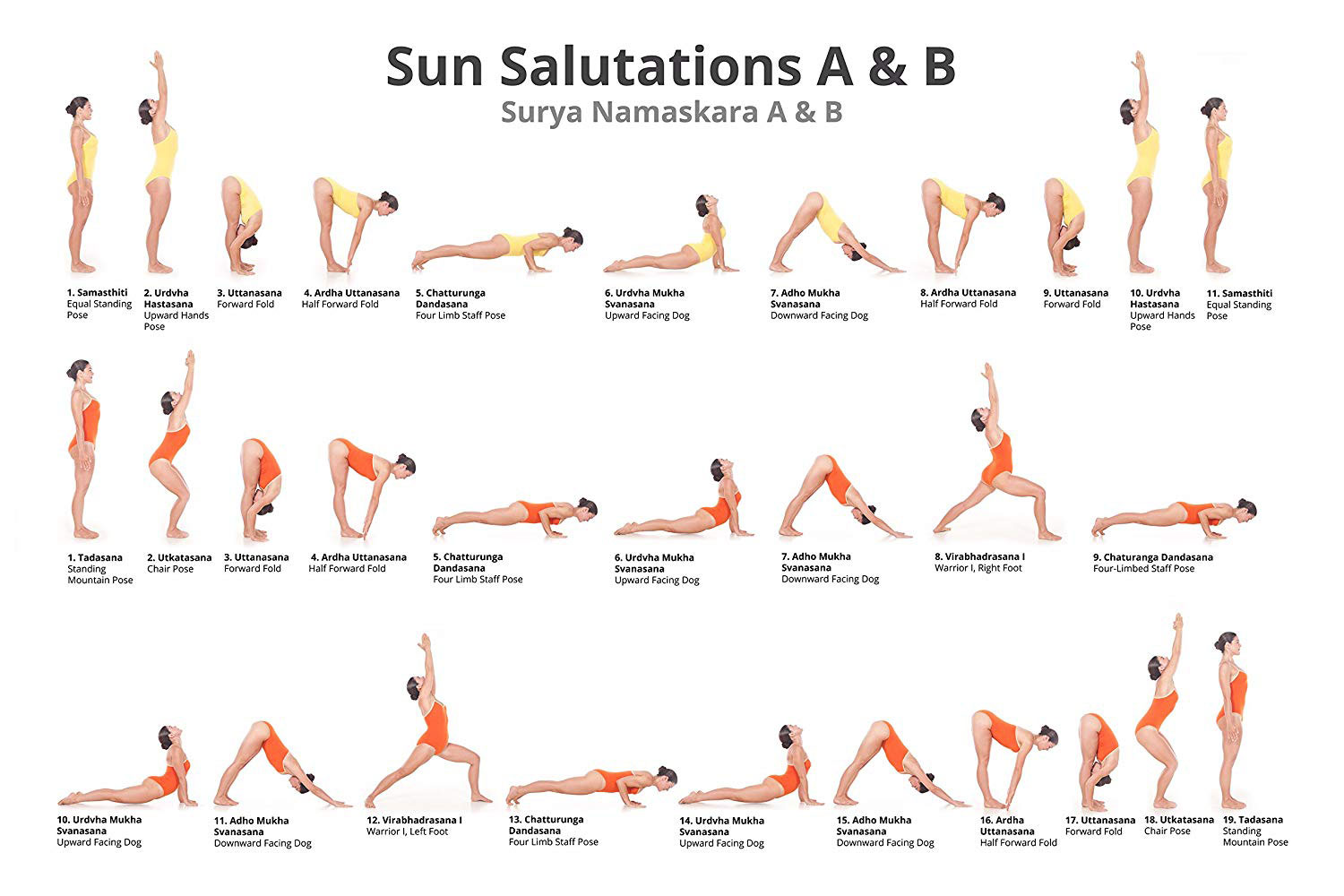
STEP 1: Stand on your yoga mat and start with the Mountain Pose. Bring your palms together in prayer position. Take a moment or two to ground your feet, still your eyes and connect with your breath. Exhale. |
STEP 2: As you inhale, raise your arms overhead, keeping your palms together. Reach through the fingertips and lengthen the sides of the waist. Upward Salute: Urdhva Hastasana literally translates to "Raised Hands Pose," but it is also sometimes called Talasana, the Palm Tree Pose (tala = palm tree). |
STEP 3: Exhale and then bend forward until your hands touch your feet. Slowly bend further so that your belly is touching your upper legs. Grasp your toes and breathe deeply in the pose. Standing Forward Bend/Fold: Uttanasana will wake up your hamstrings and soothe your mind. |
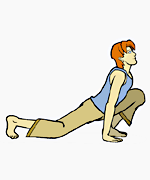
STEP 4: As you inhale, step the right leg back, arch back and lift your chin. Low Lunge: This low lunge variation stretches the thighs and groins and opens the chest. |
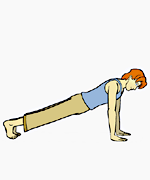
STEP 5: Exhaling, step the left leg back into plank position. Press strongly into the hands, firm the front of the body into the back of the body Keep your neck, spine and legs in a straight line and support your weight on hands and feet. Plank Pose |
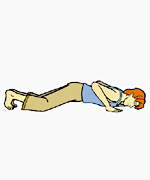
STEP 6: Retaining the breath, lower your knees, your chest and then your forehead, keeping your hips up and toes curled under. |
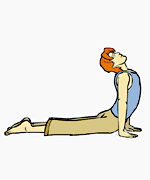
STEP 7: Inhale and roll forward and upwards into Upward Facing Dog (Urdhva Mukha Svanasana). Press the hands into the floor, shine your heart up and out and roll the shoulders down the back. Keep your arms straight. |
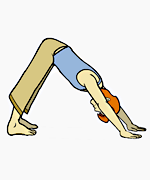
STEP 8: Exhale, draw the belly in and up, lift your hips, and press back down into your heels into the Downward Dog (Adho Mukha Svanasana). Ground your hands and feet into the floor, press the tops of the thighs back and extend the whole spine. Take three long, deep breaths... |
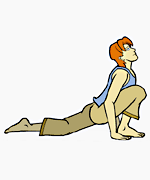
STEP 9: As you inhale, bring your right leg forward, with the top of the foot stretched out flat on the floor, and lift your chin. Low Lunge: This low lunge variation stretches the thighs and groins and opens the chest. |
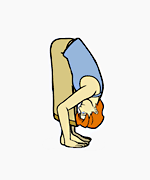
STEP 10: Exhale and then bend forward until your hands touch your feet. Slowly bend further so that your belly is touching your upper legs. Grasp your toes and breathe deeply in the pose. Standing Forward Bend/Fold: Uttanasana will wake up your hamstrings and soothe your mind. |
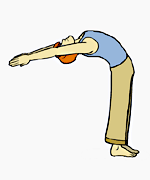
STEP 11: Inhaling, stretch your arms forward and over your head. Slowly bend backward from the waist. |
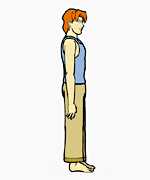
STEP 12: Exhaling, gently come back to Tadasana. Take a few moments to centre and reconnect to your breath before doing the whole sequence on the other side. |