History of Ketchup
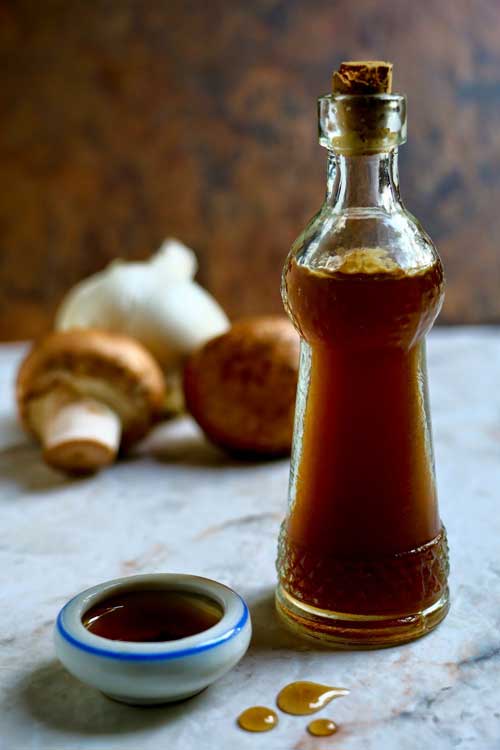
Mushroom Ketchup
The story of ketchup is in many ways a story of globalization and international trade. Stanford University professor Dan Jurafsky comprehensively traces the tangy condiment's long journey from Southeast Asia to China, then to Europe and, eventually, the United States.
The origins of this sauce reach all the way back to the middle of the sixth century, when the first recipe for kôechiap was recorded in China, in 544 A. D. Depending on how it is translated, ketchup's predecessor was known as ke-tchup, kôechiap or kê-tsiap in Hokkien Chinese. It referred to a pickled fish brine or sauce from the Fujian province of China and Southeast Asia. Most scholars believe this was very similar to garum, the well-known fish sauce which was so popular in ancient Rome. As Jurafsky notes, "Fermented food products have a long tradition in Asia." Later, vegetables like beans would also be fermented and made into pastes, and over a thousand years later, this pungent Chinese sauce was made from salted and fermented anchovies..
Hokkien Chinese traders would bring these sauces to Malaysia and Indonesia, where they were known by the names kechap and ketjap respectively. Ke-tchup would make the journey westward when it was brought back to Europe by Dutch and English sailors in the 1600s. Now known as "ketchup" or "catsup" in English, the sauce was appealing to the traders and sailors for a number of reasons, one of which was that it was well-preserved and could keep for several months without spoiling. Though they were fairly costly, their exotic source made them very enticing to many in England. As demand increased, more and more of this ketchup was imported into Britain.
The Oxford English Dictionary says the word "catchup" first appeared in print in 1699 in the New Dictionary of the Terms Ancient and Modern of the Canting Crew and was described as "a high East-India Sauce." (At the time, "East India" referred to South and Southeast Asia.)
The following is from http://en.wikipedia.org/
In the 17th century (?) the Chinese mixed a concoction of pickled fish and spices and called it (in the Amoy dialect) kôe-chiap or kê-chiap (鮭汁, Mandarin Chinese guī zhī, Cantonese gwai1 zap1) meaning the brine of pickled fish (鮭, salmon; 汁, juice) or shellfish.
By the early 18th century, the table sauce had made it to the Malay states (present day Malaysia and Singapore), where it was discovered by English explorers. This probably happened in the late 17th and early 18th centuries as evidenced by a recipe published in 1732 for "Ketchup in Paste," by Richard Bradley, which referenced "Bencoulin in the East-Indies" as its origin. The Indonesian-Malay word for the sauce was kecap (pronounced "kay-chap"). That word evolved into the English word "ketchup". English settlers took ketchup with them to the American colonies.
First English Ketchups
It's clear from the earliest English recipes that the original ketchup was a fish sauce, an attempt to create the cooking sauce called nuoc mam in Vietnam, nam pla in Thailand, patis in the Philippines, and made from salting and fermenting anchovies. An English recipe in 1736 calls for boiling down "2 quarts of strong stale beer and half a pound of anchovies", and then letting it ferment.
The first ketchup recipe appeared in print in Eliza Smith's 1727 cookbook The Compleat Housewife. Smith's "English Katchup" was a savory chutney made of anchovies, cloves, ginger and pepper. As Smith noted, this ketchup recipe was "good to put into fish sauce or any savory dish of meat." The Compleat Housewife: was a very popular English cookbook, first published in 1727, and the 1742 edition was the first cookbook to be published in the American colonies.
To make English Katchup
Take a wide mouth’d bottle, put therein a pint of the best white-wine vinegar; then put in ten or twelve cloves of eschalot peeled and just bruised; then take a quarter of a pint of the best Langoon white wine, boil it a little, and put to it twelve or fourteen anchovies washed and shred, and dissolve them in the wine, and when cold put them in the bottle; then take a quarter of a pint more of white-wine, and put in it mace, ginger sliced, a few cloves, a spoonful of whole pepper just bruised, let them boil all a little; when near cold, slice in almost a whole nutmeg, and some lemon peel, and likewise put in two or three spoonfuls of horse-radish; then stop it close, and for a week shake it once or twice a day; then use it: ‘Tis good to put into fish sauce, or any savoury dish of meat; you may add to it the clear liquor that comes from mushrooms.
— Smith, Eliza, “The Complete Housewife” 1727.
As the eighteenth century progressed, though fermented anchovy ketchup was still imported from southeast Asia, it was so expensive that many English cooks were experimenting with their own forms of spiced, pickled and/or fermented sauces. Most of these new sauces were called ketchup, with the qualifying name of the main ingredient used. A number of ingredients were used to make these sauces, including kidney beans, oysters, walnuts, and mushrooms. These sauces were made with any combination of pickling, salty brine, vinegar or wine along with the main ingredient. Some sources state that a sauce would only be called a ketchup if it contained vinegar. However, Hannah Glasse published a recipe for ketchup which included beer, anchovies, shallots and spices. Based on extant recipes, ketchups typically included some fermented liquid, not just vinegar, but beer, wine or soy sauce. Soy sauce had also come to Britain in the last decade of the seventeenth century. Soy sauce was still exotic enough in England that when it was used to make a ketchup, it was often included in the name of the ketchup. During the eighteenth century, all of these variations of ketchup were made at home, from published recipes or from recipes developed by the housewife or the family cook.
By the 1740s, according to author Justin Cord Hayes, ketchup was an everyday part of English cuisine, and referred to any type of "spiced sauce" present at the table. The rise in ketchup's popularity was helped by the fact that in the 1700s, a variety of spices were readily available in England due to trade with various colonies across the globe. In addition to salt and pepper, English cooks had access to cinnamon, mustard seeds, nutmeg and cayenne pepper among other spices — all ingredients vital to making a good ketchup.
Ketchup from about 1750-1850 mainly meant a thin dark sauce made of fermented walnuts or sometimes fermented mushrooms. But this was certainly not the ketchup we would recognize today. Most British recipes called for ingredients like mushrooms, walnuts, oysters, or anchovies in an effort to reproduce the savory tastes first encountered in Asia. These early ketchups were mostly thin and dark, and were often added to soups, sauces, meat and fish. Mushroom ketchup is still produced by old-fashioned grocers.
1800s - Heydey of Homemade Ketchups
The early 1800s was the heydey of homemade ketchups. Varieties of ketchup that would become popular included lemon, walnut, oyster, elderberry and mum (beer). Walnut ketchup was said to be a favorite of Jane Austen's and her family and Austen's closest friend Martha Lloyd recorded a recipe for it in her household book. Later, the 1861 bestselling tome Mrs. Beeton's Book of Household Management would contain several ketchup recipes, including entries for oyster ketchup and mushroom ketchup.
One of the most popular ketchups was made of fermented mushrooms. The mushrooms were broken up into small pieces and heavily salted. This mixture was stirred three or four times a day until the salt had fully dissolved and liquefied the mushrooms, which could take two or three days. Next, the liquid was gently boiled, strained through a hair sieve, and the strained liquid returned to the pot. Spices were added, typically allspice, whole black peppers, ginger and mustard-seed. Horseradish, chopped onions or shallots and often garlic were also added. This spiced mixture was simmered gently for some time while the surface was periodically skimmed to clarify the liquid. The fluid would be strained again, poured into bottles and allowed to cool. When the mushroom ketchup was completely cold, the bottles would be corked and the cork covered with a piece of bladder to fully seal them. The mushroom ketchup would keep for several months to a year. The resulting rich, dark sauce was usually used on meats, though it was sometimes also added to the gravy made from the meat juices. Mushroom ketchup is still made and sold today, with many of the same ingredients as those used in the eighteenth century.
Another popular ketchup was made from fermented green, unripe walnuts. This ketchup was usually made in the spring, when the walnuts were just about to ripen. The green walnut ketchup would have to be stored for at least a year once it was bottled in order to fully mature before it would be ready for use. One version of the recipe for walnut ketchup remains to us because it was recorded by Martha Lloyd, Jane Austen’s best friend. In the summer of 1809, Lloyd moved into the brick cottage in Chawton to live with Jane, Cassandra and Mrs. Austen. It is believed that she noted down the Austen family recipe for walnut ketchup while she was living with the Austen ladies at Chawton. Reportedly, walnut ketchup was Jane Austen’s favorite. Below is the recipe which Martha Lloyd recorded in her "household book."
Walnut Ketchup
Take green walnuts and pound them to a paste. Then put to every hundred two quarts of vinegar with a handful of salt. Put it altogether in an earthen pan keeping it stirring for eight days. Then squeeze through a coarse cloth and put it into a well lined saucepan, when it begins to boil skim it as long as any scum, rinse, and add to it some cloves, mace, sliced ginger, sliced nutmeg, Jamaica peppercorns, little horse radish with a few shallots. Let this have one boil up, then pour it into an earthen pan, and after it is cold bottle it up dividing the ingredients equal into each bottle. (late 1700s)
- from the household book kept by Jane's best friend Martha Lloyd
This recipe from Hannah Glasse is for a mushroom ketchup. As Samuel Johnson tells us in his great Dictionary in 1755, English mushroom ketchups were just an attempt to imitate the taste of an earlier original sauce that came from Asia.
To make English catchup. (mushroom ketchup)
Take the largest flaps of mushrooms, wipe them dry, but don't peel them, break them to pieces, and salt them very well; let them stand so in an earthen pan for nine days, stirring them once or twice a day, then put then into a jugg close stopp'd set into water over a fire for three hours; then strain it through a sieve, and to every quart of the juice put a pint of strong stale mummy beer, not bitter, a quarter of a pound of anchovies, a quarter of an ounce of mace, the same of cloves, half an ounce of pepper, a race of ginger, half a pound of shalots; then boil them altogether over a slow fire till half the liquor is wastged, keeping the pot close covered; then strain it through a flannel bag. If the anchovies don't make it salt enough, add a little salt."
---First Catch Your Hare: The Art of Cookery Made Plain & Easy, Hannah Glasse, facsimile 1747 edition [Prospect Books:Devon] 1995 (p. 169)
The various ketchup recipes mentioned above would arrive in the United States along with the British during the colonial period. But as The Oxford Companion to American Food and Drink notes, tomato ketchup may have been invented in the United States, which is logical because the tomato is native to North America. It is believed that Europeans were hesitant to use tomatoes in ketchup (or any cooking at all) because the fruit was believed to be poisonous, which led to more than a century going by before the first tomato ketchup was created.
By the mid-1850s, the anchovies had been dropped.
Tomato Ketchup Recipe
The recipe for ketchup has changed quite dramatically over time; tomatoes were only added to the recipe around 1800, and sugar even later, well after the Civil War. The first recorded tomato ketchup recipe, as created by Sandy Addison, appeared in the 1801 publishing of The Sugar House Book. Even though the recipe would be too salty for most modern palettes, this represents the first culinary use of tomatoes in American cuisine.
1. Get [the tomatoes] quite ripe on a dry day, squeeze them with your hands till reduced to a pulp, then put half a pound of fine salt to one hundred tomatoes, and boil them for two hours.
2. Stir them to prevent burning.
3. While hot press them through a fine sieve, with a silver spoon till nought but the skin remains, then add a little mace, 3 nutmegs, allspice, cloves, cinnamon, ginger, and pepper to taste.
4. Boil over a slow fire till quite thick, stir all the time.
5. Bottle when cold.
6. One hundred tomatoes will make four or five bottles and keep good for two or three years.
By the turn of the nineteenth century, a few English cooks were using tomatoes to make a new kind of ketchup: tomato ketchup, sometimes called tomato or tomata sauce. The first known recipe for this new spicy red ketchup published in England, in 1804, was by Alexander Hunter, a Scottish physician. This recipe appeared in his popular cookbook and medical compendium, Culina Famulatrix Medicinæ: Or, Receipts in Modern Cookery, with a Medical Commentary. This cookbook also includes a recipe for mock tomata sauce, for those who were not able to get real tomatoes. Hunter’s book went through several printings, and the tomata sauce recipe was always included in each new edition. Through the Regency, other recipes for tomato sauce, tomato ketchup or tomato soy (tomato ketchup made with soy sauce) began to appear, and tomato ketchup, so named to distinguish it from mushroom, oyster or walnut ketchup, was a popular condiment on many dinner tables.
Tomata Sauce
Take tomatas when ripe, and bake them in an oven, till they become perfectly soft, then scoop them out with a tea-spoon, and rub the pulp through a sieve. To the pulp, put as much Chili vinegar as will bring it to proper thickness. with salt to the taste. Add to each quart, half an ounce of garlic and one ounce of shalot, both sliced very thin. Boil during the space of a quarter of an hour, taking care to skim the mixture very well. Then strain, and take out the garlic and shalot ... and let it stand for a few days before it is corked up. This is a charming sauce for all kinds of meat, whether hot or cold ... Being a pleasant acid, the tomata is much used by the Spaniards and Portuguese in their soups.
Another tomato ketchup recipe appeared in 1812, written by Philadelphia scientist and horticulturalist, James Mease, who referred to tomatoes as "love apples." In 1804 he observed that "love apples" — a popular term for tomatoes at the time — make for "a fine catsup His recipe contained tomato pulp, spices, and brandy but lacked vinegar and sugar. In 1824, a ketchup recipe using tomatoes appeared in The Virginia Housewife (an influential 19th-century cookbook written by Mary Randolph, Thomas Jefferson's cousin). American cooks also began to sweeten ketchup in the 19th century.
Tomata Catsup.
Gather a peck of tomatas, pick out the stems, and wash them; put them in the fire without water, sprinkle on a few spoonsful of salt, let them boil steadily an hour, stirring them frequently, strain them through a colander, and then through a sieve; put the liquid on the fire with half a pint of chopped onions, a quarter of an ounce of mace broke into small pieces, and if not sufficiently salty, add a little more, one tablespoonful of whole black pepper, boil all together until just enough to fill two bottles; cork it tight.-- Make it in August."
---The Virginia Housewife, Mary Randolph, facsimile 1824 edition with historical notes and commentaries by Karen Hess [University of South Carolina Press:Columbia SC] 1984 (p. 201)
Hundreds of other tomato ketchup recipes would follow. An 1817 recipe incorporated both tomatoes and anchovies, an homage of sorts to ketchup's original roots as a fish sauce.
In 1824, a ketchup recipe using tomatoes appeared in The Virginia Housewife (an influential 19th-century cookbook written by Mary Randolph, Thomas Jefferson’s cousin). American cooks also began to sweeten ketchup in the 19th century.
As the century progressed, tomato ketchup began its ascent in popularity in the United States. Ketchup was popular long before fresh tomatoes were. Many Americans continued to question whether it was safe to eat raw tomatoes. However, they were much less hesitant to eat tomatoes as part of a highly processed product that had been cooked and infused with vinegar and spices.
Tomato ketchup was sold locally by farmers. A man named Jonas Yerks (or Yerkes) is believed to have been the first man to make tomato ketchup a national phenomenon. By 1837, he had produced and distributed the condiment nationally. Shortly thereafter, other companies followed suit. F. & J. Heinz launched their tomato ketchup in 1876. Heinz tomato ketchup was advertised: "Blessed relief for Mother and the other women in the household!", a slogan which alluded to the lengthy and onerous process required to produce tomato ketchup in the home. With the rise of commercial ketchup, recipes for the condiment slowly vanished from cookbooks. Here's one from 1885:
Tomato Catsup
Take enough ripe tomatoes to fill a jar, put them in a moderate oven, and bake them until they are thoroughly soft; then strain them through a coarse cloth or sieve, and to every pint of juice put a pint of vinegar, half an ounce of garlic sliced, a quarter of an ounce of salt, and the same of white pepper finely ground. Boil it for one hour, then rub it through a sieve, boil it again to the consistency of cream; when cold, bottle it, put a teaspoonful of sweet oil in each bottle; cork them tight, and keep in a dry place."
---La Cuisine Creole, Lafcadio Hearn, 1885 - the first Creole cookbook
However, as the Oxford Companion notes, the popularity of tomato ketchup would really take off after the Civil War. An 1891 issue of Merchant's Review boasted that ketchup was the "sauce of sauces" and five years later The New York Tribune declared that tomato ketchup was America's national condiment that was "on every table in the land."
After the Civil War commercial production of ketchup rapidly increased...tomato ketchup became the most important version...In 1896 the New York Tribune reported that tomato ketchup was America's national condiment...Up until 1900, ketchup was mainly used as an ingredient for savory pies and sauces, and to enhance the flavor of meat, poultry, and fish. It then became famous as a condiment following the appearance of three major host foods: hamburgers, hot dogs, and french fries.
The Webster's Dictionary of 1913 defined 'catchup' as: "table sauce made from mushrooms, tomatoes, walnuts, etc. [Also written as ketchup]."
