What is Aspic?
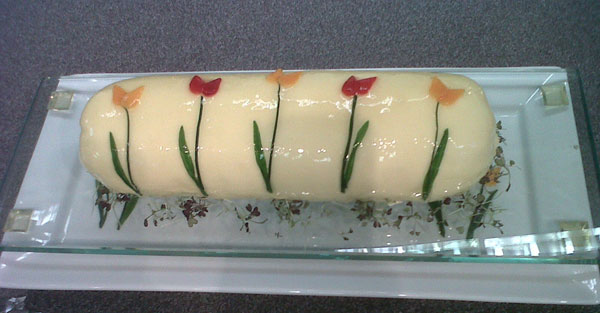
Chicken Ballotine with Watercress and Chive Mousse
The Chicken is taken off the bone and the Chicken's skin is kept in 1 piece. The skin is spread out on a muslin cloth
and the Chicken meat is laid on-top. Along the centre of that is placed your stuffing of choice. Using the muslin cloth
and the Chicken skin you roll the entire thing up around the stuffing and try to have the skin cover up all of the meat.
The muslin cloth is rolled around the Ballotine several times to make it nice and secure and the it's tied at both ends
to hold the shape.
After poaching in a liquor that is flavoured with aromatics and the usual Carrot, Onion and Celery, the roll is chilled
overnight. It is then unwrapped and coated with a Saffron Mayo that is set with gelatine. Once set, a light layer
of clear Aspic is poured over before the decorations are added. To seal everything in, another thin layer of Aspic
is poured over the entire Ballotine again.
Aspic is a translucent savoury preparation which solidifies on cooling because of the gelatinous substances it contains. Aspic jellies are prepared from basic white and brown stocks and are produced naturally when the stock is prepared with items rich in gelatine, such as Veal Knuckle, Calf's Foot, Fresh Bacon Rind, Poultry Feet and Fish trimmings.
Aspic is a dish in which ingredients are set into a gelatin made from a meat stock or consommé. Non-savory dishes, often made with commercial gelatin mixes without stock or consommé, are usually called gelatin salads.
When cooled, stock that is made from meat congeals because of the natural gelatin found in the meat. The stock can be clarified with egg whites, and then filled and flavored just before the aspic sets. Almost any type of food can be set into aspics. Most common are meat pieces, fruits, or vegetables. Aspics are usually served on cold plates so that the gel will not melt before being eaten. A meat jelly that includes cream is called a chaud-froid.
Nearly any type of meat can be used to make the gelatin: pork, beef, veal, chicken, turkey, or fish. The aspic may need additional gelatin in order to set properly. Veal stock provides a great deal of gelatin; in making stock, veal is often included with other meat for that reason. Fish consommés usually have too little natural gelatin, so the fish stock may be double-cooked or supplemented. Since fish gelatin melts at a lower temperature than gelatins of other meats, fish aspic is more delicate and melts more readily in the mouth.
History
Historically, meat aspics were made before fruit- and vegetable-flavored aspics or 'jellies' (UK) and 'gelatins/jellos' (North America). By the Middle Ages at the latest, cooks had discovered that a thickened meat broth could be made into a jelly. A detailed recipe for aspic is found in Le Viandier, written in or around 1375.
In the early 19th century, Marie-Antoine Carême created chaud froid in France. Chaud froid means "hot cold" in French, referring to foods that were prepared hot and served cold. Aspic was used as a chaud froid sauce in many cold fish and poultry meals. The sauce added moisture and flavor to the food. Carême invented various types of aspic and ways of preparing it. Aspic, when used to hold meats, prevents them from becoming spoiled. The gelatin keeps out air and bacteria, keeping the cooked meat fresh.
Aspic came into prominence in America in the early 20th century. By the 1950s, meat aspic was a popular dinner staple throughout the United States as were other gelatin-based dishes such as tomato aspic. Cooks used to show off aesthetic skills by creating inventive aspics.
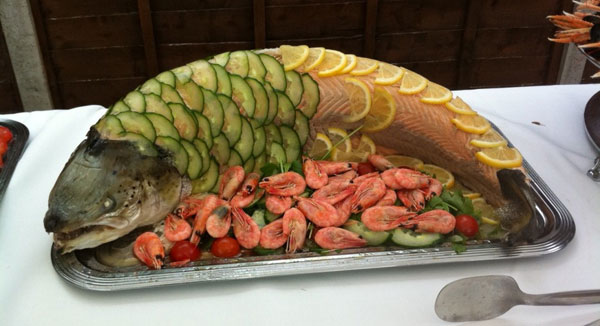
Dressed Salmon - poached, dressed and eaten cold with a dill mayonnaise or other condiment
