Za'atar
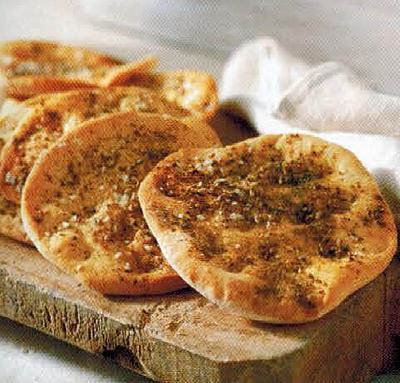
Flatbread with Za'atar
Za'atar (the Arabic word za'atar, pronounced ZAH-tahr) is an intensely aromatic and ancient spice blend and condiment central to Mediterranean cooking. The mixture is traditionally made with dried herbs such as marjoram or thyme. Just what's in your za'atar depends, in part, on where you are in the Mideast. But generally speaking, it involves some combination of ground dried oregano, thyme or marjoram, ground sumac, toasted sesame seeds and often, salt.
Beirut Correspondent Kelly McEvers says that in Syria and Lebanon, an herb that that locals refer to as wild thyme, is we might call oregano or marjoram. Palestinians also call the herb thyme, says Jerusalem Correspondent Emily Harris. Eaten in the Middle East for centuries, za'atar has a fascinating history. The word refers both to the alluring spice mixture, and to the wild oregano (Majorana syriaca or Origanum syriacum) from which the mix derives (the latter za'atar, by the way, makes several appearances in the Bible).
From another web site: There are many styles of za’atar, but all share the common ingredients of sesame seeds, ground sumac, and dried za’atar (an herb with a savory-thyme-oregano flavor). You can buy za’atar blends in Middle-Eastern markets, but you can also make it at home. In many blends, thyme and oregano or marjoram stand in for the za’atar herb, which is rarely available in the United States.
As for za'atar's reputation as health food, that goes way back, too. In the 12th century, the great Spanish Jewish philosopher Maimonides is said to have prescribed it to his patients to treat a variety of ailments. Modern studies into za'atar confirm that Maimonides was really on to something. Sumac is full of flavonoids, and thyme and oregano are both packed with thymol, an essential oil, and carvacrol, a phenol. Both thymol and carvacrol have antioxidant, antiseptic and fungicide properties. Thymol has also been shown to help control coughing fits in patients with bronchitis (which might explain why Maimonides recommended za'atar to treat colds).
Za'atar
To make about 1/2 cup of za’atar, put 3 Tbs. dried thyme, 1 Tbs. lightly toasted sesame seeds, 1 Tbs. ground sumac, 1/2 tsp. dried oregano or marjoram, and 1/4 tsp. kosher salt in a spice grinder. Pulse a few times to mix and break up some of the seeds—there should still be many whole seeds visible. Store in a cool, dark place for up to six months. If sumac is unavailable, substitute 2 Tbs. dried lemon peel. Ground sumac is a versatile spice with a tangy lemony flavor, although more balanced and less tart than lemon juice.
Make Your Own Za'atar Seasoning Blend
2 tablespoons dried thyme
2 tablespoons dried sumac
2 tablespoons sesame seeds, toasted or un-toasted as you prefer
You can simply shake these ingredients together in a spice jar or grind them in a spice grinder for a finer powder. Some mixes will also add a tablespoon of marjoram or oregano to the mix. If you like the flavor of these herbs, feel free to add them.
As with all spices, keep this mix stored in a cool, dark place.
