How to Adjust a Door Closer
from https://www.wikihow.com/
Pneumatic door closers control the speed at which your door closes, as well as the pressure that latches it. Small changes over time due to shifting foundations and door frames, bumps or other structural evolution can impact your door closer. They require periodic adjustments to ensure that the door latches properly and closes at the correct speed. Luckily, with no more than a screwdriver, you can easily adjust the pneumatic cylinder to change the swing speed, or realign the cylinder and bracket to make the door close hard enough to latch firmly. If your door still doesn't work the way you want it to after making these adjustments, then you will likely need to replace your door closer.
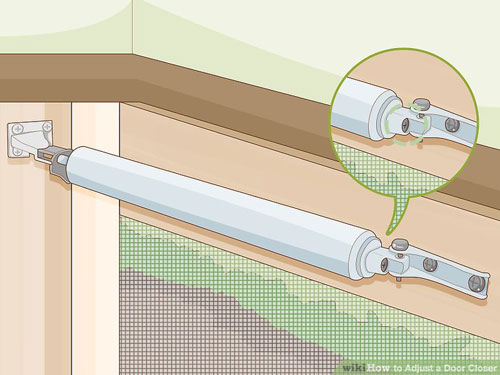
Locate the tension adjustment screw at the end of the pneumatic cylinder.
Method 1: Changing the Swing Speed of a Door Closer
Locate the tension adjustment screw at the end of the pneumatic cylinder. Door closers consist of a pneumatic cylinder, which controls the speed of the door, and a bracket, which holds the cylinder to the door. Look at the end of the cylinder closest to the bracket, with the door closed, to see the adjustment screw.
- Tightening and loosening the adjustment screw makes the cylinder close the door slower or faster.
- Some door closers might have one screw, while others will have two.
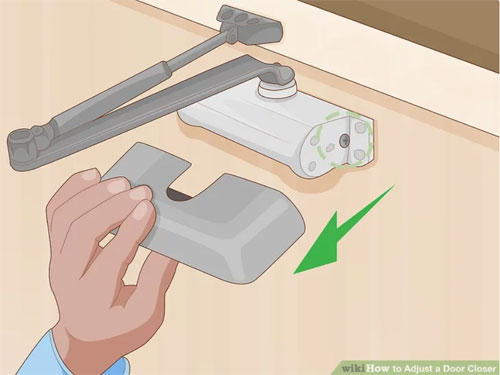
Take the cover off the door closer if you can't find the adjustment screw.
Take the cover off the door closer if you can't find the adjustment screw. Some door closers have a case that covers the cylinder and bracket. You might need to remove the cover to access the adjustment screw if you don't see it while the cover is on. Removable covers can be pried off gently, because they're held to the door closer by the power of suction alone.
- Some covers are not meant to be removed. These have a clearly marked adjustment screw that is exposed on the outside of an end of the cover. If it's not obvious which screw is the adjustment screw, you will have to experiment by loosening or tightening screws one at a time, then closing the door to test it.
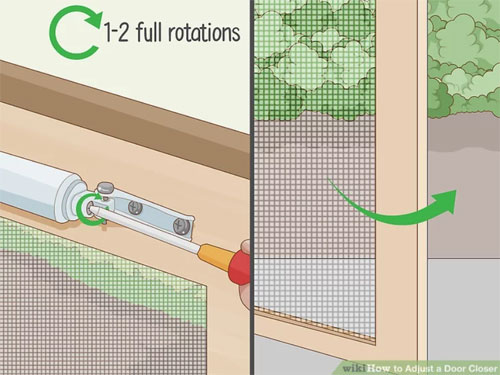
Turn the screw clockwise to make the door close slower.
Turn the screw clockwise to make the door close slower. Use a screwdriver to tighten the adjustment screw slightly if the door is closing too fast. This will change the speed of the pneumatic cylinder to slow the door down.
- Make very minor adjustments—maybe 1/8 of a turn at a time—until you're happy with how the door closes.
- Test the door by opening and letting the door close to see how much slower it closes. Keep making minor adjustments until the door closes at the desired speed.
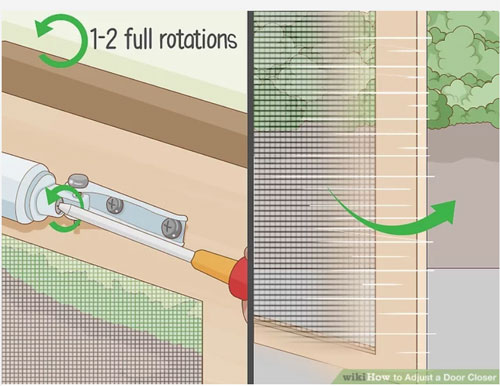
Turn the screw counterclockwise to make the door close faster.
Turn the screw counterclockwise to make the door close faster. Loosen the adjustment screw slightly with a screwdriver if your door is closing too slowly. This will adjust the speed of the pneumatic cylinder to speed the door up.
- Make sure not to completely unscrew the adjustment screw, or the cylinder could come apart and start leaking pneumatic fluid.
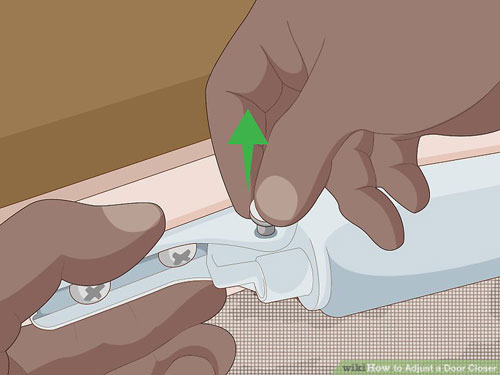
Press up on the pin that holds the cylinder to the bracket to remove it.
Method 2: Making a Door Latch Firmly
Press up on the pin that holds the cylinder to the bracket to remove it. Close the door completely and locate the pin that holds the pneumatic cylinder to the bracket. Slide it up and out to release the cylinder from the bracket.
- Door closers have a pneumatic cylinder, which controls the swing speed of the door, and a bracket, which connects the pneumatic cylinder to the door. Look where the arm of the cylinder connects to the bracket to find the pin you need to remove.
- Most door closers have 2-3 different holes that you can use to attach the cylinder closer to or further away from the bracket to adjust the closing pressure.
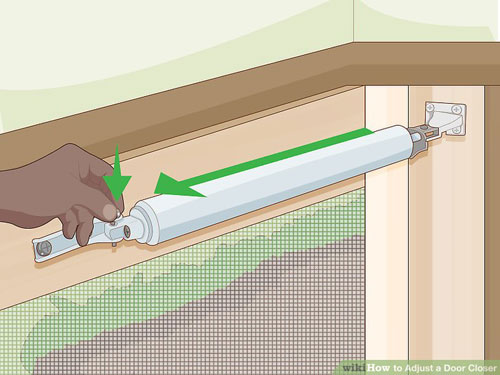
Put the pin in the hole furthest away from the cylinder to make the door latch.
Put the pin in the hole furthest away from the cylinder to make the door latch. Align the holes on the arm of the cylinder underneath the holes furthest away on the bracket. Slide the pin back in to hold the cylinder and the bracket together and make the door close harder and latch all the way.
- Your door won't latch all the way if there is not enough pressure in the last several inches when it closes. Connecting the cylinder closer to the bracket creates more pressure in the final stages of closing so the door will latch firmly.
- If the cylinder is already attached to the bracket through the hole furthest away from it, and the door still doesn't latch properly, then you will need to adjust the position of the bracket on the door.
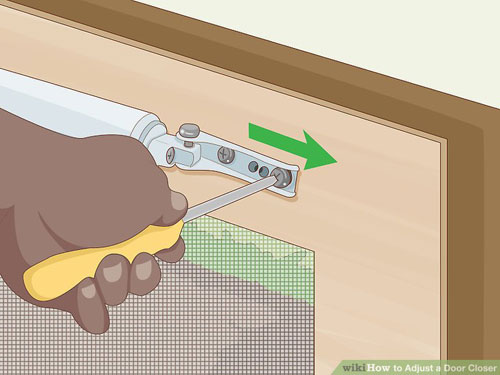
Change the position of the bracket on the door if moving the pin doesn't work. Loosen the screws that attach the bracket to the door. Slide the bracket further away from the cylinder, closer to the door handle, to create more closing pressure.
- Most door closer brackets have slotted holes so you are able to slide them left to right to make adjustments without completely removing the screws.
- If none of these adjustments works, then your door closer may be worn out and you will need to buy a new one to replace it. Look for a similar model so you can simply unscrew the old one and screw the new one back into the same position.
