How to Remove a Stipped-out Screw
1. If the screw is not too badly stripped out, place a rubber band over the head of the screw and while pressing down firmly, turn the screw counter-clockwise very slowly while putting consistent pressure down on the screw.
2. Products called Screw Grab and DAP Liquid Grip, increase the grib between screwdriver and screw. Friction gels are made out of abrasive particles (such as crystals) and thickening agents that can greatly increase grip between the screw head and a screwdriver. Insert some Screw Grab or DAP Liquid Grip into the screw head. Apply just 1-3 drops of gel onto screw head. Don’t put on too much gel which will clog the screw slots. Apply steady downward pressure while turning the screwdriver slowly. The main downside is that friction gels only work for slightly stripped screws since your screwdriver still needs to be able to fit into the slots.
3. Pliers Or Vice Grip (Most Manual. Pliers or vice grips is a nice manual method to remove stripped screws if the screw head is exposed. This method requires the screw head to be slightly raised so you can get the pliers around the screw head. The concept is to bypass the stripped screw head entirely by using the turning force of pliers. Locking pliers work great on larger screws because it allows you to focus entirely on turning rather than gripping. Grip the screw head horizontally with pliers for a stronger turning force.
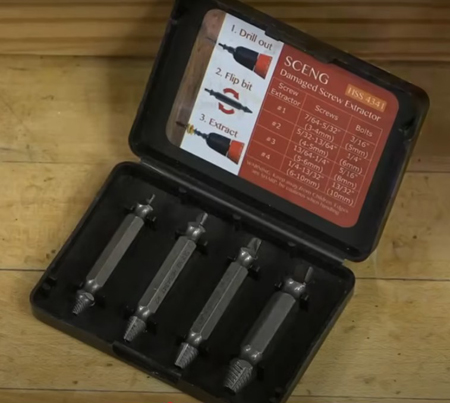
4. Screw Extractor. Each bit has two ends. One for burnishing (looks sort of like a drill bit) and the other for extracting (cone shape with lots of little groves). Set the drill to reverse and placed the remover (extracting bit end) into the chuck. Run the drill at slow to moderate speed while appliying light pressure. This will create a depreesion in the screw end. Flip the bit around so the extraction end is protruding. Run the drill in reverse applying steady downward pressure to extract the screw.
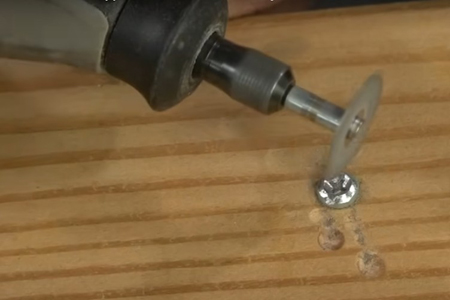
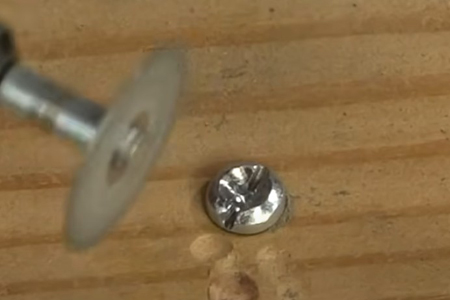
5. If you have a Dremel, angle grinder, or oscillating multi-tool, cutting a notch into the screw head is a clever way to remove a stripped screw. It’s essential to use a small cutting wheel for a Dremel at around 1-inch. A comparable disk for an angle grinder would be a 4-inch or 5-inch cutting wheel. Make sure it is as thin as possible to match the flathead screwdriver for maximum grip — around 1/32 to 1/16 inch thickness. Ideally, the cutting disk should be made out of aluminum oxide or zirconia alumina which is much harder than aluminum, steel, or brass screw heads — easily cutting a notch.
This last technique is used in the picture adn uses a rotary tool, fitted with a cut-off blade to cut a slot across the damaged screw. Then a flat blade screwdriver can be used to back the screw out.
6. Epoxy (Most Surprising) Epoxy, such as JB Weld, can be an unexpected but effective solution for removing a stripped screw using a common hardware item. There are two ways to use it:
- Drip epoxy into the stripped screw head, and then stick a Phillips or flathead screwdriver into it — allowing it to dry.
- Use epoxy to bond a nut onto the top of the screw head, and then using a wrench to turn the nut.
This strategy is more likely to work for small screws that don’t require a lot of turning power or torque. Overall, this method is best for small to standard screws that don’t require a lot of turning force. If it is a larger screw, it will likely break the epoxy bond.
Allow Epoxy To Dry: Follow the package instructions and wait for the epoxy to properly set. Remove Screw: Use a standard wrench to loosen the nut. If you cemented a screwdriver into the screw head, turn the tool the remove the nut. Alternately, you can use the wrench to turn the screwdriver for a better grip.
