How to Test an Electrical Outlet
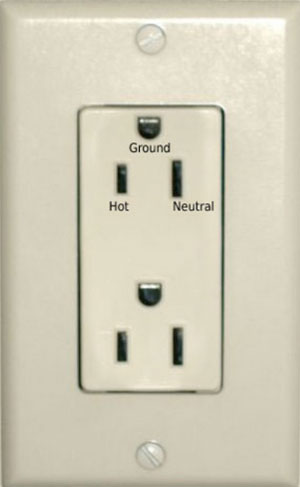
The right slot on an outlet is the black, or hot wire, where your electricity comes from. The left is your white or neutral common wire which the electricity takes its path home on. Hot and neutral are your power to make a complete circuit. When the plug is slid into the outlet, it completes the circuit from the hot slot to the neutral slot so that electricity safely flows from the home’s electrical system to the plugged-in appliance.
The bottom middle outlet is the ground wire, the bare wire or green wire, effectively all the same thing. It is for grounding equipment with a three-prong plug. This ensures that under normal operating conditions, the appliance is “grounded” and should not pose a hazard for electrical shock. Lamps or other smaller plug-in electrical items usually do not have a grounding prong.
Two-prong outlets
Two-prong outlets were standard in homes built before the 1960s. While they are not the grounding type, they are safe to use as long as they are working properly, according to the National Electrical Code. Test the two-prong outlet with a circuit tester to ensure it is safe to use for your small household appliances and other everyday items.
Most hazards come about when someone tries to use a two-prong outlet incorrectly. They’re fine for cell phone chargers, table lamps and other two-prong attachment plugs, but they cannot be used for anything with a three-wire attachment plug. There are many electrical “adapters” available, but their misuse can create serious shock hazards.
Neon Circuit Tester
A neon circuit tester is one of the most simple tools you can use to test for voltage and check for grounding. Priced at just a few dollars, this tool can help you check the wiring on two-prong outlets and three-prong outlets.
- To Test if Current Present: To use a neon voltage tester, simply touch one tester probe to a hot wire, screw terminal, or outlet slot. Touch the other probe to a neutral slot or ground contact. The small neon bulb in the tip of the tool will light up if there is current present.
- To Test if Properly Grounded: The tester can also verify whether an outlet is properly grounded. If the tester lights up when the probes are inserted into the hot and neutral slots on the outlet, but fails to light up when the probe is moved from the neutral to a screw on the front of the faceplate or in the grounding slot (so one probe in the hot slot and one in the grounding hole or on a screw on the faceplate), it means the outlet is not properly grounded.
