Homemade Ricotta Salata
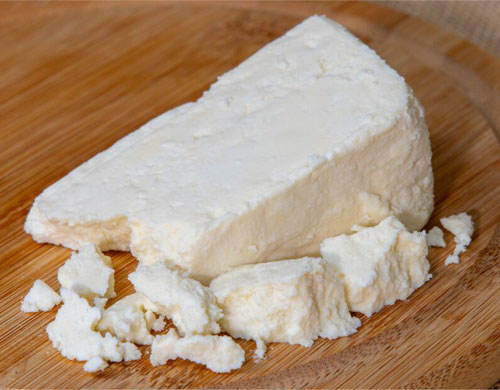
As the name implies, Ricotta Salata, is a sheep's milk ricotta to which salt has been added as a preservative. It can be used fresh or aged for an extended time. The liquid is pressed out of ricotta cheese and the solids are compacted into semi-solid rounds, enabling it to be cut with a knife. It's texture is crumbly but firm. When it's young, ricotta salata is similar in taste to a Greek style feta. It works well served in an antipasto, or as a garnish for pasta. Try substituting ricotta salata in any recipe that calls for feta. Because Ricotta Salata is a very salty cheese, its merit lies in its ability to complement other foods.
Ricotta salata can also be air cured or dried in an oven to render a sharp-tasting cheese reminiscent of the flavor of romano. If you age it long enough it can be used as a grating cheese – sort of a poor man's parmesan. It is a milky-white hard cheese used for grating or shaving. Ricotta salata is sold in wheels and decorated with a delicate basket-weave pattern.
(Makes about 1 pound)
4 cups of Homemade Ricotta (I have also seen a recipe that uses store-bought ricotta with success)
1 to 2 cups Kosher salt
plastic containers with holes punched in for drainage
Let ricotta drain for an extended period of 24-36 hours After the first 6-8 hours place a weight on top of the cheese, 2-4 lbs should be enough.
After draining, de-mold the Ricotta onto a plate or bowl that will catch extra whey. Every other day for at least the first week sprinkle about 1/2 tsp of salt over the cheese, rubbing over the outside of the cheese, then cover the top with plastic returning it to the refrigerator. Pour off any whey that weeps out of the salted cheese.
Keep them in the refrigerator for 3 to 4 days. Check every day to see that there is still salt covering the top. Add more salt if needed.
After 4 days, take the cheese out of the containers and rinse the salt off the top. Invert the cheese, put back in the containers, and add 1/4 inch of salt to the top. Again, check every day to see if more salt needs to be added.
As the cheese starts to firm up and lose less whey you can salt less often until it is pretty firm, at least a week and a half if not two or three. The final cheese can be anywhere from a firm table cheese after 4-6 weeks or a very dry grating cheese after several months. Keep the mold under control by wiping with a light brine as it appears.
The cheese is done when the ricotta is crumbly with the consistency of Feta cheese. Rinse off all of the salt and pat dry. The cheese will be very salty at this stage; eating a slice will perhaps taste unappetizingly salty. Shredding the cheese with a box grater or slicing it extremely thin reduces the perceived saltiness. Alternately, if you want a milder cheese, you can soak the ricotta salata in water until it reaches the desired flavour, then dry again on paper towels.
You can store ricotta salata for up to two months in the refrigerator.
