Crème Fraîche
from Cooking A to Z
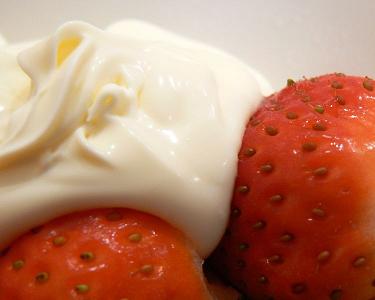
Literally translating to "fresh cream" from French, in the US crème fraîche is concocted by fermenting pasteurized cream with sour cream or buttermilk. In France however, the cream used is unpasteurized and produces a velvet textured cream with a tarty and nutty flavor. True French Crème Fraiche is a high fat cream that is left to culture on its own. Raw cream is used for true Crème Fraiche, since raw cream and milk will culture on their own if given the proper environment. Because there is no active bacteria in pasteurized milk, we need to introduce and inoculate our cream in order to transform it into crème fraiche. That is done, in this case, using cultured buttermilk.
Basically, crème fraîche is a French version of sour cream, but more luxurious and subtle. Not quite as sour, or as thick as sour cream. It’s more of a tangy custard. The higher fat content allows it to more readily heat, meaning you won’t get the same amount of curdling you get when you heat sour cream. It is also a little “sweeter” than sour cream, and certainly less “tangy”.
Substitution for Crème Fraîche in Recipes:
Cooking: Substitute sour cream. Crème fraîche is different from sour cream when it comes to its smooth texture and a higher heat stability - sour cream tends to curdle when heated. So, if you do not have to do anything related to heating, or you want to serve cream with some fruit, like strawberry or cherries, then beat ½ a cup sweet whipping cream and an equal amount of sour cream together to substitute for 1 cup of crème fraîche. After mixing the two, cover the mixture, and set them aside to stand for 12 hours in a relatively warm place. (As an aside, sour cream is only 14–18% milkfat, whereas crème fraîche is 30-40% milkfat.) Mexican crema also would be a good substitute as it is very similar to Crème Fraîche.
Whipped Crème Fraîche: In bowl of electric mixer, with whisk attachment, beat the Crème Fraîche with 1-2 tablespoons (14-28 grams) of granulated white sugar until stiff peaks form. Can be used in desserts instead of whipped cream.
To Make Your Own Crème Fraîche:
Crème fraîche can be made at home by adding a small amount of cultured buttermilk or leftover crème fraîche with live cultures to normal heavy cream, and allowing to stand for several hours at room temperature until the bacterial cultures act on the cream. Crème Fraîche can take 24 - 36 hours to thicken, so be sure to start this a day or two ahead. It will thicken a little more once refrigerated.
The Differences between Creme Fraiche and Sour Cream Fat: While they both contain higher amounts of fat than some other dairy products, Creme Fraiche contains 30% fat, whereas Sour Cream is made up of 20% fat. Sour cream contains more protein than Creme Fraiche because of its fat content. Sour cream is much tangier than Creme Fraiche.
1 cup heavy cream (not ultrapasteurized)
1 Tbsp. buttermilk or crème fraîche with active culture (Emeril Lagasse uses 2 Tbsp. & covers his with a cloth, not a jar top)
Heat the whipping cream in a small saucepan to 95° F. Transfer cream to a clean jar with a tight fitting lid. Add the buttermilk and shake well. Cover with a Tea Towel or Cheesecloth: Use a fine woven tea towel secured with a rubber band, but you can use several layers of cheesecloth if you prefer. You want the weave to be tight enough that bugs and dust will stay out, but air can freely move.
Let stand at room temperature until thickened (12 to 24 hours). Stir and taste every 6 - 8 hours. This process takes anywhere from 24 to 36 hours, depending on your room temperature. The creme fraiche is ready when it is thick with a slightly nutty sour taste. If it doesn't seem to be thickening, move to a slightly warmer location. Don't worry about the cream going bad. The benign live bacteria in the buttermilk will multiply and protect the cream from any harmful bacteria. The warmer your kitchen, the faster your crème fraîche will thicken up.
Once the creme fraiche has thickened sufficiently, cover and place in the refrigerator. It will continue to thicken and take on a more tangy flavor as it ages. Creme fraiche will keep in the refrigerator for about 7-10 days.
[Your Crème Fraiche is ready when it is thick, with the consistency of mayonnaise or a thick yogurt, and has a nice 'tangy' flavor. If it still looks a little runny after 24 hours, leave it another few hours.]
Save 1 tablespoon from each batch and use in place of buttermilk in future batches. Do not try to make crème fraîche with ultrapasteurized cream, because it does not contain enough bacteria to curdle.
