Spiced or Flavoured Cheeses
Many cheeses have their flavours enhanced by the addition of a variety of herbs and spices. Derby Sage has a greenish hue due to sage being introduced to the cheese curd during the making process (Vermont Sage is the American equivalent); Leyden is treated with caraway and cumin seeds; and Boursin, a triple-creme cheese, is marketed in flavoured versions ranging from pepper to garlic. Other cheeses may be studded with walnuts, covered with grape seeds or treated with cloves. The English are now producing several of their traditional lines flavoured with beer, wine, cider, port and chives.
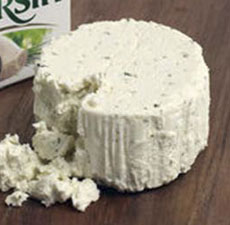
Boursin
Boursin is a trademarked brand of Gournay cheese. It is a soft creamy cheese available in a variety of flavours, with a flavour and texture somewhat similar to cream cheese.
The world's first variety of Boursin, was created in 1957 in Normandy by Francois Boursin. Inspired by a long-standing traditional dish, fromage frais (fresh cheese), in which guests mixed their own seasoned cheese from a bowl of fine herbs, the expert cheese maker introduced Boursin Garlic & Fine Herbs. His recipe quickly became the first flavored fresh cheese to be sold throughout France.
Boursin cheese was first developed in Normandy, and at one time was produced exclusively in Croisy-sur-Eure, France, by the Boursin company. In 1990, the Boursin name was acquired by Unilever who sold it to Groupe Bel in November 2007 for 400 million euros. The cheese is still produced in the United States for North American distribution by Unilever.
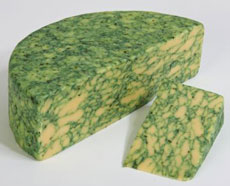
Derby Sage
The first production began in the seventeenth century in England. Sage Derby is a variety of British Derby cheese infused with sage to produce a glorious green marbling effect and subtle herb flavour. Hard to find these days, it is England's oldest and most famous cheeses originally made only for special occasions such as Harvest and Christmas.
To make this cheese, freshly milled, salted Derby curd and sprinkles of fresh sage are arranged in layers and left to mature for six months. Some dairies blend dried sage with mature, chopped Derby and then repress it again.
A semi-hard, delicate cheese, it has a mild sage flavour and is well known for its versatility. It has a natural rind, which is often dusted with sage. Due to the bright markings, it looks very striking on a cheeseboard. Moreover, it has smooth melting characteristics that pair with everything from fresh fruits, vegetables to poultry dishes.
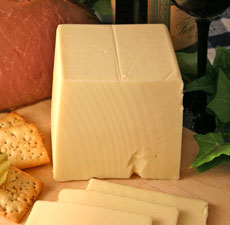
Horseradish Cheese
The sharp pungency of horseradish is balanced by the smooth taste of cheddar in this flavored cheese. Great with a smoked beer, bock, or even a dark beer, horseradish cheese offers a tasty surprise. Serve it on a tray with more traditional cheeses and a variety of crackers. Horseradish cheese will be that choice on the appetizer tray that lends an extra bite to the rest of the options. Slice it very thin and serve it on a roast beef sandwich with a little mayonnaise for a savory twist.
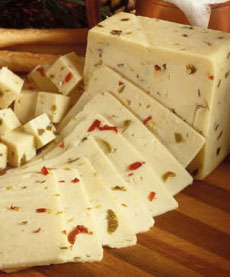
Pepper Jack Cheese
Pepper Jack cheese is an American cow's milk cheese which blends the creamy, buttery flavor of jack cheese with the intensity of spicy peppers, especially jalapeños. Some producers make special varieties of this cheese which are named for the peppers they contain, like habanero jack and serrano jack. This cheese can be used in a wide variety of recipes, and it is particularly popular in the American West, where people have an acquired taste for spicy peppers.
Jack cheese originated in California, where it was originally made by Franciscan monks. An enterprising entrepreneur by the name of David Jacks realized that a market for the cheese could be developed, and he created a distinctive semi-soft, mild, creamy cheese which proved to be a big hit. Jack cheese is also known as Monterey Jack, and it is famous for its delicate flavor, which allows it to be used in a variety of ways.
When producers make pepper jack cheese, they add small pieces of spicy pepper to the curds of their jack cheese, adding a zing to a normally fairly bland cheese. As the cheese ages, the peppery flavor intensifies, with some older pepper jacks being quite zesty. Generally, the cheese ages only for a few months, acquiring a creamy color and a semi-firm texture.
This semi-soft, open textured cheese is spicy to taste yet leaves a delicate and buttery taste in the mouth. It is often eaten with quesadillas, crackers or on hamburgers.
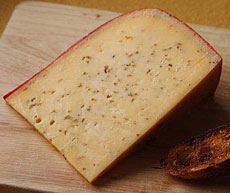
Leyden [LIE-dehn] (curry seed)
Traditionally from the Leiden area of the Netherlands, Leyden cheese was originally developed as a way to use semi-skimmed milk, a byproduct of the butter making process. A way to use the milk was to produce low-fat cheese. Low-fat cheeses could be preserved better than full-cream cheese (such as Gouda, another cheese from the Netherlands), especially at higher temperatures. The farmers in the Leiden area added cumin seeds for flavor and anatto to give it a reddish color. Cumin is an aromatic spice which imparts a strong, smoky flavor. It's spicy and semisoft. As the cheese increases in age, the flavor becomes spicier and tangier.
On the farms, about 5% of buttermilk may be added to the milk, and it is set with rennet at a temperature of 82 to 86°F (28 to 30°C). About 30 minutes later, the curd is cut with a harp, stirred, and warmed to about 92°F (33°C) by pouring in hot whey. The curd is dipped with a cloth and kneaded. Cumin seeds are added to a portion of the curd, and the curd is then put into cloth-lined hoops in three layers, with the spiced curd as the middle layer. The cheese is pressed for about three hours, then it is redressed, inverted, and again pressed overnight. It may be salted with dry salt, or it may be immersed in a brine bath. It is cured in a cool, moist cellar. If the rind becomes too hard, it is washed with whey or salty water.
Great for breakfast or lunch with ham or mild salami. As a snack or cheese course serve with dark bread, crackers, ham, and dark beer or a hearty red wine.
