Strong-smelling Cheeses
Strong-smelling cheeses are called Washed-Rind or Smear-Ripened Cheeses. These cheeses can be hard, e.g. Gruyère, Beaufort, Appenzeller and Comté, semi-hard, e.g. Tilsit, Brick, Fontina, Taleggio, Raclette, and Limburger, or soft, e.g. Münster, Livarot and Reblochon.
One of the most important steps in producing a washed-rind or smear-ripened cheese, like Gruyère or Taleggio, is the curing or ripening process. Cheeses in these categories develop their characteristic flavors and textures from microbial growth on the surface of the cheese. The bacteria that develop are responsible for the unique characteristics of the cheeses' rinds, the reddish color, and pungent smell.
Probably the best known cheese in this category is Limburger, Belgian in origin but often thought of as German due to its great popularity in that country. Cheeses that possess a truly powerful aroma are usually of the washed-rind variety.
For many people the aroma is both the beginning and the end of the acquaintance. The fact is that cheeses such as Limburger, Maroilles and Livarot are extremely pungent smelling, not to say rank, and overpowering. In Limburger's case, its bark is somewhat less than its bite, for the cheese's taste is not as strong as its smell. Maroilles and Livarot, however, are both strong-smelling and strong-tasting, as are the German matured varieties of sour curd cheeses such as Harz and Mainz (the American version of this style of cheese is known as Hand).
Brick and Liederkranz, the two cheeses that are considered genuine American originals, are also noted for their distinctive aromas, but unless well aged they are not overpronounced in taste.
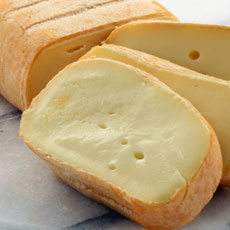
Limburger
(Belgium)
Limberger may be the most famous “stinky” cheese. This washed rind cheese, or aromatic, was originally created by Belgian Trappist monks. It originated in the historical Duchy of Limburg, which is now divided between modern-day Belgium, Germany and Netherlands. In the 1880s, New Yorker Emil Frey copied the recipe for Limburger and created Liederkranz.
This pasteurized cow’s milk cheese has a tangy, creamy, Brie-like flavor with an incredibly pungent aroma. Used for desserts and sandwiches. The bold enjoy it in thick slabs atop dark bread with shaved raw onion, but don't worry: its flavor is remarkably approachable, rich and buttery from whole-fat cows' milk. Goes well with fruit, dark colored breads and crackers. Made in Belgium.
The classic American version is made by the Chalet Cheese Company in Wisconsin.
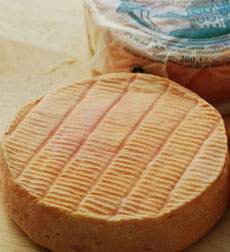
Munster Cheese
(France - Alsace)
Munster cheese is an assertive cheese believed to have originated in the eastern Vosges Mountains of the Alsace region of France. It is a monastery cheese that dates to the early Middle Ages; the name munster derives from the local dialect for monastery (in Latin, monasterium). Made of unpasteurized cow’s milk in small and large flat wheels, munster is the only cheese native to Alsace.
A washed rind cheese, Munster has a very pronounced, powerful aroma. In the five-week to three-month aging period, the rind is periodically washed with brine. It is rubbed by hand with a cloth moistened by a brine solution of rock salt and water (the salt inhibits the growth of mold). This added moisture encourages the development of the bacteria that gives munster its characteristically strong flavors and smells, as well as its “red” rind (actually orange).
When ripe, munster has the aroma of porcini mushrooms and the runny interior evokes truffles. When young, the paste is creamy.
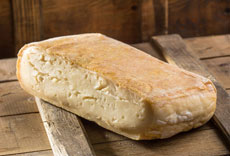
Taleggio
Named after the valley of its origin, Taleggio is tradition incarnate. Its coarse rind is edible, and stands in great contrast to the creamy interior. Together, they create a seamless blend of opposing sensations in terms of both flavor and consistency. The outcome is smooth, and slightly acidic.
Taleggio and similar cheeses have been around since Roman times, with Cicero, Cato the Elder, and Pliny the Elder all mentioning it in their writings. The cheese was solely produced in the Val Taleggio until the late 1800s, when some production moved to the Lombardy plain to the south. Today, the cheese is made from both pasteurised milk and raw milk in factories. The factory-made cheeses are brighter and moderate in flavour.
Made from local cow’s milk, Taleggio uses five different types of mold to produce the red smear that gives it its unique look and flavor. Intense flavors are promoted in the thorough washing of the rind during the aging process, resulting in a strong aroma and a rich yet mellow taste. Soft tones of fruit play in tune with a composition of mild and buttery notes, finishing with a tangy aftertaste that lingers on your palate. Quick to mature, this cheese is ready to eat within 50 days of aging.
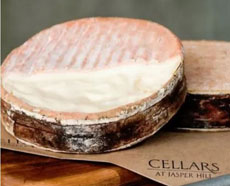
Winnimere
Perhaps the most luxurious (and rarely made out of raw cows' milk!) is the seasonal Winnimere from the Cellars at Jasper Hill in northern Vermont. Winnimere, which can only be found between January and June, has a wobbly panna cotta-like interior encased in a layer of spruce bark. The tree's Christmas-y aroma balances the cheese's intense savoriness.
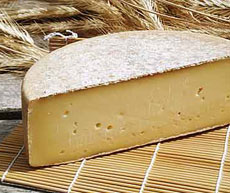
Gruyère
As for hard, aged washed rind cheese, the classiest is Gruyère, such as 1655 or Emmi's Kaltbach. The burnished, rust-tinged rind is evidence that the cheese was washed with brine, in the case of this cheese for a minimum of five months. It trades in pungent stink for intense savory flavors: beef broth and horse stables. Gruyère is typically aged between six and 18 months and it's always made from raw cows' milk.
