Canned/Tinned Fish Guide
from https://www.thespruceeats.com/ and https://www.seriouseats.com/
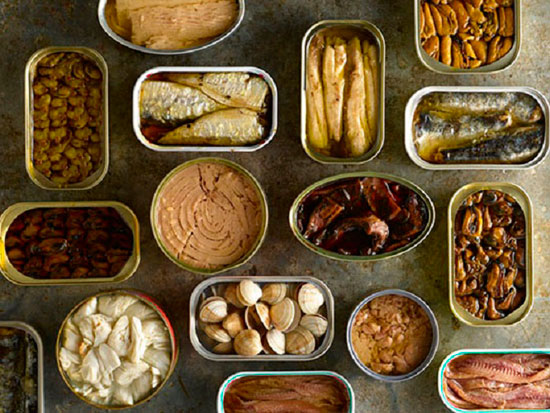
In Mediterranean countries such as Spain and Portugal, canned seafood (conservas), is a delicacy. Yes, that’s correct! You can choose from stuffed squid, mussels escabeche, and scallops marinated in tomato sauce, all canned and stacked on market shelves. Luckily, our canned fish options are expanding and improving, so it’s good to explore and go beyond "Chicken of the Sea." This guide will explain how to purchase canned fish sustainably, as well as define how the various types of fish (sockeye salmon? pink salmon?) taste different from one another. Then, you’ll be able to buy confidently and think creatively, leaving behind those mystery tuna memories.
The Iberians, the region including Spain and Portugal in the Iberian peninsula, preserve seafood by first lightly steaming or frying the product and then canning it in boiling water baths, like any other canned food. But when it comes to the liquido de cobertura (the liquid added to protect the seafood from drying out), their approach is focused on highlighting flavor and texture. Squid are often preserved in their own ink or stuffed with rice and covered in different sauces. Pricey bivalves go untampered with, and are canned in a soft natural brine to mimic the sea, while the more economical mussel usually gets the escabeche treatment—a vinegary brine of garlic, paprika, and bay leaf that was used for preservation long before canning was invented. Blue fish like tuna and mackerel have a dense texture and strong flavor that holds up to oil, and potent sardines are seasoned with every permutation of oil, spice, and tomato sauce the Iberians can imagine.
But why choose canned over fresh seafood? “The best conserva makers are canning fish caught literally the day before,” says Abel Álvarez, the chef and owner of the restaurant Güeyu Mar, and an adjacent small specialty cannery next door, in Spain’s northern coastal region of Asturias. “Why wouldn’t you maintain the freshness of that fish as long as possible?” This idea rings true with most conserva makers and consumers: canning is a way to capture the catch at its peak—a tinned time capsule of unparalleled flavor and nutrients.
Even when considering the environmental effects of transportation, Barrett says the carbon footprint of cans is lighter. Shipping cans of seafood on slow boats across the ocean from the Iberian peninsula is preferred to sending them on a plane (the method used for sending most fresh fish around the world) or on a truck. “When considering that 90% of the seafood consumed in the US is imported, seeking out seafood from canneries using wild and well-regulated fisheries is an alternative worth seeking out,” says Barrett.
A popular grocery or specialty shop item, as noted above, conservas also appear on restaurant menus: In fact, some bars in Spain and Portugal serve nothing but gourmet preserved seafood. The conserva naturally weaves itself into the everyday cuisine of the region, maintaining its place as an essential pantry item for home and professional cooks. Most of the time, the fish is preserved in sauce or olive oil, meaning an abundance of dipping opportunities. Translation: A good baguette is conserva’s best friend. An edible sponge of sorts, the mini loaf of bread can sop up all of the deliciousness at the bottom of the tin. Conserva’s other best friend? Wine, of course.
Fahlstrom’s (Chicago) stocks 29 varieties (which include fish pates), from tuna in olive oil to more exotic octopus in a paprika sauce. Prices span from $5.25 at the lower end (for mackerel pate) to as much as $35.75, for sea urchin roe packed in brine. The restaurant sells the tins for dine-in only, bundled with either soft toasted bread and butter ($3.75) or with a deluxe charcuterie-style tray ($13.45). The latter comes with thinly sliced ham, softened rosemary onions, pungent garlic confit, fruit preserve, a generous serving of bread and a dill-infused mustard.
Crack open a few tins, pull out some bread, and pop a bottle of wine. It’s a great lunch of afternoon snack and can be made into a full-on supper with little more than some added pasta, or complementary items like olives and cheese, a simple salad, or a few vegetable options (ones that also dip well, like asparagus, bell pepper, and other crudités). Have a lemon or two on hand just to be safe, as a splash of fresh citrus can bring some of the simpler fish options to life.
For recipes using canned fish and seafood: Canned Fish & Seafood
Canned Salmon
Salmon is uniquely high in key nutrients like omega-3 fatty acids and astaxanthin, a potent antioxidant that also gives salmon its color. Wild-caught salmon is often more nutritious, less laden with contaminants, and less environmentally destructive than farmed salmon. If the label doesn’t explicitly state that it’s wild-caught—or if it reads “Atlantic” salmon—it's likely farmed. Alaskan and Pacific salmon, on the other hand, have a reputation for being wild-caught and more sustainably harvested. If the can tells you that it’s a product of Asia, it means the Pacific or Alaskan-caught salmon was shipped all the way to Asia for processing, then back again. In this case, your product won’t be as fresh, but you can decide if that’s important to you.
As for how your canned salmon will taste, look for what type of salmon is inside. Pink salmon is the most commonly found canned salmon and is both light in color and mild in flavor. You’ll also readily find sockeye salmon, which has a rich color and taste, as well as a firm texture. Both chum and coho salmon are less commonly found in the can, but they are still excellent options. Chum has a similar flavor and color to pink salmon, but with a firmer texture. Coho salmon has a depth of flavor and color that’s just shy of sockeye, but it contains less fat. Canned salmon often comes with bones and sometimes, its skin. Not only can you eat the bones with little noticeable difference in taste or texture, but you’ll benefit from the heaps of calcium they contain. If you’re in the mood for something casual and easy, try this favorite recipe for salmon cakes (don’t forget the remoulade sauce!).
Tuna
America has had a long-term love affair with canned tuna and in fact, from about 1950 to 2000, canned tuna was the most popular seafood in the nation. But with concerns over high levels of mercury and marine life bycatch, this “chicken of the sea” has seen a dip in popularity. That said, there are safe and environmentally conscious ways to enjoy canned tuna fish. First, it’s good to know that each type of tuna—albacore, skipjack, yellowfin, and tongol—contain varying levels of mercury. Albacore tuna, also referred to as white tuna, is highest in mercury and the FDA recommends that you limit your serving size to no more than 4 to 5 ounces per week. Yellowfin tuna is a bit fuller in flavor than albacore, but its mercury levels are about equal. Skipjack tuna or light tuna, as well as tongol tuna have about three times less mercury per serving, so if you don’t mind their fishier taste, they’re your healthiest options. Use albacore tuna in water for lighter recipes and light tuna for recipes that need a stronger taste.
Tuna Noodled Casserole - definitely use the light tuna, not albacore. I once made it with light tuna and wonder why it did not taste as good.
Albacore is great for Tuna Fish Sandwiches.Tuna Melts
Tuna Croquettes
Macaroni Salad with Tuna Fish
As for sustainability, tuna that has either been pole or troll-caught is best—these are the most precise and least damaging fishing methods.
Anchovies
Commonly caught off the coasts of the Mediterranean, Northern Africa, and Western Europe, anchovies are frequently matured in a brine, then packed in oil or salt. Their flavor packs quite the punch and they're the iconic fish in Caesar salad dressing, as well as Provençal pissaladière. Anchovies are an oily fish and while in the wild, they feed mainly off of plankton so they're about as far down the food chain as you can go. This is actually a good thing in terms of sustainability and toxicity: anchovy populations replenish quickly since their natural life cycle is only a few years long and also, animals lower down in the food chain typically don't build-up toxins like mercury or PCBs in their tissues. Although the vast majority of anchovies are cured and packed in either oil or salt, the variety used for Spanish boquerones are pickled and offer a distinct, yet equally tasty, appeal.
Italians opened the first anchovy canneries in Spain in 1900, preserving the fish in butter to enjoy their favorite snack straight from the can. Eventually they switched to oils, and only a few still use butter. For the best oil-packed anchovies, look to Cantabria (specifically Santoña), a region known for harvesting some of the best anchovies in the world.
Quality Spanish anchovy conservas (like Ortiz), are a far reach from the salt bombs you scatter on pizza or blitz into Caesar dressing. They’re carefully selected, hand-skinned, deboned, and canned with less salt than the common anchovy to let the natural fish flavors shine. Because they have less salt to preserve them, they’re kept in the refrigerator. Throughout Spain anchovies are elegantly strewn onto thin slices of bread or dabbed with a bit of marmalade to contrast the salinity. A tapas spot in the southern city of Seville serves anchovies in a tiny pressed sandwich with sweetened condensed milk. Also try anchovies draped over soft-boiled eggs or roasted broccoli. You just don’t want to cook with these—it's better to savor their delicate texture and flavor rather than dissolve them into a sauce.
Sardines
Sardines are often compared to anchovies for both their similar appearances and flavor. That said, sardines are larger and their flavor is normally less intense since they don't undergo the same curing process that most anchovies do. After they're caught, sardines are either deep-fried or steamed, then either smoked or packed in oil. The former method is the popular choice in Scandinavian countries, while Mediterranean countries like Portugal and Spain prefer their sardines in oil. As for sustainability, sardines are a great choice—they're low down on the food chain and repopulate quickly. Though as a schooling fish, they're commonly caught using the purse-seine method. This is not the most sustainable approach in terms of by-catch, so if eating sustainably is a priority for you, this is useful to know.
Sardines are the symbol of Portuguese cuisine, though they’re popular in both countries. You’ll find cans of small tails, some containing the full loin with skin and bones, or others completely skinned and deboned. You may be inclined to go the cleaner route, but the rich skin and subtle crunch of the spines are part of what make canned sardines so unique.
Also see Ideas for Using Canned Sardines
Mackerel
There are two main types of mackerel conservas. Sometimes referred to as Atlantic mackerel or chub mackerel, these skinned and deboned filets are a great substitute for the can of overfished tuna, as they’re compact and hold up to mixing. Small mackerel (caballita/cavalinha) are also an excellent alternative to the at-risk sardines. Canneries leave these guys intact, preserving them with their spotted skin and bones.
Tejero mackerel is an economical household conserva found in many pantries in southern Spain, but it’s not readily available in the US. Use Atlantic mackerel as you would tuna or in Haun’s sardine formula. Try small mackerel on melon, with oranges and sherry vinegar, or as a garnish on ajo blanco. Again, hold on to that oil for salad dressings and garnishes by pouring it into a small container and refrigerating it until needed.
Squids
Canned squid constitute a ready-made meal if you warm them up alongside a starch. The folks at Güeyu Mar serve their Calamares de Otro Planeta (calamaris from another planet) with a creamy risotto cooked in fish broth and a touch of their sharp local cheese. The grilled squid in its savory ink and sofrito gravy alongside the sweet fat of the cream is a pairing nothing short of otherworldly.
Shellfish
Shellfish is a catch-all term, encompassing mollusks, crustaceans, and even echinoderms. Although all three types of shellfish can be found canned or jarred, the most common in the states are mollusks and crustaceans. Unlike fish, shellfish often pose far less ethical and health concerns, making them a great option if you’re not in the mood to do any homework. Bivalves, like mussels, clams, and oysters feed by filtering nutrients from their environment, so even when they’re farmed, farmers aren’t pressured to buy cheap and often low-quality food to keep their farms running. Crustaceans, particularly shrimp, are unfortunately often sourced from unclean, unsustainable sources, so if you can’t be sure your product has been wild-caught, skip buying it. Often, shrimp from the United States or the Gulf of Mexico are a good bet. If this were a fresh shellfish guide, it would be worth the time to learn about the different species of shellfish, but with canned shellfish, it’s more about how they’ve been prepared and packed. Perhaps you’d like to remix your favorite chowder with smoked clams. Or take olive oil-packed oysters, which you can spread on French bread with a shake of Spanish paprika.
Mussels
Galicia produces the best mussels in the peninsula and the canned version’s texture is vastly different from the fresh; they're soft and velvety rather than rubbery. They’re commonly preserved in escabeche and come in two sizes, the bigger the better. These large guys mature longer on the rocks before they’re harvested, becoming plump and firm enough to hold up really well to preservation without disintegrating. Additionally, look for ones that say “fritos” (fried before canning), as frying them adds to their pleasantly meaty and juicy texture.
Toss them into pasta with garlic, lemon, and fresh mint, or do what Sevillano Luis Blanco does with a can of giant Iglesias mussels at his restaurant, Salsamento, and perch them on a pile of potato chips for a swank sea nacho. Save the remaining oil to make into mayo or drizzle over roasted vegetables.
Cockles & Clams
Cockles and clams are actually some of the most approachable conservas. Steamed and preserved in a simple brine, each is a tender morsel with none of the chewiness that can be off-putting in over-cooked fresh molluscs.
Eat clams in raw salads with lots of good olive oil or toss them into a light pasta at the last minute. Cockles are best chilled for 15 minutes with a few splashes of white wine vinegar or served ceviche-esque with red onion and cilantro, mixing the brine with the lime.
Crabmeat
While there are many subcategories and fine distinctions in the area of canned crabmeat, there are a few main categories. Knowing these will help you save money when deciding what type of crab meat to purchase for the meal you’re planning. Lump crabmeat is best for fancy, impressive-looking dishes where appearance matters, like Butter-poached Crab, Crab Cakes or Crab Louis, where you want big chunks that will hold together with minimal binders. Backfin grade is made up of smaller, broken chunks of lump crabmeat mixed in with flakes of white body meat. It’s less expensive than lump crab meat. Good for salads and pasta dishes. Claw Crabmeat is the least expensive and most flavorful grade. It is pinkish-brown rather than white and has a hearty crab flavor that doesn’t get lost under seasonings. Great for soups, crab meat stuffing, tacos, stir-frys, etc.
