What Is Imitation Crab?
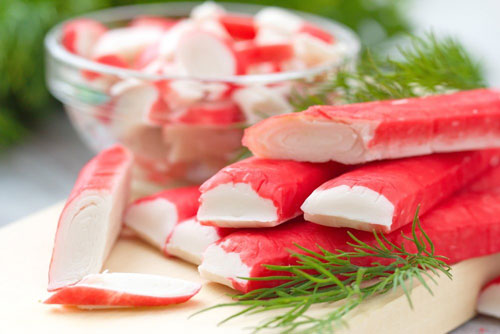
Who doesn’t love sweet, briny crab meat? Unfortunately, that kind of fresh-from-the-ocean haul can be cost prohibitive. That’s why several decades ago, food manufacturers and chefs went looking for a less expensive alternative to the much sought-after shellfish. In the 1970s, the Japanese introduced imitation crab, a processed seafood proxy that tastes and looks like the original. Japanese chefs originally created surimi to make use of extra or leftover fish fillets.
In 1975, Osaki Suisan Co., Ltd., of Japan first produced and patented imitation crab sticks. In 1977, The Berelson Company of San Francisco, California, US, working with Sugiyo, introduced them internationally. Kanikama is still their common name in Japan, but internationally they are marketed under names including Krab Sticks, Ocean Sticks, Sea Legs and Imitation Crab Sticks.
This crab stand-in has become popular over the past few decades and is commonly found in seafood salad, crab cakes, fast-food seafood sandwiches, California sushi rolls, and crab rangoons. In short, imitation crab is processed fish meat — in fact, it’s sometimes called “the hot dog of the sea.” However, you may still wonder what it’s made from.
Imitation crab is made from surimi — fish flesh that has been deboned, washed to remove fat and unwanted bits, then minced into a paste. This paste is blended with other ingredients before being heated and pressed into shapes that mimic crab meat. Once the surimi paste is made and piped into molds, a thin coat of orange food dye is painted onto the exterior in order to mimic the crab’s natural hue.
While imitation crab is made from seafood, it generally contains no crab — other than a tiny amount of crab extract that is sometimes added for flavoring. Pollock, which has a mild color and odor, is commonly used to make surimi. This fish is also used to make fish sticks and other breaded fish products.
Packages of crab-like products may be labeled “imitation crab,” “crab-flavored seafood” or “surimi seafood” but must follow government labeling rules. In Japan, surimi-based seafood is often called kamaboko.
Nutritionally, these are two very different products. Real crab meat has almost three times the protein of imitation crab. (A three-ounce serving of crab has 16 grams of protein versus only 6 grams in imitation examples). Additionally, artificial crab has more sodium and sugar. And people with gluten sensitivities should avoid the faux fish product as it is often processed with starch and other gluten-based thickeners.
How to Tell if Your Crab Is Real or Not
The easiest way to know if what you’re buying is real or not is to read the label. Imitation crab is often labeled as “crab sticks” or “krab,” if not clearly marked as “imitation.” If the front of the carton isn’t clear, be sure to flip the package over and read the ingredients. Processed crab typically only two components—crab and water (it may also include citric acid or another ingredient to prevent discoloration)—whereas imitation crab meat has a litany of ingredients.
In a pinch, you can use imitation crab in any recipe that calls for the real thing, and you’ll save money in the process. It cooks and tastes almost identical to real crab meat, so use it in salads, spreads, and sandwiches to taste a bit of the sea any time of the year.
