Types of Onion
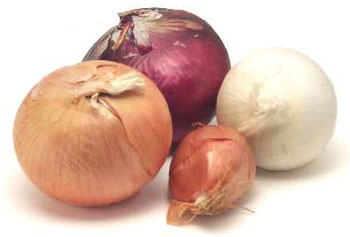
Because there's such a wide variety of onions, it's helpful to know what characteristics to consider in selecting them. Onions tend to be called simply yellow, red or white onions, but there can be a lot of difference between them.
Sweet vs. Pungent
Grouping onions according to taste is one way to select onions. There are two categories of dry onions: the strong-flavored storage onions and sweet onions which are milder and usually bigger. Mild varieties are sometimes called "European" onions. These include the kinds we slice for hamburgers and onion rings, like 'Sweet Spanish', 'Vidalia', 'Walla Walla', 'Bermuda' and the big red onions. Storage onions are more pungent and flavorful than sweet onions, and they're best if cooked before eating, while sweet onions are usually served raw or lightly cooked. The different types of fresh onions are mostly recognized by their color.
When onions are eaten raw, they can have a sharp taste that some people may find overpowering. To reduce the sharpness and make the onion more palatable, it can be sliced and soaked in cold water for about 10 to 20 minutes to mellow out its flavor. If the onions are cooked, they release their natural sugars and have a sweeter taste.
Onion Storage
Onions vary in keeping qualities, too. For an onion that you can keep long after the growing season, the strong-flavored, yellow ones are your best bet. Storage onions are low in water (prevents molding during storage) and high in sulfur, so they store well and are available year-round. They're the most widely grown in this country and they keep extremely well. Commercial growers like these onions because they store them for long periods of time and ship them long distances. 'Stuttgarter' and 'Yellow Globe' are examples of onions you can bag and hang in your root cellar in fall that will last through the winter and following spring. The milder Bermuda, Portugal and Spanish onions won't keep that long. They don't develop the really firm outer skin needed for long storage. In fact, some white Bermuda onions will keep for just a few weeks. Sweet onions are usually available just from March to August though some producers extend the season by storing them in a low-oxygen environment.
Storage Onions - These onions are available year-round. Since storage makes onions more pungent, these onions are usually cooked before eating. This category includes the yellow onion, white onion, red onion, Spanish onion, and Bermuda onion.
Sweet Onions - Due to their high sugar content these onions are mild and crisp, so they're the onions of choice for slicing raw on burgers and sandwiches, adding to salsas. They can be lightly cooked, too, though they're not as pungent and flavorful as storage onions. There are several different varieties, often named after the region in which they're grown. The most popular include Vidalia, Walla Walla (Spanish onion), Sweet Imperial, Texas Spring Sweet, Texas 1015Y, Carzalia Sweet, Oso Sweet, Arizona, Granex, and Maui. Sweet onions are usually larger than storage onions.
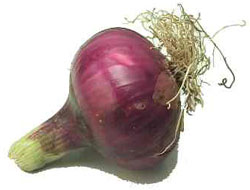
Bermuda Onion
These bulb-shaped onions have a sweet mild flavor. They're available in the spring. This large, flat, mild onion is popular for use on hamburgers and sandwiches.
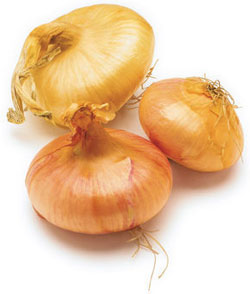
Cippolini Onion = Borettana onion
Pronunciation: chip-ah-LEE-nee
These round, flat Italian onions are about one to two inches in diameter. They're available in the fall. This mild flavored onion will hold until late winter. The small, flattened shape makes this an excellent braiding onion. Onion braids are hung where air can circulate freely around the braid. Air circulation prevents mold and disease making this a superior storage method.
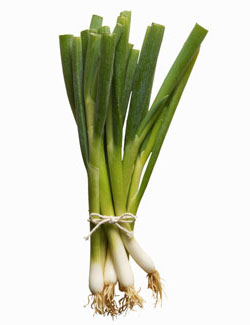
Green Onions
These are onions that have small bulbs and long green stalks. They're usually eaten raw, but you can also grill or sauté them.
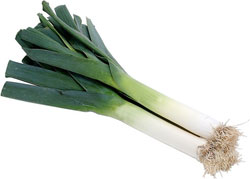
Leeks
Leeks look like large green onions, and they have a more complex onion flavor. They're often cooked as a vegetable side dish, or used in soups. Be sure to wash them thoroughly before cooking as the leaves are notorious for collecting dirt.
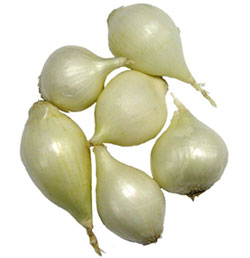
Pearl Onion
These tiny onions are sweet and mild. About one inch in diameter, they're often pickled or creamed. These small, mild and sweet onions are used in cocktails, for pickling and for creamed onions.
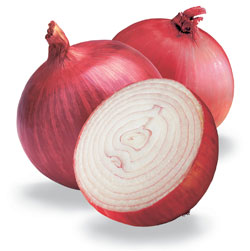
Red Onion
Red onions, sometimes referred to as purple onions, are deep purple in color. These are sweet enough to eat raw, and they're often used to add color to salads. Red onions are perfect for onion rings on a burger (raw or grilled), diced raw into a salad, or cooked into a dish for depth of flavor. Varieties include the sweet red Italian onion, Italian red onion, creole onion, and red torpedo onion.
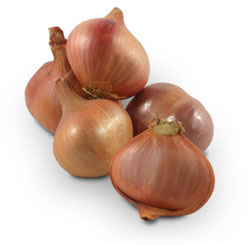
Shallot
Australians use the term shallots to describe green onions, but to Americans, shallots are shaped like small brown onions with papery brown skins. They have a more delicate, garlicky flavor than other cooking onions, and are a common ingredient in French sauces. Many people find them too hot to eat raw. They're available year-round. Shallots have a rich yet delicate flavor and are more concentrated than onions, so one shallot goes a long way. The flesh of this rich-flavored bunching onion is streaked with red or purple. Mature bulbs are about one inch in diameter. They do not store as long as onions.
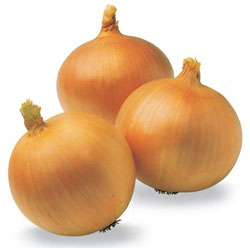
Spanish Onion
A Spanish onion is like a yellow onion but larger and generally a little milder and sweeter. This type of onion can be substituted in pretty much any dish that calls for a regular white onion or yellow onion, and will add a bit more mellowness and sweetness to the dish. A Spanish onion can be sweet enough for many people to eat raw, and when cooked becomes sweeter and turns a dark caramel color.
Bloomin' Onions
*Beer Battered Onion Rings
*French Onion Soup
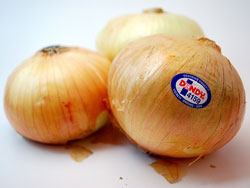
Vidalia Onion
Vidalias are large sweet onions widely available in the spring and early summer across the United States and Canada before they sell out. The onions were first grown near Vidalia, Georgia, in the early 1930s. It is an unusually sweet variety of onion, due to the low amount of sulfur in the soil in which the onions are grown.
Baked Onion w/ Bouillon
*French Onion Soup
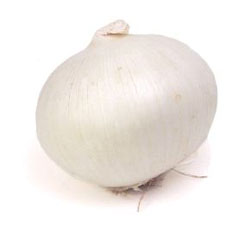
White Onion
These popular cooking onions tend to be the largest of the onions, with thin papery skin and a strong flavor, making them common in Mexican dishes and ideal for sautéing and roasting, which mellows their robustness. These are often called for in Hispanic dishes, since they have a cleaner, more pungent flavor than yellow onions. White onions can be cooked just like yellow onions and be used for extra kick in salsas. They're slightly more prone to mold than yellow onions, so store them in a dry, well-ventilated place.
Bloomin' Onions
*Beer Battered Onion Rings
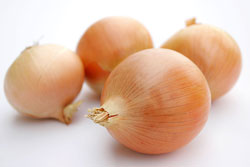
Yellow Cooking Onion = yellow storage onion
Suitable for most cooking, yellow onions are great to have ready in the kitchen. This is what most cooks reach for when a recipe simply calls for "onion." Yellow onions are the most common type of onion and generally considered all-purpose. The skin outside is a golden color, with a lighter flesh inside. It's higher in sulfur than the white onion, so it has a more complex flavor. The sulfur, unfortunately, is also what makes you cry when you cut into it.
Yellow onions have a strong, pungent flavor and smell and can be cooked or used raw. Many people find them too pungent to eat raw. They turn a rich brown and become sweeter and milder when cooked. Storage onions typically have the best cooked flavor. Outfitted with a darker, heavier skin than others, they are ideal for roasting or caramelizing and using in soups and stews.
