Types of Winter Squash
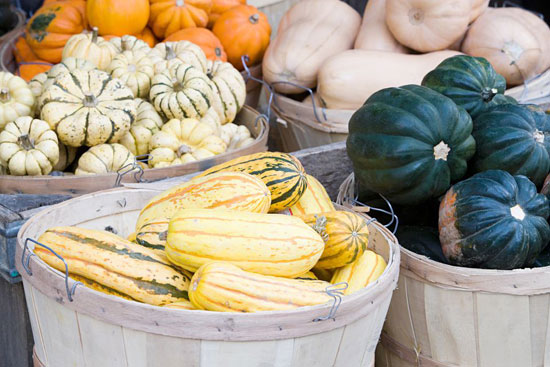
Marrows, squashes and gourds are all part of a large family of edible gourds that grow on vines. It is possible that squash was the very rst food to be cultivated by Native American Indians; it seems at least to have been the rst within what has been called the Indian triad - maize, beans and squash. Winter squash are slower growing than summer squash varieties, with months passing from the time they blossom until the time they are mature and ready to be harvested in the fall. Their dense sweet esh re ects a whole summer of accumulating energy from the sun and soil.
Winter squash is an annual fruit representing several squash species within the genus Cucurbita. It differs from summer squash in that it is harvested and eaten in the mature fruit stage when the seeds within have matured fully and the skin has hardened into a tough rind. The thick, tough shells protect the sweet, rich flesh inside which makes them excellent storage vegetables. Some varieties are available year-round, but their natural season runs from late summer to mid-winter. Winter squash is generally cooked before being eaten and the skin or rind is not usually eaten as it is with summer squash.
No matter what variety of winter squash or pumpkin you choose, always pick winter squash that feel heavy for their size. Regardless of the type, to get the best quality, select winter squash that are blemish- and bruise-free, with an intact stem and heavy feeling for their size.
Winter squash are often cooked and eaten on their own simply with salt and butter added. They also go well with other seasonings, such as cinnamon, ginger, cloves, and allspice. Some winter squash are sweetened by adding brown sugar, maple syrup, and honey. Winter squash can be added to soups, stews, curries, casseroles, and other dishes. They can be mixed with other vegetables and be used to replace sweet potatoes in most recipes. Winter squash are also used in pies, muffins, cakes, puddings, and other desserts.
Naturally low in fat and calories, the winter squash family delivers significant nutritional benefits. For example, one cup of baked butternut squash is rich in vitamins A (from beta carotene), B6, C, and E, as well as magnesium, potassium, and manganese. Flavors are generally mild-to-sweet, so squash won't overwhelm other ingredients and can easily be incorporated into your seasonal cooking. The orange and yellow flesh helps brighten dishes—a definite bonus, especially in the colder months, when variety and color can be hard to come by in seasonal produce.
Acorn Squash
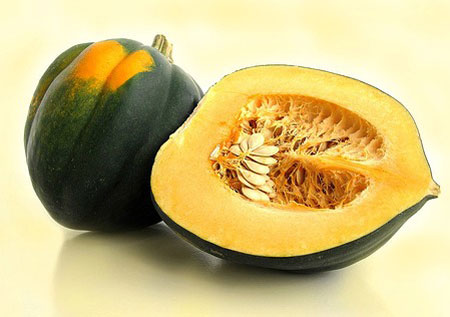
This small green squash with even groves is one of the most commonly found on the Thanksgiving dinner table. One of the sweetest varieties, the small acorn squash keeps for one or two months, thanks to its thick skin. The skin can be tough to peel, but easily separates from the flesh after cooking. They tend to weight between 12 ounces and 2 pounds.
The slightly dry, orange colored flesh of the acorn squash have a definite nut-like flavor.
You can roast it skin-on, whether halved and or cut into wedges. They are also good for steaming, mashing, and sauteeing. Smaller ones are perfect for stuffing and make an excellent vegetarian main course for special occasions like Thanksgiving.
Their large seed cavities are perfect for stuffing, and they are best when baked.
Blue Hokkaido Squash
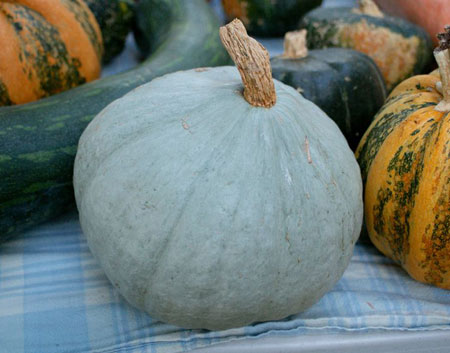
A lovely pale blue on the outside, this sweet, versatile squash looks like it’s straight out of Cinderella. A staple in the Japanese kitchen, the rich, sweet-fleshed kabocha is unpleasantly starchy unless it is cooked long enough to bring out its sugars. Kabocha's mottled green skin looks tough, but it's actually edible when cooked, so it's often left on in Japanese dishes.
Blue Hokkaido squash is a type of pumpkin. As if the gray-blue skin giving way to bright orange flesh weren't a selling point all on its own, these squash have a wonderfully subtle sweet and deeply nutty flavor that stands on its own better than any winter squash.
Roast it cut into wedges but unpeeled, with a bit of salt and butter, the Blue Hokkaido is delicious. The contrast between blue rind and orange flesh looks great on the plate. It also makes a wonderful vessel for a dramatic stuffed squash and its flesh mashes up nicely into baked good or soups. Kabocha is often steamed or simmered, which adds moisture to its dry flesh.
Similar to the dark green kabocha is the deeply red-orange ambercup squash, which can be treated in the same way.
Butternut Squash
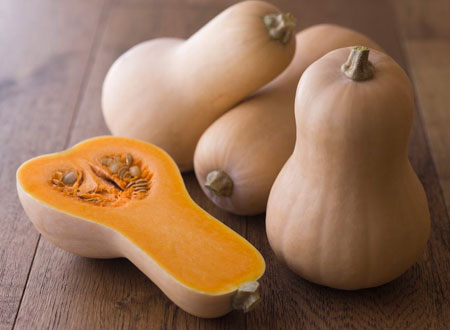
A slim neck and bulbous bottom give the butternut squash its distinctive pear shape. The pale tan rind hides bright orange-yellow flesh with a relatively sweet taste. A butternut squash can keep for up to six months. Look for one that sounds hollow when you knock on it, and has a beige skin bearing no greenish cast. They usually weigh between 2 and 3 pounds.
Butternut squash is one of the sweetest winter squash. The smaller squash tend to be the sweetest. Its flesh is thick and moist and hides very few seeds; its peel is comparatively thin and easy to peel. The flesh of the butternut squash is a deep orange color, with a distinctive butterscotch flavor that most people find delicious.
Its sweet, nutty flesh works well in baked, boiled, and steamed preparations, but it's particularly well suited to deep roasting. Butternut squash plays especially well with sage. Best of all, is mashes and purees smoothly, with no thick strands or fibrous bits, making it perfect for butternut squash soup or pumpkin pie.
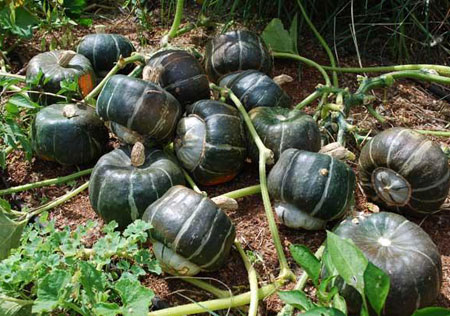
Buttercup Squash
A winter squash, typically weighing 5 to 7 pounds, that is round in shape and grows with a very distinctive protruding ring around the flower end opposite the stem end. On some, the ridge may surround a more pronounced bump, or "turban." Compact and green with paler green striations, the buttercup can closely resemble a kabocha squash. Although the buttercup is very close in appearance to the kabocha, the texture of this compact squash is much drier and the flavor much more mild than its nutty and sweet look-alike.
Although it looks quite different from the butternut squash the buttercup has a very creamy, orange colored flesh much like that of the butternut. Its flavor is not as rich as the butternut, but is still quite sweet.
A freshly cut buttercup may smell like a clean, fragrant cucumber, but once cooked, its orange flesh becomes dense, a bit dry, and very mild. Thanks to its dense character, the hearty buttercup is best cubed and cooked into stews, boiled, steamed, or roasted until tender, or can be or worked into baked goods and casseroles.
It will keep for two to four months.
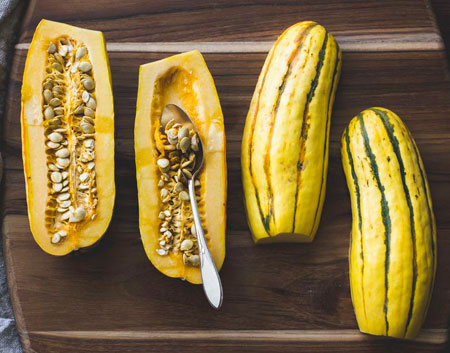
Delicata Squash
This particular winter squash, with its pale yellow shading and green stipes, most closely resembles its summer squash cousins. Delicata squash is small, oblong, and cheerfully striped in bright yellow, dark green, and orange. The peel is exceptionally thin and is, in fact, edible. Because of its thin skin, however, it does not store as long or as easily as other winter squash. They'll keep for up to a few weeks. This squash is available year round, but best during August to October. Size may range from 5 to 10 inches in length.
Delicata and sweet dumpling squash are two forms of the same squash, differing only in shape—delicata is cylindrical, while sweet dumpling is squat and round.
The delicata squash has a moist, creamy yellow flesh that tastes and smells like a blend of corn, butternut squash and sweet potato. It is often referred to as the sweet potato squash. One of the milder, less sweet winter squashes that’s so tender you can eat the rind.
When cooked, the delicata has a consistency similar to that of a sweet potato—creamy and soft—although the flavoring is a bit more earthy. They are best eaten when steamed or baked, and even grilling. It is particularly delicious roasted with butter or stuffed and baked.
For a decorative effect, take advantage of this squash's ridges by slicing width-wise to create scalloped circles or halves; small- to medium-size delicata work best.
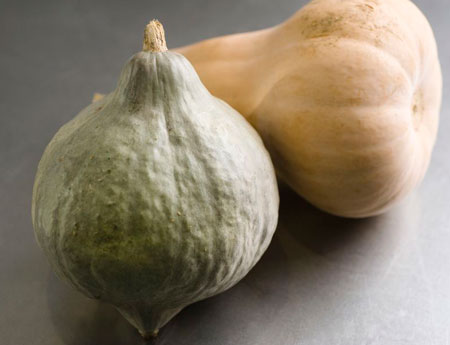
Hubbard Squash
Most blue Hubbard squash are huge, bumpy, and lumpy. They are slightly tear-shaped with dark green to pale grayish blue skins. Though the squash can grow up to 20 pounds (!), the best specimens for cooking are around three or four pounds. They sweeten as they're stored and their extra-thick skins help them store through the winter (up to five months if kept properly cool and dry).
A particular variety, the Blue Ballet, is much smaller, making it easier to store and prepare at home. Underneath the gray-blue skin is sweet-tasting orange flesh. Hubbard squashes come in a whole range of colors—they can be grayish-blue, dark green, orange, or golden.
Because of their size, hubbards are often sold in pre-cut and seeded chunks of a size more appealing to home cooks. The thick skin on a hubbard squash can be extremely hard and difficult to peel; on the plus side, that means it can keep for a very long time (up to eight months), and makes it well suited to stuffing and baking.
The hubbard squash has a very sweet, dry orange flesh. Hubbards are remarkably sweet with a clear pumpkin flavor. They are excellent in pumpkin pies, and actually have a thicker, firmer texture than fresh pumpkin, they "set up" easier and require less sweetener than pumpkin. Hubbard squash are at their best when roasted. Try them seasoned with rosemary and black pepper or roasted and then mashed with plenty of butter and warm spices like cumin or nutmeg.
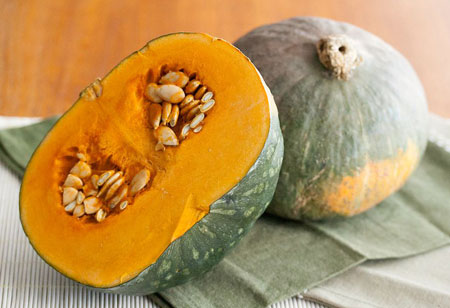
Kabocha Squash
This green Japanese pumpkin is available year-round. Kabocha squash are large, round, and squat. They are dark green and mottled, often with bumpy skin and make lovely table decorations.
The red kabocha is squat, like its green counterpart, and has faint white stripes running from top to bottom. While the two are interchangeable, the green kabocha is relatively savory, and the red kabocha is unmistakably sweeter.
The orange color flesh of the kabocha squash is very sweet and rich tasting and is reminiscent of a sweet potato in color. Its texture is floury dry, like a balance between a sweet potato and a pumpkin. It has the highest sugar content of any squash, and is excellent baked as a side dish or stuffed.
Kabocha squash have a remarkably sweet and tender flesh with a slightly nutty flavor. The peel is really more of a rind and is difficult to cut. The dense, smooth, sweet flesh is so tasty it needs very little fuss in preparation. Roasting it or slicing and baking it with a bit of butter or oil and salt are all this delicious squash needs. The dense flesh also holds its shaped with cooked, even in liquids, which makes it perfect for using as chunks in soups or steamed dishes. It pairs well with ginger and sesame as well.
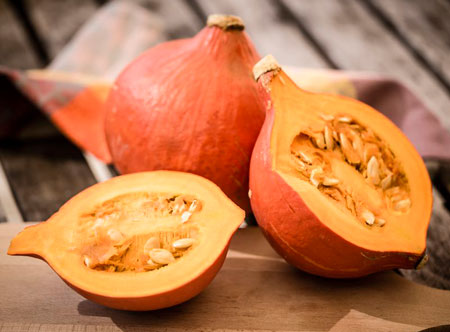
Red Kuri Squash (type of Hubbard squash)
Another hubbard variety is the red kuri, which is miniature compared to the blue hubbard and has a distinctive chestnut flavor and starchy texture. Like all Hubbards, the red kuri has an asymmetrical, lopsided look to it. And like the Blue Ballet variety, the red kuri is smaller and easier to handle. Its yellow flesh is smooth and has a chestnutlike flavor.
Its edible skin is much easier to peel than the larger Hubbards, but we take it off for purées so that they're smoother,
The red kuri squash has a very rich, sweet flavor that almost has a spiciness to its taste. Although not as thick in texture as the kabocha, it still holds together well and is excellent either baked either whole or split.
This teardrop-shaped beauty goes well with something creamy, like dairy or coconut milk, and is best cooked unpeeled.
Red Hubbard.
The Red Kuri squash, also called Hokkaido squash, looks like a small, red-orange pumpkin without the deep ridges in the sides. The flesh is bright orange and has a mellow, somewhat nutty flavor. The flesh is good in soups or baked goods, and the Red Kuri's small size makes it perfect for stuffing and roasting. This Spiced Butter Squash recipe works with pretty much any winter squash, but is particularly delicious with the nutty flavor of Red Kuri.
Also known as Orange Hokkaido or Uchiki Kuri squash. Inside the hard outer skin there is a firm flesh that provides a very delicate and mellow flavor similar to the taste of chestnuts.
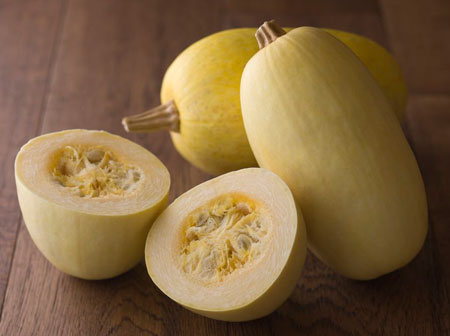
Spaghetti Squash
Once cooked, the creamy golden flesh separates into miles of swirly, crisp-tender, spaghetti-like strands. The taste by itself is rather bland, but used as a pasta substitute with your favorite sauce and this squash comes to life, with far fewer calories than pasta as well!
Take a fork to the inside of a cooked spaghetti squash, and you'll understand how this variety got its name. By scraping the flesh, you'll get "strings" that closely resemble noodles. If you're in search of a healthy pasta alternative, try this very mild-tasting squash.
Spaghetti squash are all about the texture. Once cooked the flesh pulls apart into thick, slightly crisp, noodle-like strands (see how it's done at How to Cook Spaghetti Squash). Many people then serve it with tomato sauce. I don't find that's the best use of this mild and only slightly sweet squash. Instead, try Roasted Spaghetti Squash with a bit of butter and salt. Or, use the strands more like rice noodles in this Spicy Spaghetti Squash "Noodles" With Pork. It is also delicious cooked in a gratin or casserole in a creamy sauce or with plenty of cheese, as in this swoon-worthy Spaghetti Squash With Jalapeño Cream. Spaghetti squash are large, weighing in between 3 and 5 pounds, with pale yellow-white skin.
The flesh of the smooth-skinned and appropriately named spaghetti squash cooks into translucent strands that have become a pasta replacement among the gluten conscious. The yellow squash's mild flavor borders on bland, so it takes to pasta-like preparations in which the flesh is doused in flavorful sauces, such as in this recipe for spaghetti squash with sausage, kale, and sun-dried tomatoes. You can make the sauce while the squash is roasting; the strands will easily pull away from the skin once it is fully cooked. Its skin is thinner than that of some other varieties, so it keeps for only two to four weeks.
It can be cooked by baking, boiling and steaming. The larger the squash, the thicker the strands.
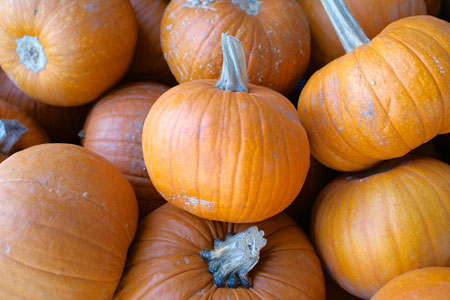
Sugar Pumpkin
Pumpkins! Yes, pumpkins are winter squash. Field pumpkins, like those used for jack o' lanterns, have dry, flavorless flesh. They can be used as baked tureens for soup, but are otherwise best left for carving and decoration.
Save the big jack-o'-lantern pumpkins for carving—they're watery and not flavorful enough for cooking and eating. If your Halloween pumpkin was small and squat, chances are it was a sugar pumpkin. The "sugar pumpkin" label indicates you've found a sweet, creamy-fleshed baking variety. But more than just decorative, sugar pumpkins are prized for their classic pumpkin flavor, as well as for their thick and flesh-packed walls. If you'd like to opt out of canned pumpkin for your baking and make your own purée instead, reach for a sugar pumpkin.
Look for small, dense ones that are about four to five pounds labeled sweet, sugar, or cheese pumpkins. The skin is easier to peel than on varieties like Hubbard, so they won't keep for as long, but prep is a bit quicker.
The obvious use for them is a homemade pumpkin purée for a classic smooth pumpkin pie. But, like other winter squash, they also work nicely in stews, stuffed and baked, or puréed into a soup. The smaller specimens can be hollowed out, roasted until tender, and filled with savory custards or small portions of soup for a fun dinner party treat.
Generally thought of only as a cooked vegetable, pumpkin can be eaten raw and is delicious when very finely grated and served in combination with grated carrots and beets as a base for salads.
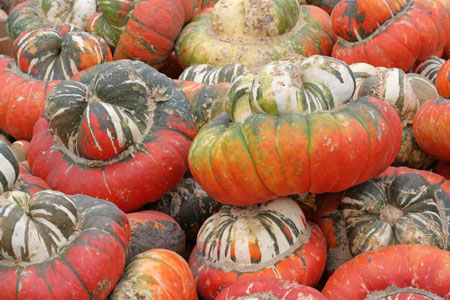
Turban Squash
Although often used as a gourd for decoration purposes, the turban squash is very edible. Its orange-yellowish flesh is very sweet with a hazelnut-like flavor that most people find very delicious. Its texture is dry.
Turban squash come in lovely, irregular, turban shapes and a range of mottled green, orange, and yellow colors. They have interested bumpy skin and are widely used as decoration. They can, unlike decorative gourds, be roasted and eaten. They have a floury texture that works well in soups, and large ones make excellent edible soup tureens when roasted until tender and filled with soup. Turban squash have a mild flesh that takes well to a wide range of seasonings.
Similar in flavor to the buttercup, the turban or Turk's cap squash is visually striking. It typically has a broad, deep-orange bottom and a smaller top knot with colorful streaks of orange, as well as white, yellow, or pine-green. Delicate and nutty, the turban squash keeps for two or three months, and is best baked or steamed.
The whole squash is often used as a decorative table piece or as a tureen that is filled with squash soup. Firm textured, the inner golden flesh has a delicious hazelnut flavor after being baked or steamed.
Other Squash
Carnival squash
Calabaza Squash
