Golumpki: Stuffed Cabbage
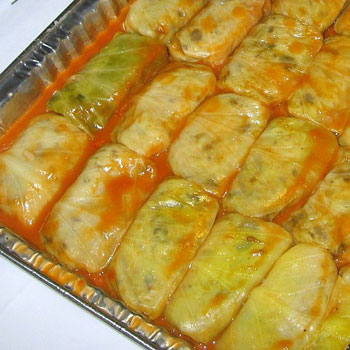 Golumpki, also called stuffed cabbage, cabbage rolls or "pigs in a blanket," is a dish consisting of cooked cabbage leaves wrapped around a variety of fillings. It is common to the peasant cuisines of Europe and Western Asia, and has also found popularity in areas of North America settled by Eastern Europeans.
The filling is traditionally based around meat, often beef, lamb or pork and is seasoned with garlic, onion and spices. Grains such as rice and barley, eggs, mushrooms and vegetables are often included in the filling as well. Pickled cabbage leaves are often used for wrapping, particularly in Southeastern Europe. As only the largest leaves can be used, small pieces of cabbages are often mixed into the stuffing and sauce. As the dish originated as a way to use leftover food, other ingredients may also be used in the stuffing.
Cabbage leaves are stuffed with the filling which are then baked, simmered or steamed in a covered pot and generally eaten warm, often accompanied with a sauce. The sauce varies widely by cuisine.
In Eastern Europe, tomato-based sauces or plain sour cream are typical.
In Finland and Sweden, stuffed cabbage is often served with bittersweet lingonberry jam. A classic combination of minced pork and rice makes the perfect Swedish version of a cabbage roll. The original recipe made use of vine leaves but was adapted to use cabbage when vines leaves were unavailable or too expensive. A popular addition to this dish include mashed or boiled potatoes, a creamy gravy made from beef broth and sour cream, and lingonberry jam, a tart yet sweet addition to the meal.
Cabbage rolls are the epitome of Polish cuisine, and combine beef and pork meat with barley or rice inside their cabbage leaves. These cabbage rolls are cooked in the oven, accompanied by a delicious tomato-based sauce. Typical Polish side dishes that work well with cabbage rolls include: mashed potato, honey-glazed roasted carrots, sautéed wild mushrooms or Polish potato pancakes.
The Romanian version of the cabbage roll showcases the flavours of ground pork and caramelised onions. They created this delicious meal with sauerkraut, enhancing the flavour even more. Great Romanian side dishes that pair well with cabbage rolls include: mashed potatoes, green beans with a tomato sauce, baked mushrooms or roasted eggplant.
In Lebanon it is a popular plate, where the cabbage is stuffed with rice and minced meat and only rolled to the size of cigar. It is usually served with a side of yogurt and a type of lemon and olive oil vinaigrette seasoned with garlic and dried mint.
In Hungary, the cabbage rolls are often simmered on top of a bed of cabbage and sauerkraut with pieces of smoked ham hock tucked in between. They are filled with minced pork meat and served with sour cream and paprika. The best way to enjoy this version of the cabbage roll is to serve it with mashed potatoes and applesauce Add some delicious buttered bread rolls for dipping to really top it off well. See recipe for Hungarian Stuffed Cabbage.
In Croatia, cabbage rolls are a staple diet of the population. The popularity of the dish has only recently been surpassed by a love for a hearty bean soup. Stuffed Cabbage with ground smoked pork is a firm Croatian favorite at Christmas.
Typical Ukrainian cabbage rolls can be made from either pickled or parboiled cabbage leaves. Fillings traditionally contain rice only, since the typical peasant diet was largely vegetarian due to the higher cost of meat. Occasionally, the rice filling is mixed with small amounts of meat. Other recipes call for cooked kasha and chopped wild mushrooms or, more recently, combinations of whole grains and root vegetables. Some modern recipes call for tofu or textured vegetable protein instead of meat. The finished rolls may be simmered in thinned tomato juice, beef stock, vegetable stock, or even miso broth.
The Russians are famous for a ‘lazy style’ cabbage roll, where the cabbage is chopped up and mixed with minced meat and cooked buckwheat or rice. This mixture is stewed with a sour cream and tomato sauce to create a quick and easy meal. This cabbage roll alternative will pair well with: Russian knish, baked or fried potato dumpling, simple Russian pancakes.
Made popular in the USA by Polish immigrants, Americans have their own unique take on cabbage roll dishes. The descendants of Polish and Jewish East European immigrants have inherited the cabbage roll recipes of their families, adapting where necessary to fit their family’s preferences. They are usually made with ground beef or chicken, and hardly ever use pork since American cabbage roll recipes descend from Jewish families. Seasoned with dill, onion, lemon juice, brown sugar, garlic, paprika and allspice, and paired with tomato-based sauces, these cabbage rolls are filled with ground meat and rice.
Typical sides fround in the U.S. are mashed potatoes, boiled potatoes, pierogies (boiled potato stuffed dough) and bigos (meat and sauerkraut stew), rye bread and butter. Peas would go well with the mashed potatoes. A cucumber salad would add freshness. Other suggestions, for a bigger meal, are potato pancakes, kielbasa, schnitzel (breaded pork cutlet). Kielbasa or smoked ham hocks could be stuck between the cabbages as they cook.
*Stuffed Cabbage
Recipe by Martha Stewart
FMM: Brian and I made these, minus the apple and sour cream, and they were excellent. We also added paprika to the sauce. While we didn’t put sour cream in the sauce at the end, we did serve it on the side and put a little on the stuffed cabbages as we ate them, which was good. We should try mixing it in the sauce next time. White rice (not convereted rice) works best for these due to the stickier quality of the rice. The filling tends to stay together better. Some recipes add an egg as a binder, although many Polish recipes do not.
When Martha Stewart was growing up in Nutley, New Jersey, her grandmother often made a Polish version of stuffed cabbage leaves called golabki. The filling was a simple one -- rice and meat with onions, garlic, celery, cloves, and green apple -- but the dish was as tasty as it was comforting. Served with a hot tomato sauce and creamy sour cream, it's a perfect meal for the winter season. [Paprika is often added to the tomato sauce for flavoring.]
2 quarts water (reserve some of the cabbage cooking water, see recipe)
1 large green cabbage (about 2 1/2 pounds)
2 tablespoons unsalted butter
1 large onion, chopped
1 garlic clove, finely chopped
2 cups cooked rice (1 cup uncooked)
8 ounces ground beef
8 ounces ground pork
Coarse salt and freshly ground pepper
1 tablespoon dried parsley flakes
1 medium green pepper, grated
2 celery stalks with leaves, finely chopped
4 cups tomato puree
1 tablespoon sweet or hot paprika
1 Granny Smith apple, peeled, cored, and chopped
1/2 cup sour cream, plus more for garnish
Using a paring knife, remove center core of cabbage. In a large nonreactive stockpot, bring 2 quarts water to a boil. Add cabbage and cook 2 to 3 minutes or until outer leaves are bright green and tender. Lift cabbage from water, and remove outer leaves. Return cabbage to boiling water, and repeat brief cooking and removal of leaves until all leaves are cooked. Reserve 2 cups cabbage cooking water to make the tomato sauce for cooking the cabbage. [Note: you could also reserve some of the cooking water for cooking the rice.]
Trim thick center vein from bottom of each leaf. Reserve four large outer leaves to line bottom of pan.
In a medium skillet, melt butter over medium heat. Add onion and garlic, and cook until golden and tender, about 8 minutes. In a large bowl, combine onion mixture, rice, beef, pork, salt, pepper, parsley flakes, green pepper, and celery. Stir to combine.
Add about 1/3 cup rice filling to one cabbage leaf. Fold sides of cabbage over filling, and, starting with the stem end, roll the cabbage up. Repeat with remaining leaves and filling.
Line a 5-quart Dutch oven with reserved outside leaves. Transfer stuffed cabbage leaves to Dutch oven.
In a large bowl, combine tomato puree and the reserved 2 cups of cabbage cooking water and the tablespoon of paprika.
Pour some of the tomato sauce over cabbage to almost cover. Sprinkle apple over top of cabbage leaves. Bring to a boil and immediately reduce to a gentle simmer; cover. Cook for 1 hour or until cabbage is very tender, adding additional tomato sauce as needed.
Place sour cream in a small bowl, and ladle in about 3/4 cup of tomato sauce from the cooked stuffed cabbage rolls. Whisk to combine. Add sour cream mixture back to Dutch oven, and stir to combine. Serve with additional sour cream.
Makes 10 large cabbage rolls
Stuffed Cabbage Leaves w/ Paprika Tomato Sauce
Recipe courtesy Wolfgang Puck, 2002
Stuffed cabbage is very popular in Germany, Austria, and Hungary. Wolfgang Puck likes to use equal parts of ground lamb, pork, and chicken for the filling, but you can substitute any combination of meats you prefer. Serve it with mashed potatoes or rice to soak up the delicious sauce.
This recipe does not use rice in the filling, just ground meat.
Stuffed Cabbage Leaves:
9 slices white bread, crusts removed, cut into 1/2-inch cubes
1 cup milk
1 1/2 pounds ground meat of your choice
2 tablespoons chopped fresh parsley
1 tablespoon chopped fresh sage
1 tablespoon finely chopped garlic
1 tablespoon sugar
11/2 tablespoons salt
1 teaspoon freshly ground black pepper
12 large cabbage leaves, preferably Savoy cabbage
Paprika Tomato Sauce:
5 tablespoons extra-virgin olive oil
1 cup diced onion
1 tablespoon finely chopped garlic
1 tablespoon tomato paste
4 teaspoons sweet paprika
2 cups chicken stock
1 cup prepared tomato sauce or 1 cup diced tomatoes
2 tablespoons balsamic vinegar
1 tablespoon sugar
4 leaves fresh sage or 4 sprigs thyme
Salt
Freshly ground black pepper
First, make the filling for the Stuffed Cabbage Leaves: Put the bread cubes in a small mixing bowl, add the milk, and leave the bread to soak until it is completely saturated. With your hands, squeeze out the excess milk. Discard the milk and add the soaked bread to a large mixing bowl with the meat, parsley, sage, garlic, sugar, salt, and pepper. Mix well, cover with plastic wrap, and refrigerate.
Bring a pot of water to a boil and prepare a large bowl full of ice water. Add the cabbage leaves to the pot and blanch them in the boiling water just until they are slightly wilted, about 1 minute; drain them and immediately transfer the leaves to the ice water. When the leaves are cold, remove them from the water and pat them dry.
With a small, sharp knife, cut the thick part of the stem from each cabbage leaf. Place a heaping 1/2 cup of the filling in the center of each cabbage leaf. Fold the sides of the leaf over the filling, overlapping them slightly, and then, starting at the stem end, roll up the leaf into a compact bundle. Set aside.
Preheat the oven to 400 degrees F.
Meanwhile, make the sauce: Heat a large heatproof saucepan over medium-high heat. Add the olive oil, onion, and garlic and saute until the vegetables are translucent. Add the tomato paste and paprika and saute briefly. Then, stir in the chicken stock, tomato sauce, balsamic vinegar, sugar, and sage. Season, to taste, with salt and pepper. Simmer for 5 minutes.
Arrange the stuffed cabbage leaves neatly in a single layer in the saucepan. Bring the sauce back to a boil. Transfer the pan to the preheated oven and bake until the bundles are cooked through and firm to the touch, 25 to 30 minutes.
To serve, use a large spoon to transfer the rolls to a platter or individual heated plates. Spoon the sauce over and around them.
4 servings
