Steak Diane
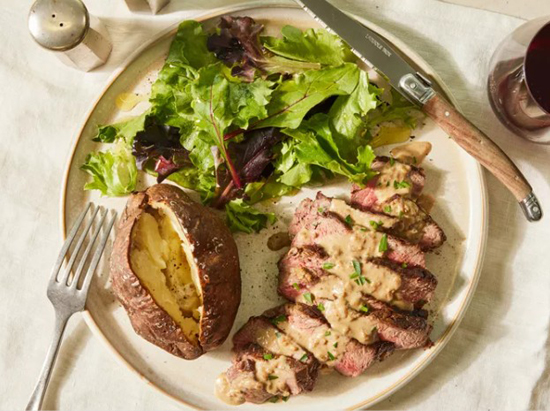
The Legacy of the Huntress: Diana was the Roman Goddess of wild animals and the hunt. The sister of Apollo, she was praised for her strength, beauty, athletic prowess, and hunting skills. She was also deemed a protectorate of woman and became associated with chastity, marriage, and fertility. Diana considered her body sacred. According to Roman mythology, one day she was bathing when a hunter happened to come upon her. Diana was outraged and turned the hapless hunter into a stag. This fable may explain why in many artistic depictions of Diana she is accompanied by a deer. And that my fellow gastronomes, brings us to Steak Diane.
In the 19th century, sauces made “a la Diane” were dedicated to Diana the Rome goddess and was originally served as an accompaniment to venison. Sauce a la Diane was composed of cream, truffles, and ample amounts of black pepper. The first written mention of Sauce Diane comes from the culinary icon Auguste Escoffier in his 1907 cookbook Le Guide Culinaire.
Steak Diane likely conjures up thoughts of smoking jackets and martinis—and for good reason. While this retro restaurant dish was first served in 1930s London, it made its way to the U.S. and was a mainstay of the 1950s and 1960s "Continental cuisine," alongside other favorites like fondue and cordon bleu. A hot culinary trend at the time in upscale restaurants were dishes that could be flamboyantly prepared tableside. Steak Diane was traditionally done so; its theatrics arising from the flambéing of the cognac used to make the sauce.
It appears that Steak Diane first became widely popular in New York City in the 1940’s. The Drake Hotel, the Sherry-Netherland Hotel, and the Colony restaurant are all possible contenders for its modern day birthplace according to a 1950’s New York Times article. Whatever the exact origin, New York was the place that popularized steak Diane and became its de facto home.
The type of steak utilized varies but fillet mignon, a.k.a. tenderloin, and strip steak are the two most common. Stick with a tender piece of meat no more than a half inch in thickness. Pound the meat with a mallet down to a half inch if need be so that the meat cooks quickly.
Steak Diane
Recipe courtesy Emeril Lagasse
4 (3-ounce) filet mignon medallions
1/2 teaspoon salt
1/4 teaspoon freshly ground black pepper
1 tablespoon unsalted butter
4 teaspoons minced shallots
1 teaspoon minced garlic
1 cup sliced white mushroom caps
1/4 cup Cognac or brandy
2 teaspoons Dijon mustard
1/4 cup heavy cream
1/4 cup reduced veal stock
2 teaspoons Worcestershire sauce
2 drops hot red pepper sauce
1 tablespoon finely chopped green onions
1 teaspoon minced parsley leaves
Season the beef medallions on both sides with the salt and pepper.
Melt the butter in a large skillet over medium-high heat. Add the meat and cook for 45 seconds on the first side. Turn and cook for 30 seconds on the second side. Add the shallots and garlic to the side of the pan and cook, stirring, for 20 seconds. Add the mushrooms and cook, stirring, until soft, 2 minutes. Place the meat on a plate and cover to keep warm.
Tilt the pan towards you and add the brandy. Tip the pan away from yourself and ignite the brandy with a match. (Alternatively, remove the pan from the heat to ignite, and then return to the heat.) When the flame has burned out, add the mustard and cream, mix thoroughly and cook, stirring, for 1 minute. Add the veal stock and simmer for 1 minute. Add the Worcestershire and hot sauce and stir to combine. Return the meat and any accumulated juices to the pan and turn the meat to coat with the sauce.
Remove from the heat and stir in the green onions and parsley. Divide the medallions and sauce between 2 large plates and serve immediately.
Serves 2
