Ham Cuts
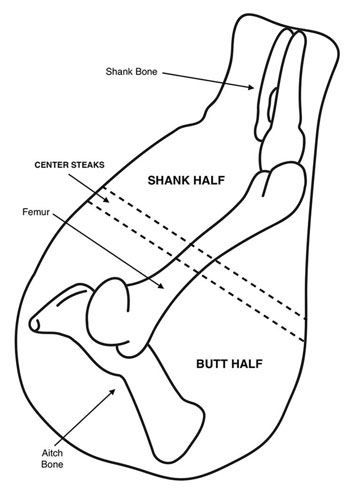
Location of bones inside Ham
Smoked / Wet-Cured Ham (City Ham)
Smoked ham has usually been wet cured, meaning it has been brined in a mixture of salt water and spices for several days, then smoked. The brine may also include sugar. These hams come fully cooked and are safe to eat without baking first, meaning they are ready to be used for ham sandwiches and ham salads. However, they are best when they are heated. This type of ham is sometimes referred to as city ham.
Smoke. Determine if the smoke in the product has come from a smoking process or if it is listed as an ingredient, meaning it is artificial flavor.
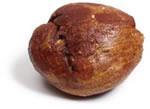
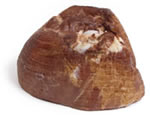
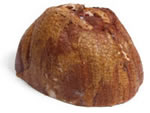
Country Ham
Country ham is a popular type of ham in the southern United States. It is dry-cured, rubbed with salt and seasonings, smoked, then aged for several months or even years. This extra-salty ham is popular on biscuit sandwiches but also served on holiday tables. If you buy a country ham, check the packaging to see if it is pre-cooked or not. Uncooked country hams must be fully baked in the oven and may require soaking beforehand to add moisture and remove some of the salt.
You may find country hams that are labeled Virginia Ham or Smithfield Ham. Virginia ham is country ham made in the state of Virginia. A Smithfield ham is also a Virginia ham, but it was produced specifically in the Smithfield region of the state. Country ham is usually sold and consumed in thick slices or as a half portion.
Ham Weights and How Much per Person
Whole hams can range from 12 to 18 pounds, half hams (butt or shank) from 5 to 10 pounds, spiral-sliced hams from 7 to 10 pounds, and boneless hams from 2 to 8 pounds.
If you’re buying a bone-in ham, plan on purchasing about 1/2 to 3/4 pound per guest. This should allow for generous portions and some tasty leftovers.
For boneless ham, plan on 6 to 8 ounces per guest and you should have some to put away for a second meal as well.
Whole Ham
|
Includes both the butt and shank cuts of the leg. The whole ham can weigh 10 to 20 pounds. |
Butt End
|
The upper cut of the hog's hind leg. The butt end is meatier but contains more fat than the shank end of the whole ham. The butt contains the femur and pelvic bone, which can be challenging to carve around. If the cut is found labeled "butt half", it has not had the center ham slice removed. If the center slice has been cut from it, the cut will be labeled "butt portion". |
Shank End
|
Lower cut of the hog's hind leg. The shank end contains less fat, is not as meaty as the butt end, but it contains only one leg bone, making it easier to carve. It has a slightly sweeter flavor. If the cut is found labeled "shank half", it has not had the center ham slice removed. If the center slice has been cut from it, the cut will be labeled "shank portion". |
Fresh Ham
|
Fresh hams are completely raw and you can either roast it just as you would for any regular pork roast or you can cure it yourself. |
Spiral Sliced
|
Pre-cooked, spiral-sliced hams are perfect if you are short on time or don't like fussing with a carving knife. Spiral slicing is accomplished by a special machine that cuts the ham around the bone into thin, uniform slices, leaving the femur intact. After heating, the slices are ready to serve without much additional carving. You can warm them up, but keep in mind that spiral-sliced hams tend to dry out faster than other hams, so keep them covered with aluminum foil when heating. |
Boneless Ham
|
|
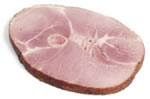
Center Ham Slice
|
Also referred to as center cut ham steak, this cut is approximately ½ to 1 inch thick and is sliced from the center of the ham where the butt end and shank end are separated. It is available cured and smoked. The center ham slice is the best cut from the ham. |
Boneless Ham
|
As the name implies, boneless hams have had all the bones removed and are then firmly pressed into a uniform, easy-to-carve shape. With most brands of boneless ham, the salt in the curing process will break down some of the proteins in the meat, causing them to rejoin and fill in the gaps left when the bones were removed. However, some brands will use ground ham and/or binders to help fill those gaps. This must be marked on the label though, so if you’re concerned about additives, be sure to read carefully before choosing. |