Types of Pork Chops
A pork chop is just a pork chop, right? Well, there's actually more than one cut out there! Depending on what you buy, this popular cut of meat may be tender, mild-tasting, and only need quick cooking; or it can be tough and need braising but be extremely flavorful at the end.
Pork chops are the most popular cut from the pork loin, which is the strip of meat that runs aslong the top from the pig’s hip to shoulder. Depending on where they originate, pork chops can be found under a variety of names. Working our way down from the shoulder toward the back of the pig, we have four major sections where pork chops come from: the shoulder or blade chops, rib chops, loin chops, and finally, sirloin chops.
Before you choose a pork chop it helps to understand which part of the animal it came from. The tenderness or toughness of a pork chop depends on how much the animal has had to use the muscle. Cuts from the shoulder and leg areas (muscles used for movement) are going to be tougher than cuts from the loin, which lies in the upper back section. All pork chops can be tender if you know how to cook them; meat from different parts of the pig must be cooked in different ways to maximize flavor and tenderness.
Go for bone-in loin and rib chops. The bone helps provide some protection from overcooking and also has some fat around it that keeps the pork juicier and tastier, so we prefer the bone-in chops.
Note: Enhanced or seasoned pork is becoming more and more popular in grocery stores in the United States and Canada. If the pork you have purchased is enhanced do not use a brine solution or add any salt to your recipe for preparing the chops.
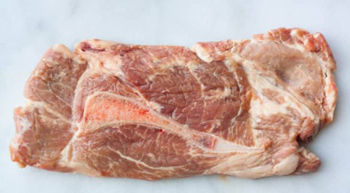
Blade or Shoulder Chops
Other names: Blade chops, blade steaks, blade-end pork loin chops, pork loin blade chops, pork shoulder steaks, pork shoulder blade steaks, pork steaks
Where it’s from: The shoulder
Blade chops are cut from the beginning of the loin in the shoulder area. Shoulder chops have dark-colored meat, lots of fat and connective tissues. They may contain some blade bone as well as back-rib bone.They are very juicy and flavorful but contain more fat, gristle and bone than the other chops and have a tendency to be tough. They can still be grilled, broiled, or pan-fried to great effect, especially if marinated or tenderized beforehand, but they have enough fat to withstand being braised in slow, moist heat to break down the connective tissues.
Blade chops are usually thicker and more marbled. They often are butterflied and sold as pork loin country-style ribs.
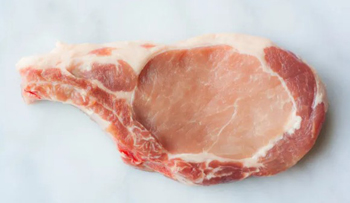
Rib Pork Chop
Other names: Center-cut rib chop, pork chop end cut, pork rib cut chop, rib end cut, rib pork chop
Where it’s from: The rib section of the loin, from the shoulder to the middle of the loin (the rib bones attached to these chops are actually baby back ribs).
Rib chops originate in the center of the loin in the rib area and include some back and rib bone. It lies between the shoulder where blade chops come from and the center portion of the loin. There's a large eye of lean loin meat and no tenderloin meat. There is a bone running along one side and sometimes a layer of fat on the outside. Rib chops from the blade end have more fat and connective tissue than chops from the shoulder end. A cut similar to the center loin chop but with more marbling and better flavor, some compare it to the rib in beef.
The chops are very tender, have a little more fat than loin chops, and have a mild flavor. The rib chop and the loin chop are the most preferred and the most expensive chops.
It adapts well to rubs, marinades, and glazes and, for maximum tenderness, should not be cooked more than medium to medium-well doneness. Since the meat on these chops is lean, quick cooking like grilling, broiling, or sear-roasting are the best methods. Brining first will help keep these chops moist and tender.
Note that rib chops are also sold boneless. In fact, most boneless pork chops you’ll find are cut from the rib chop.
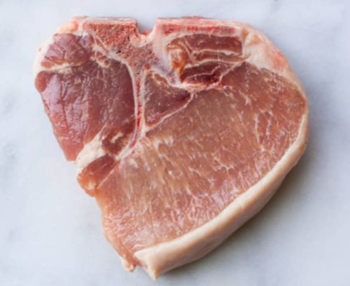
Loin Chop
Other names: Center loin chop, center-cut loin chop, loin pork chop, pork loin end chop, porterhouse, top-loin chop
Where it’s from: The hip and loin toward to the back of the animal. Depending on where they’re cut from, the chops may have some pieces of tenderloin.
Loin chops a.k.a. porterhouse chops a.k.a. T-bone chops are from the lower back (just behind the rib chop, but in front of the sirloin chop) and have a characteristic t-bone shape similar to a beef T-bone steak. These chops include a lot of meat as well as a bit of tenderloin meat. One side of the bone is firm loin meat and the other side is soft tenderloin. The texture and taste is distinctly different between the two pieces of meat.
Loin chops and rib chops are the more popular chops due to their tenderness, however many feel the best pork chops are made from the rib end of the loin, which have more fat and, thus, are very flavorful and juicy.
Loin chops are very versatile, lean, tender and quick cooking and are great chops to grill, broil, or panfry. They also adapt well to rubs, marinades, and glazes. For maximum tenderness do not cook past medium to medium-well doneness.
Because tenderloin and loin cook at different rates, loin chops can be hard to cook properly since both are present. Like rib chops, they should be cooked quickly, so grill, broil, or sear-roast these chops, but be careful not to overcook them. Brining will also help with keeping the meat moist.
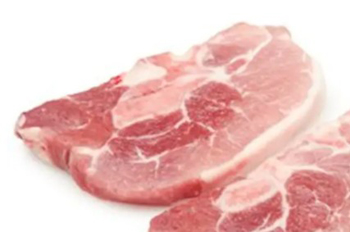
Sirloin Pork Chop
Other names: Sirloin steak
Where it’s from: This cheaper cut is from the hip area toward the back of the loin.
The sirloin chop is part of the loin that is located between the center loin and the back leg and often includes part of the hip bone and backbone. It also contains more bone than the other chops and has a tendency to be dry. The meat is composed of various muscle groups.
Unlike the center cut loin chop and the rib chop, the sirloin pork chop should be done in a brine or marinated because it is somewhat dry and tasteless compared to the rest of the loin. Because of all the different muscles present, sirloin chops should be cooked over slow, moist heat, in braises or stews.
It is one of the least preferred and least expensive of all the chops.
