Different Beef Cuts in the United States, Britain and France
A primal cut is a piece of meat initially separated from the carcass during butchering. Different countries and cultures make these cuts in different ways, and primal cuts also differ between type of carcass (beef, pig, lamb, etc.). The British, American and French primal cuts all differ in some respects.
American Beef Cuts
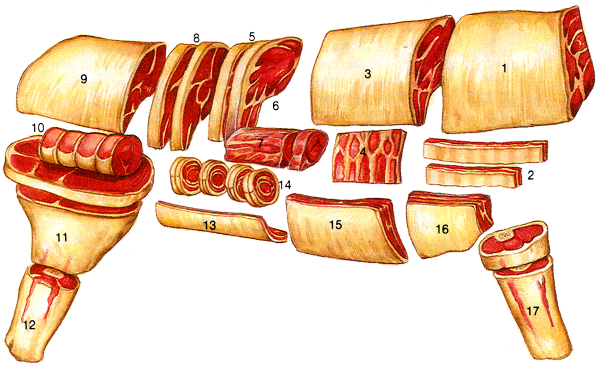
1. chuck
2. flanken-style ribs
3. rib
4. back ribs
5. short loin
6. Porterhouse steak
7. tenderloin
8. sirloin
9. round
10. boneless rump roast
11. round steak
12. hind shank
13. flank
14. flank steak rolls
15. short plate
16. brisket
17. fore shank
British Beef Cuts
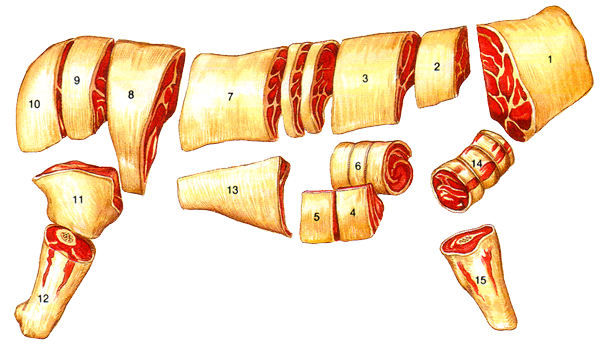
1. neck and clod
2. chuck and blade
3. fore rib
4. thick rib
5. thin rib
6. rolled ribs
7. sirloin
8. rump
9. silverside
10. topside
11. thick flank
12. leg
13. flank
14. brisket
15. shin
French Beef Cuts
In French butchering the direction of the cuts is different, and the chart doesn't convey that (most French butchering is done by cutting along the muscle grain, not against it). The French butchery separates muscles at boundaries, while a lot of American croscuts with a bandsaw. Thus an American Porterhouse steak has cross-sections of filet and contrefilet.
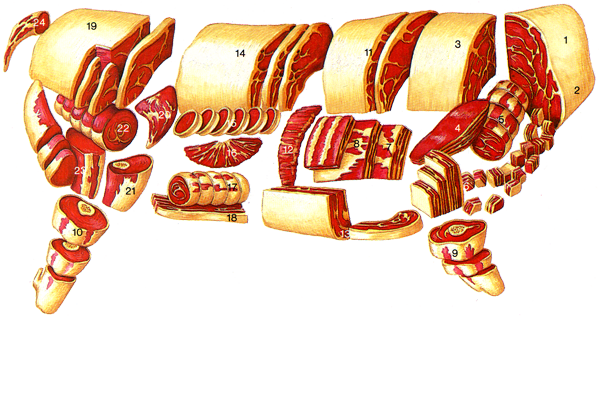
1, 2. collier (neck)
3. basses-côtes
4. jumeau for grilling or frying
5. jumeau for stewing
6. macreuse
7. plat de côtes découvert (uncovered rib)
8. plat de côtes couvert (covered rib)
9. gîte de derrière
11. entre-côte
12. hampe
13. poitrine
14. faux-filet
15. filet
16. bavette for grilling or frying
17. bavette for stewing
18. flanchet
19. romsteck (rump steak)
20. aiguillette baronne
21. rond de tranche basse
22. tranche
23. gîte à la noix
24. queue (tail)
