Types of Sausages
Cooked Sausage
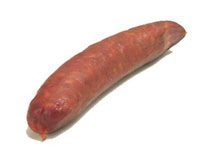
Made with fresh meats and then fully cooked. The sausage is either eaten immediately after cooking or must be refrigerated and is usually reheated before eating. Examples include Liver sausage (liverwurst), bologna, mortadella, and many German-style "wursts." They are usually made with smooth, even pureed fillings. Sometimes the fillings are partially cooked before being stuffed into the casing, but in all cases the sausage is cooked after filling.
You still want to cook these sausages, or at least heat them up to room temperature to bring out their best flavor. They can be grilled, broiled, pan-seared, or cut up and added to other dishes. You don't need to worry about cooking them through or to temperature, though, since you're not dealing with raw meat.
German Brühwurst ("scalded sausage" or "parboiled sausage") is the collective name for several types of sausages according to the German classification. They are a cooked sausage that are scalded (parboiled), as opposed to being raw. They are typically prepared from raw meat that is finely chopped, are sometimes smoked, and are typically served hot. In the English-speaking world such sausages are usually divided into two classes: cooked sausages (e.g. hot dogs) and cooked smoked sausages (e.g. kielbasa).
Bologna
|
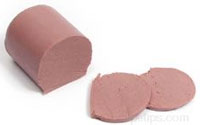
Bologna comes from Bologna, Italy! The Italian ancestor of bologna is mortadella. Mortadella is a thick Italian sausage, speckled with bits of fat, peppercorns, and sometimes pistachios or green olives. It also contains a lot of spices. The standard bologna you will find pre-packaged in your grocer’s refrigerated cold-cut section doesn’t contain a lot of spices; however, if you visit a meat market and buy sliced bologna, you will probably be able to recognize pepper, coriander, and garlic. Typical seasonings for bologna include black pepper, nutmeg, allspice, celery seed and coriander, and, like mortadella, myrtle berries give it its distinctive flavor. Bologna is commonly made of beef, pork, turkey, or chicken that is finely ground and stuffed into a casing for cooking, which is often later removed. The bologna is cooked or smoked and then either packaged whole or sliced. Although there is nothing wrong with the traditional bologna sandwich, there are plenty of other ways to enjoy this meat. If you have some time on your hands, trying fried bologna is a must! For breakfast, put some fried bologna on a bagel topped with a fried egg, or try a fried bologna sandwich topped with fried onions. You are only limited by your imagination when it comes to all the things you can make with bologna. A variety of bologna that is popular in Canada and the United States is includes olives and pimentos and is called olive loaf. |
Liverwurst
|
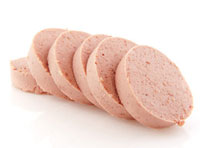
Liverwurst, leberwurst, or liver sausage is a kind of sausage made from liver. It is eaten throughout Europe, as well as North and South America. Some liverwurst varieties are spreadable. It is often sold pre-sliced. Liverwurst usually contains pigs' or calves' liver. Other ingredients are meat (notably veal), fat, and spices including ground black pepper, marjoram, allspice, thyme, ground mustard seed, and nutmeg. Many regions in Germany have distinct recipes for liverwurst. Adding ingredients like pieces of onion or bacon to the recipe make each variety of liverwurst very important to cultural identity. Liverwurst is typically eaten as is, on cracker, and often served as traditional or as open-faced sandwiches. It is popular in North America with red onion and mustard on rye or whole grain bread. In the Southern and Midwestern US, as well as Germany, liverwurst is served with slices of sweet pickles (gherkins pickled with vinegar, sugar, and mustard seeds). In the Northeast US, liverwurst is served with dill pickles (gherkins pickled with vinegar, salt, and dill). If smoked, it is known as braunschweiger. |
Mortadella
|
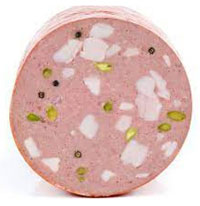
Mortadella is an emulsified sausage with origins in Bologna, Italy. It's composed of cured pork with least 15% pork fat cubes, whole or chopped pistachios, and spiced with black pepper and myrtle berries. Myrtle was in fact a popular spice before pepper became available to European markets. The extra fat content gives mortadella its signature white "polka dot" look. The primary flavor in mortadella is rich, fatty pork, with accents of spice and pistachio that are mellowed when cooked. Mortadella has a silky mouthfeel and hearty texture, not unlike bologna. In Italy, it’s common to see thick cubes or thin slices of mortadella served as an appetizer. This cold cut also works well on a charcuterie board with other meats, cheeses, fruit, bread, and condiments like mustard. Mortadella is delicious in a cold sandwich or hot panini. |
Scrapple
|
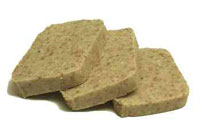
Scrapple, also known by the Pennsylvania Dutch name panhaas or "pan rabbit," is traditionally a mush of pork scraps and trimmings combined with cornmeal and wheat flour, often buckwheat flour, and spices. Scraps of meat left over from butchering, not used or sold elsewhere, were made into scrapple to avoid waste. The mush is formed into a semi-solid congealed loaf, and slices of the scrapple are then pan-fried before serving. Scrapple is best known as an American food of the Mid-Atlantic states (Delaware, Maryland, New Jersey, Pennsylvania, and Virginia). Scrapple and panhaas are commonly considered an ethnic food of the Pennsylvania Dutch, including the Mennonites and Amish. Scrapple is found in supermarkets throughout the region in both fresh and frozen refrigerated cases. It's often slowly fried and served with eggs and grits in place of sausage or bacon. |

Cooked Smoked Sausage
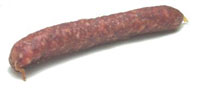
Much the same as cooked sausage, but it is cooked and then smoked, or smoke-cooked. It can be eaten hot or cold, but is stored in the refrigerator. Examples include Braunschweiger, Kielbasa, smoked Bologna. andouille, hot dogs, and frankfurters. Some are slow cooked while smoking, in which case the process takes several days or longer, such as the case for Gyulai kolbász. The mortadella of Amatrice, high in the Apennines of northern Lazio, is unusual in being lightly smoked.
Braunschweiger
|
In the United States and Canada, Braunschweiger refers to a type of pork liver sausage which, if stuffed in natural casings, is nearly always smoked. The USDA requires that the product contain a minimum of 30% liver. A typical commercial formula is about 40% pork liver or scalded beef liver, 30% scalded pork jowl, 20% lean pork trimmings and 10% bacon ends and pieces. Added seasonings include salt and often include white pepper, onion powder or chopped onion, and mace. Curing ingredients (sodium erythorbate and sodium nitrite) are optional. The meat has a very soft, spread-like texture and a distinctive spicy liver-based flavor, very similar to the Nordic leverpostej. It is usually used as a spread for toast, but can also be used as a filling for sandwiches, often paired with stone-ground mustard, sliced tomato, onion and cheese. In the Midwestern United States, braunschweiger is typically eaten in a sandwich with various condiments such as ketchup, mustard, and dill pickles, or simply spread on crackers. There are also a few recipes for pâté and cheese balls which use braunschweiger as a primary ingredient. However, pâté is creamier than braunschweiger. |
Cocktail wieners
|
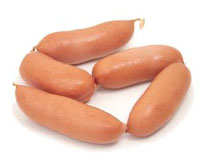
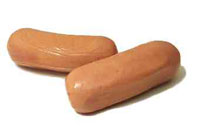
A small sausage, usually about two inches in length, that is produced from beef, pork, a combination of beef and pork, or turkey meat and seasonings, usually with some kind of smoke flavoring. They are pre-cooked, salty and spicy. Cocktail wieners are fairly recent innovations and have made a name for themselves in the realm of quick appetizers. Cocktail wieners are served as an appetizer or as part of a main dish combined with a sauce or a bean dish. These are smaller than hot dogs, but larger than Vienna sausages. Substitutes: hot dog (cut into smaller pieces) OR Vienna sausages |
Hot Dog
|
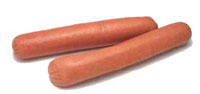
= wiener = weiner (a common misspelling) = frankfurter = frank = tube steak = wienerwurst An American staple, hot dogs are mild, smoked, and usually skinless sausages that are traditionally served in a bun with relish and mustard. The term hot dog can also refer to the sausage itself. These types of sausages were culturally imported from Germany and became popular in the United States. It became a working-class street food in the U.S., sold at stands and carts. The word frankfurter comes from Frankfurt, Germany, where pork sausages similar to hot dogs originated. "Wiener" refers to Vienna, Austria (German: Wien), home to a sausage made of a mixture of pork and beef. Pork and beef are the traditional meats used in hot dogs. Today, many versions are available, including chicken and turkey. As with most sausages, hot dogs must be in a casing to be cooked. Traditional casing is made from the small intestines of sheep. The products are known as "natural casing" hot dogs or frankfurters. These hot dogs have firmer texture and a "snap" that releases juices and flavor when the product is bitten. "Skinless" hot dogs use a casing for cooking, but the casing may be a long tube of thin cellulose that is removed between cooking and packaging, a process invented in Chicago in 1925. When frankfurters were first placed on buns is up for dispute but most likely occurred in the US around the end of the 19th century. They might perhaps have been exhibited first at the World’s Fair in 1893 in Chicago. You’ll find a lot of argument on the when and where of hot dog invention by food historians and hot dog enthusiasts. Franks are forgiving sausages, with a lot of different ways to cook them. You can boil them, steam them, bake them, grill them or pan fry frankfurters and any other type of hot dog. The original German version is called Frankfurter Würstchen. Substitutes: Vienna sausage OR bockwurst OR banger |
Kielbasa
|
= kolbasa = kolbasz = Polish sausage = knublewurst = Polnische wurst Pronunciation: kill-BAH-suh or keel-BAH-suh or (in Poland) KEHW-bah-sah Kielbasy are smoked Polish sausages made with pork and/or beef and flavored with garlic, pimento, and cloves. They come already cooked, but most people heat them before serving. Kielbasa is literally the Polish word for sausage, although native Poles consider it to be a generic term, much like asking for a non-specific soda in a restaurant. There are dozens of varieties of kielbasa available, so shoppers would need to know the specific name of the sausage they desire. In the United States, however, the term "smoked Polish sausage" has almost become synonymous with kielbasa when describing a precooked smoked sausage made with pork, garlic, marjoram, salt and pepper. Substitutes: andouille OR Spanish chorizo OR linguica |
Knackwurst
|
= knackwurst = knoblauch Pronunciation: NAK-worst OR NAK-vursht These smoked beef sausages are seasoned with lots of garlic. They should be cooked before eating, and they're often served like hot dogs or smothered in sauerkraut. Knackwurst (in North America sometimes spelled knockwurst) refers to a type of sausage of northern German origin from the mid-16th century. The many available varieties depend on the geographical region of their production. The German noun Knackwurst comes from the German verb knacken ("to crack") or the adjective knackig (("crisp"). This refers to the swelling of the sausage during the process of cooking, so that the skin becomes pressurized and balloon-like, and tends to "pop", often exploding the juices, when bitten into. In North America, a knockwurst refers to a short, plump sausage originating from northern Germany. It contains ground veal, ground pork, and fresh garlic stuffed into hog casings. As part of the production process, the sausages are aged for two to five days, then smoked over oak wood. Knockwurst is often prepared highly seasoned. Knockwurst is sometimes cut in half lengthwise before serving. These sausages are usually sold in the US as a cooked product that simply need to be reheated. It is essentially a fancy hot dog. Compared to a regular hot dog this sausage is usually shorter, plumper, juicer and has a slight smokey flavor. Substitutes: hot dogs |
Vienna sausage
|
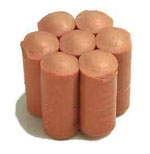
= Vienna-style frankfurter Vienna sausage gets their name from Vienna, a city in Austria. They have a texture and taste that are very similar to North American hot dogs, however, they are typically thinner and longer with an edible casing. In North America the term "Vienna sausage" has most often come to mean smaller and shorter smoked and canned wieners. North American vienna sausages are made from pork wieners, finely ground to a paste consistency and mixed with salt and spices, most notably mustard, then stuffed into a long casing, sometimes smoked and always thoroughly cooked, after which the casings are removed. The sausages are then cut into short segments for canning and further cooking. They're often used to make hors d'oeuvres. Substitutes: cocktail wieners OR hot dog (Cut into smaller pieces if you like) |
Fresh Sausage
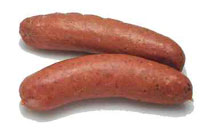
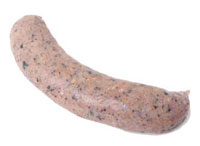
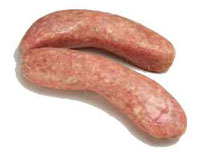
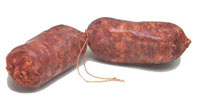
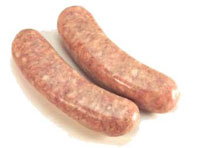
Made from meats that have not been previously cured. This sausage must be refrigerated or frozen and thoroughly cooked before eating. One of the easiest sausages made in the home. Examples include Boerewors, Italian Pork sausage, Fresh Beef sausage, breakfast links, sausage patties, Italian sausage, bratwurst, and Mexican chorizo. Fresh sausages can be grilled, pan-fried, or broiled. Some types of fresh sausage - particularly "white sausages" made with veal - are traditionally poached or steamed. Fresh sausages can also be cut up or removed from their casing and crumbled in order to be sauteed and used in other dishes.
Andouillette
|
Pronunciation: ahn-dwee-YET This tripe sausage is a small version of French andouille sausage, but unlike French andouille sausage, it is not smoked. Andouillettes are eaten hot. Definitely not a party pleaser, but some people have grown accustomed to its taste. Andouillettes is a smaller version of andouille, where the small intestine is used to make the casing instead of the large intestine. Substitutes: French andouille (larger) OR Italian sweet sausage |
French andouille sausage
|
Pronunciation: ahn-DWEE In the United States, andouille sausage is synonymous with Louisiana Cajun cuisine. However, the true origins of andouille can be traced back to Western France. Invented as a way to use up pig offal, andouille gained popularity across France, with different regions creating their own versions of the sausage. Don't confuse this with Cajun andouille, which is much spicier. French andouille is made with layers of pork offal, typically pork intestines or tripe, brined and flavored with onions, pepper, wine or stock, and select seasonings. Cajun andouille sausages, meanwhile, generally use pork shoulder combined with a mix of different peppers, onions, garlic, and Cajun seasonings. Traditional French Andouille is made using the whole digestive tract of a pig, including the stomach and the small intestines. The chitterlings would be either diced or sliced thinly, before being combined with onions and seasoning. Wine is also sometimes included in the meat stuffing. The meat mixture would then be stuffed inside a casing made from the large intestine of the pig. The end result is a sausage that is very large in size. Both the Cajun and French versions of the sausage are smoked before being cooked slowly in stock to impart an earthy flavor and aroma, and then dried. The similar, but unsmoked and smaller, sausage is called andouillette, literally "little andouille". In traditional French cooking the andouille was not smoked but poached. It would then be left to cool and then served in thin slices. French andouille, meanwhile, has a deeply earthy and porky taste that may be off-putting to some, so consider pairing it with stronger flavors. Incorporate French andouille in a long-simmered cassoulet, add it to a charcuterie board with a selection of pungent cheeses, or serve with a tangy mustard sauce or red wine reduction. Substitutes: andouillette (smaller) |
Banger
|
This is a mild British pork sausage. These sausages are white or pink and are made primarily of pork butt, a small amount of breadcrumbs, and water. They are normally pleasantly spiced with both sweet and savory spices. The average banger will have both salt and pepper, as well as sage, ginger and mace or allspice. Spices differ depending upon the brand. Bangers are the quintessential British breakfast sausage, forever immortalised by being half of the classic 'Bangers & Mash" and they have become famous internationally as 'bangers'. Bangers are not just one kind of sausage, the term bangers can refer to any British sausage and you will a variety of British sausages in the English breakfast depending on what part of the country you are in. They started calling sausages bangers sometime during the first World War, it was a slang name for a sausage at the time. British sausages are sometimes called bangers because back then, sausages had a habit of bursting open while cooking. This was partly due to the shrinkage of the tight skin (this is still quite a common occurrence depending on the sausage if you do not prick them before cooking) and partly because of the cheap sausage fillers that they were using at the time. To avoid losing some of the sausage, they can be boiled first, and sliced lengthwise prior to frying or grilling. |
Bauerwurst
|
= bauernwurst Pronunciation: BOW-er-wurst OR BOW-er-vurscht Bauernwurst (Farmer's Sausage) is a traditional German favorite made from coarsely ground (thus “country-style”), smoked pork and beef meat, seasoned with onion, garlic, marjoram, and mustard seeds. Excellent for grilling and frying, the Bauernwurst is a spicier, stronger flavored cousin to Bratwurst. Use with a medium hot mustard or mild curry ketchup and sauerkraut or green cabbage (kale). It's often grilled and served on a bun or cooked with sauerkraut. |
bockwurst
|
Pronunciation: BAHK-wurst OR BAHK-vurscht This is a mild fresh German sausage made with veal, pork, milk, and eggs, and seasoned with chives and parsley. Once a year from mid-September through late October, Bockwurst shares the honor with Munich beer as a traditional food of the Oktoberfest. You need to cook it before serving. Use it soon after you buy it--it's very perishable. Of the dozens of sausage styles prepared across the globe, just a few are made with veal, and even those are usually blended with more prevalent sausage fodder — pork. Bockwurst veal sausage is a plump, pink blend of mostly veal, less pork, and a range of distinctive ingredients like egg, garlic, coriander seeds, paprika, mace, nutmeg, mustard powder and some sugar. By contrast, a Bavarian blend of veal and bacon called weisswurst, or white sausage, turns completely white during the cooking process, despite similar spicing, due to the lack of preservative nitrites. Bockwursts made in America, also from veal and pork, bear more resemblance to the Bavarian Weisswurst in color and taste, although parsley is rarely used in this version. Bockwurst is considered to be one of the most popular varieties of German sausages, particularly within Germany itself. The sausage is commonly served only with mustard and a piece of bread or a crusty roll. It is also sometimes served along with a salad or potato salad. This type of sausage is a Brühwurst. They are pre-cooked, and you just have to blanch them in simmering, not boiling water. Boiling this sausage will cause the casing to split open and it will therefore lose its flavor. Then pan-sear or grill if you like. Substitutes: bratwurst |
boudin blanc
|
= white boudin Pronunciation: boo-DAHN BLAHN This is a white sausage made of meat (pork, chicken, or veal) and rice. France produces a very delicate milk-based version, while the Cajun version includes a lot of rice as a filler, making it chewier and more flavorful. Substitutes: weisswurst OR bratwurst |
bratwurst
|
This sausage is made with pork and sometimes veal, and seasoned with subtle spices. It is one of the most popular types of sausages in Germany and a favorite in Wisconsin for cookouts. It usually needs to be cooked before eating, though some markets carry precooked bratwurst. Substitutes: weisswurst OR boudin blanc OR bockwurst |
Chaurice
|
Pronunciation: shore-EESE Chaurice is a fresh Creole Sausage, similar and probably derived from the Spanish Chorizo, without the curing process. It's available either in links or patties, but it's hard to find outside of Louisiana. Chaurice is a spicy pork sausage used extensively in Creole cooking. One of the few sausages seasoned with fresh vegetables, it is seen time and time again in different presentations on the Creole table. It is related to the Spanish chorizo which is commonly used in paella, the forefather of our own jambalaya. Today in South Louisiana, chaurice is seen most often as a pan-fried side dish for Red Beans & Rice. This spicy pork sausage is often used as a seasoning meat in many one pot meals such as jambalaya and gumbo. Although much more common in Creole cooking, chaurice is used from time to time by the Cajuns as well. Substitutes: andouille Homemade Chaurice (Fresh Cajun sausage) |
chorizo, Mexican
|
Shopping hints: This is fresh pork mixed with lots of spices. Don't confuse Mexican chorizo, which needs to be cooked, with Spanish chorizo, which is dry-cured. Substitutes: Italian hot sausage OR mild Italian sausage OR spicy breakfast sausage OR Spanish chorizo Homemade Mexican Chorizo (Fresh sausage) |
| Breakfast or Country Sausage | A breakfast sausage (or country sausage) is a type of fresh pork sausage found in the United States, usually served at breakfast. One can most commonly find "breakfast sausage" served in the Southern U.S., in common breakfast dishes such as a sausage biscuit, and sausage gravy. Breakfast sausage is not cured or smoked. It is essentially highly seasoned ground meat, so it does not keep and should be stored and handled appropriately. Country Style Pork Sausage (Fresh Sausage) |
Italian sausage
|
This is a pork sausage that's often added to pasta sauces. Varieties include sweet Italian sausage = mild Italian sausage , which is flavored with garlic and fennel seed, and hot Italian sausage, which also has a shake or two of crushed dried red chile peppers. It's sold either as links or in bulk. Cook thoroughly before serving. Homemade Italian Sausage (Hot or Sweet fresh sausage) |
Weisswurst
|
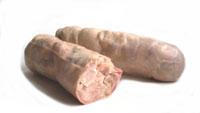
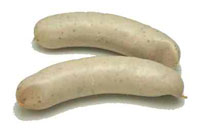
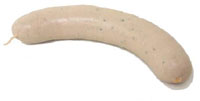
Pronunciation: WICE-wurst OR VICE-vurscht Literally white sausage (Bavarian: Weißwuascht), Weisswurst is a traditional Bavarian sausage made from minced veal and pork back bacon. It is usually flavoured with parsley, lemon, mace, onions, ginger, and cardamom, although there are some variations. Then the mixture is stuffed into pork casings and separated into individual sausages measuring about ten to twelve centimeters in length and about two centimeters in thickness. Preservatives are not used and the meat is not smoked, and hence the sausage is made fresh every day. As they are very perishable, Weisswürste traditionally were manufactured early in the morning and prepared and eaten as a snack between breakfast and lunch; there is a saying that the sausages should not be allowed to hear the noon chime of the church bells. The sausages are heated in water—well short of boiling—for about ten minutes, which will turn them greyish-white. Weisswürste are brought to the table in a big bowl together with the hot water used for preparation (so they do not cool down too much), then eaten without their skins. Weisswürste are always boiled, never grilled or fried. Grilling it is a big faux pas. Weisswurst is commonly eaten for breakfast with a special Bavarian sweet mustard (Weisswurst senf) and accompanied by Brezen (Bavarian Pretzel) and Weissbier, a Bavarian "white beer." Germans also like to eat them with potato salad, bread and Weisswurst Senf (sweet mustard). They are very popular during Oktoberfest. Cook before eating. Substitutes: bockwurst OR bratwurst OR boudin blanc |
Fresh Smoked Sausage
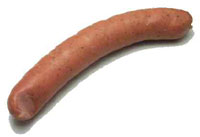
This is fresh sausage that is smoked. After smoking, the sausage can then be refrigerated and cooked thoroughly before eating. Examples include Mettwurst and Roumanian sausage.
Andouille
|
Cajun andouille = Louisiana andouille Pronunciation: ahn-DWEE or ann-DO-ee This is a spicy smoked Cajun sausage that's used in jambalaya and gumbo. Don't confuse it with the milder French andouille sausage. Because it’s smoked, Andouille is precooked. Substitutes: kielbasa Homemade Cajun Andouille (Fresh smoked sausage) |
Bratwurst, smoked
|
This is a smoked variation of German bratwurst. Substitutes: bratwurst |
Dry or Cured Sausage
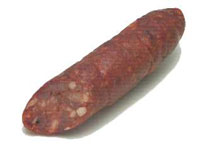
Cured sausages that are fermented and dried. Some are smoked as well at the beginning of the drying process. These are the most complicated of all sausages to make, as the drying process has to be carefully controlled. Once produced this type of sausage can be readily eaten (they are generally eaten cold), and will keep for very long periods under refrigeration. Examples include Droë wors, Finnish meetvursti, Sucuk, Landjäger (smoked), Salami, Summer sausage, Pepperoni, Spanish chorizo, Coppa, Genoa salami, and Slim Jim.
Some sausages have a strong flavor (like chorizo), while others have a more delicate taste (salami).
Chorizo, Spanish
|
Shopping hints: Don't confuse Mexican chorizo, which is moist and needs to be cooked, with the Spanish version, which is dry-cured and ready-to-eat. Spanish chorizo is made from pork, and it's very hot and spicy. Substitutes: kielbasa OR pepperoni OR other dry-cured pork sausage OR linguisa (milder) OR Mexican chorizo (This needs to be cooked) |
Lebanon Bologna
|
Another popular variety of bologna is Lebanon bologna. This bologna doesn’t get its name from the Western Asian country, so what is Lebanon bologna? It takes its name from Lebanon County, Pennsylvania. The Pennsylvania Dutch typically make this sausage with aged beef and spices like black pepper, white pepper, mace and nutmeg, then smoke it. Lebanon bologna’s flavor profile is smoky and tart. It is a semi-dry sausage, meaning it’s more akin to summer sausage than bologna most Americans are likely used to. Lebanon Bologna looks and tastes more like salami. |
Pepperoni
|
Pepperoni is an American variety of salami, usually made from cured pork and beef mixed together. This is a spicy sausage. Sodium nitrite (or sometimes saltpeter), usually a part of modern curing agents, protects against botulism and other forms of microbiological decay. Sodium nitrite is white, but reacts with the heme in the myoglobin of the lean to give pepperoni its reddish colour. The use of paprika and cayenne also contribute to its reddish color. It's hard and chewy, and makes a terrific topping for pizza. In 1919 Italian immigrants in New York City created pepperoni. It is a cured dry sausage, with similarities to the spicy salamis of southern Italy on which it is based, such as salsiccia or soppressata. The main differences are that pepperoni is less spicy, has a finer grain (akin to spiceless salami from Milan), is usually softer in texture, and is usually produced with the use of an artificial casing. It is already cooked during the curing process, so it can be eaten without further cooking. The first use of "pepperoni" to refer to a sausage dates to 1919. Substitutes: salami OR lap cheong (sweeter) OR Spanish chorizo OR Canadian bacon (Works well as a pizza topping.) |
Salami
|
|
Summer sausage
|