Basil Three-Cheese Ravioli
from https://www.foodandwine.com/, Originally appeared: June 2019
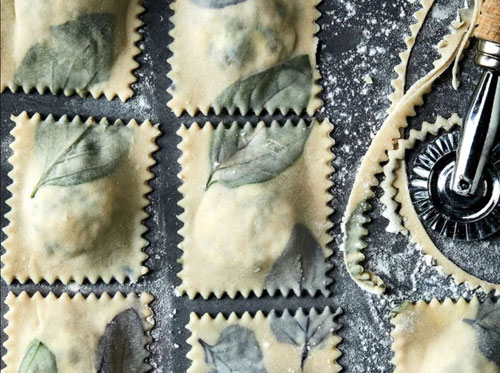
Press and seal fresh basil leaves in homemade pasta dough to make three-cheese ravioli that are as beautiful as they are delicious. Food & Wine pairs the ravioli a no-cook fresh tomato sauce, but you could also use a cooked tomato sauce. Mix the ravioi up with other herbs if you like, but be sure to use tender herbs like other basil varieties or dill—woody, tough herbs like rosemary can cause the delicate dough to tear. You can make these ravioli ahead of time and keep in the freezer for a speedy weeknight dinner. To cook from frozen, add a minute or two to the cook time.
8 ounces whole-milk ricotta (about 1 cup), drained
3 ounces mozzarella cheese, shredded (about 3/4 cup)
1 1/2 ounces Parmigiano-Reggiano cheese, grated (about 1 cup), divided
3/4 cup chopped fresh basil, divided
6 tablespoons plus 1/2 teaspoon kosher salt, divided
3/4 teaspoon black pepper, divided
4 Homemade Dough Sheets (see recipe below)
1 1/2 cups loosely packed fresh basil leaves, divided
4 quarts water, plus more for brushing
All-purpose flour, for work surface and dusting
3 pounds red or yellow heirloom tomatoes (about 6 medium tomatoes)
1/3 cup extra-virgin olive oil
Balsamic glaze (optional)
Stir together ricotta, mozzarella, 1/2 cup Parmigiano-Reggiano, 1/4 cup chopped basil, 1/2 teaspoon salt, and 1/4 teaspoon pepper in a medium bowl. Chill until ready to use.
Place 1 dough sheet on a well-floured surface with one long side facing you. Brush right half of dough lightly with water; arrange one-fourth of whole basil leaves on top in a single layer. Fold the dry dough half over the basil-topped dough half; press gently to adhere. Dust dough generously with flour, and cut in half crosswise.
Set rollers of a pasta machine to setting number 4. Working with 1 basil-filled dough piece at a time, feed dough through pasta machine. Transfer to a lightly floured surface with one long side facing you; brush off excess flour. Repeat process with the second basil-filled dough piece.
Leaving a 1-inch edge from the short side of the first dough sheet, place a teaspoon-size ball of ricotta filling 1/2 inch from the bottom of the long side. Continue placing spoonfuls of ricotta filling in 1 row, leaving 2 inches between them. Lightly brush dough around ricotta filling with water. Fold top half of dough over row of ricotta filling, and gently press dough around filling to seal. Using a fluted pasta wheel cutter or a sharp knife, cut filled dough into 2-inch square ravioli. Transfer to a lightly floured baking sheet; cover with plastic wrap, and chill until ready to use. Repeat process with second basil-filled dough piece and ricotta filling.
Repeat steps 2 through 4 with remaining 3 dough sheets, whole basil leaves, and ricotta filling. Ravioli can be refrigerated up to 8 hours or overnight, or frozen up to 1 month.
No-cook fresh tomato sauce: Working over a large bowl, grate tomatoes on the large holes of a box grater, discarding skin and stem. (If mixture is very loose, pour through a fine wire-mesh strainer into a bowl; discard excess liquid.) Add 2 tablespoons salt, remaining 1/2 cup chopped basil, and remaining 1/2 teaspoon pepper. Let stand at room temperature 15 minutes. Gradually whisk in oil.
Bring 4 quarts water to a boil over high. Add remaining 1/4 cup salt, and stir until dissolved. Working in batches, boil ravioli until tender, about 1 minute and 30 seconds. (If cooking from frozen, boil ravioli 2 to 3 minutes.) Serve ravioli over fresh tomato sauce and sprinkled with remaining 1/2 cup Parmigiano-Reggiano. Drizzle with balsamic glaze, if desired.
Yield: 8
Homemade Dough Sheets
Be sure to knead it well to develop the gluten, ensuring that the dough stretches rather than tears during the rolling process.
2 cups all-purpose flour (about 8 1/2 ounce), plus more for work surface and dusting
2 1/2 teaspoon kosher salt
2/3 cup water
Stir together flour and salt in a medium bowl. Add 2/3 cup water; stir until a shaggy dough forms. Knead dough in bowl until flour is fully incorporated. Turn dough out onto a floured work surface; knead until a smooth dough forms, about 4 minutes. Wrap dough in plastic wrap; let rest at room temperature for at least 1 hour or up to 8 hours or overnight.
Unwrap dough; turn out onto a lightly floured surface. Divide into 4 equal portions. Cover 3 dough portions loosely with plastic wrap, and set aside.
Set rollers of a pasta machine on number 1 (widest setting). Using a rolling pin, roll uncovered dough portion to about 1/4-inch thickness, ensuring dough is narrower than the width of the pasta roller (about 5 inches) of pasta machine. Dust dough generously with flour, and feed through pasta machine. Reduce width to setting number 2 (second-widest setting), and feed through again. Continue re-feeding dough through pasta machine, reducing the roller width 1 notch each time, until dough has passed through number 8 (narrowest setting), dusting dough with more flour between each feed through the machine as needed to prevent sticking. Lay rolled dough sheet flat on a well-floured surface. Trim and discard any tapering end pieces; cover dough sheet loosely with plastic wrap.
Repeat step 3 (3 times) with remaining 3 dough portions.
