Grilled Tuna & Cheese Sandwiches (Tuna Melt)
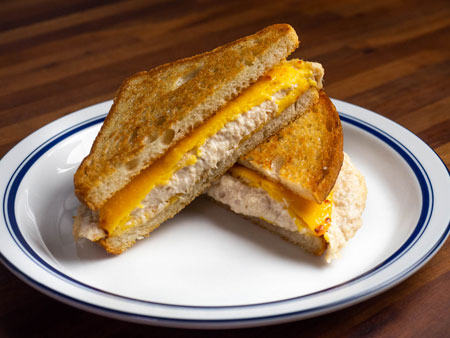
All American Tuna Melt
Dating back to the 1960s, the tuna melt is an American classic born out of the diner culture that was sweeping the nation at that time. Traditionally made on white bread with just tuna fish mixed with mayonnaise and two slices of cheese. This sandwich is open to a lot of variation: for instance, tuna fish, sliced tomatoes, cheese on pumpernickel bread makes a good sandwich. Some people like to add celery, pickel relish or onion to their tuna fish.
Open-face sandwiches made on toasted English muffins seems popular, which are baked to heat the tuna fish and melt the cheese. Some also have a slice of tomato added on top of the tuna fish and under the cheese.
A Jewish Deli–Style Tuna Melt is made with minced red onion, finely diced celery, sweet relish, mustard, Swiss cheese, and maybe some fresh parsley and dill on rye bread.
To make a tuna melt on a roll or bun, and for tuna melt variations, see Tuna Melt on a Bun.
Basic ingredients:
Bread, two slices of choice (classic American style uses white)
Canned tuna fish mixed with a little mayonnaise
American, Cheddar, Monteray jack, or Provolone cheese
Tomato slices (optional, but it adds a little freshness to the sandwich)
Soft butter
Spread the tuna fish, mixed with mayonnaise, on one slice of bread. Top with the tomatoe, the cheese and the other slice of bread. Butter the top slice of bread.
Place the sandwich, buttered side down, in a hot cast iron frying pan. Butter the top slice of bread. Set the heat of the burner to medium. Brown one side of the sandwich. Cover with a lid so the cheese melts. Flip and brown the other side. Serve immediately while the bread is still crispy.
Note: Do not add extra butter to the pan or the sandwich gets too greasy.
Preventing Your Tuna Melt from Becoming Soggy
- First, make sure your tuna is well-drained. Excess water from the canned tuna can seep into your bread and make it soggy. Take your time to squeeze out as much water as possible.
- Second, the type of bread you use can also affect sogginess. Opt for thicker, denser bread types like sourdough or sturdy whole-grain bread. These kinds of bread are less likely to get soggy because they can hold up better to wet ingredients.
- Third, try toasting the inside of your bread before assembling the sandwich. This can create a barrier, preventing the tuna and mayo mixture from making the bread soggy.
- Finally, buttering and toasting both sides of the bread helps create a deliciously crisp exterior that can ward off sogginess.
