Kettle Corn
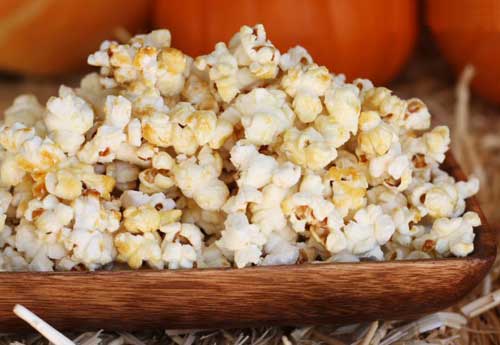
Kettle corn is a sweet-and-salty variety of popcorn that is typically mixed or seasoned with a light-colored refined sugar, salt, and oil. It was traditionally made in cast iron kettles, hence the name, but in modern times other types of pots and pans are used.
Kettle corn was introduced to the United States in the 18th century. It is referenced in the diaries of Dutch settlers in Pennsylvania circa 1776. It was a treat sold at fairs or consumed at other festive occasions. During it's first rise in popularity, most of the kettle corn was cooked usually without oil. Once done, it was garnished with bees honey and salt, which were two ingredients with relative abundance during that time period. It wasn't until the mid to late 18th century, that the use of granulated sugar began to overtake bees honey as the main kettle corn sweetener.
Kettle corn enjoyed a very popular 18th and 19th century, however it's popularity began to fade away during the early 20th century. It is not known exactly why this fading of interest took place, however some have suggested that it was due to a huge burst in innovation of snack foods that occurred during this time, and that the market was simply oversaturated with a variety of new goods.
In the early 21st century, kettle corn made a comeback in America, especially at 19th-century living history events. It is cooked and sold at fairs and flea markets throughout the United States, especially art and craft shows. Although modern kettle corn is commonly cooked in stainless steel or copper kettles because of their lighter weight, cast iron cauldrons are still used to publicly cook the corn and mix the ingredients to retain the original flavor.
To make Kettle Corn, the corn, oil, sugar, and salt are cooked together in a cast iron kettle, or possibly a Dutch oven. This produces a noticeable sweet crust on the popcorn; however, this method requires constant stirring or the sugar will burn. Alternatively, a batch of plain popped corn can be sweetened with sugar or honey before adding salt. This combination was widely popular in the early 19th century but fell from wide usage during the 20th century.
In the pantheon of popcorns, kettle corn sits somewhere in between plain popped corn and caramel corn. It's lightly golden — more or less so depending on the amount of sugar you use — and salty-sweet. It has a crisp crunch from the sugar coating, but won't stick to your teeth the way caramel corn sometimes does. Kettle corn also takes significantly less time than full-on caramel corn since it's made entirely on the stovetop — it's a quick five-minute snack right when you need one.
2 Tbsp. vegetable oil
1/2 cup popcorn kernels
1/3 cup sugar
3/4 teaspoon kosher salt
Place a large stock pot on the stove top. Set heat to medium-high. Add oil (see Homemade Popcorn for best results). While your oil is heating (it won't take long), measure out your popcorn into a small bowl. Add sugar to the kernels.
Wait until you see your oil smoke. That's your cue! Pour popcorn kernels and sugar into the pot.
Immediately stir using a wooden spoon or rubber spatula, scraping sugar from bottom of pan. This step should only take about 10 seconds. Cover pot with lid. You will need to shake the pot every few seconds. Use a towel or hot pot holders to both hold onto the pot handles and the lid. The pot gets hot.
Shake the pan side to side in all directions and up and down a few times. Do this every few seconds or so. It will keep the sugar from burning on the bottom and help the kernels to be evenly coated.
After a few minutes you should start hearing the pops. Continue the shaking every few second until you can tell almost everything is popped. Remove the lid and immediately pour into a bowl. If you leave it in the pot, the sugar could burn.
Sprinkle with kosher salt to taste. Let the popcorn cool a bit; caramelized sugar it HOT so don't eat it right away. You may need to stir the popcorn as it cools to break it apart.
