Types of Chili
Chili History
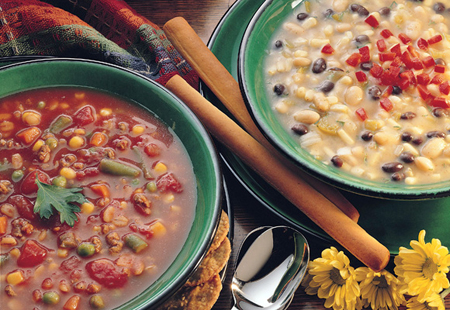
"Everything about chili con carne generates some sort of controversy - the spelling of the name, the origin of the dish, the proper ingredients for a great recipe...Although archaeological evidence indicates that chile peppers evolved in Mexico and South America, most writers on the subject state flatly that chili did not originate in Mexico. Even Mexico disclaims chili; one Mexican dictionary defines it in 1959 as: 'A detestable dish sold from Texas to New York City and erroneously described as Mexican.'" ---The Chile Pepper Encyclopedia, Dave DeWitt [William Morrow: New York] 1999 (p. 76-8)
Charles Ramsdell, a writer from San Antonio in an article called San Antonio: An Historical and Pictorial Guide, wrote: "Chili, as we know it in the U.S., cannot be found in Mexico today except in a few spots which cater to tourists. If chili had come from Mexico, it would still be there. For Mexicans, especially those of Indian ancestry, do not change their culinary customs from one generation, or even from one century, to another."
Despite such protestations, the combination of meat and chiles in stew-like concoctions appears frequently in Mexican cooking. Elizabeth Lambert Ortiz, in her book, The Complete Book of Mexican Cooking (1967), has a recipe for Chile con Carne made with ancho chiles, which she described as "an authentic northern Mexican style of cooking ... as distinct from the version that developed in Texas." In The Food and Drink of Mexico (1964), George C. Booth commented: "In the United States, chili con carne is predominantly a bean dish, but in Mexico chile con carne is a generous meat dish."
Mexican caldillos and pucheros (thick soups or stews), moles (sauces made with a variety of chiles), and adobos (thick sauces) often resemble chili in both appearance and taste because they all sometimes use similar ingredients: various types of chiles combined with meat (usually beef), onions, garlic, cumin, and occasionally tomatoes.
Probably the most likely explanation for the origin of chili con carne in Texas combines the heritage of Mexican food with the rigors of life on the Texas frontier. The first of these dishes to appear in the United States were in the southwest, most likely in the state of Texas. Early in the 19th century, San Antonio's poorest families would stretch a bit of meat over many mouths by hashing it with chili peppers. Visiting San Antonio in 1828, J.C. Clopper of Houston saw pots of peppery hash simmering on the back streets and remarked on how meat was "cut into a kind of hash with nearly as many peppers as pieces of meat" and everything "stewed together." Clopper gives the hash no name but his description may be the first we have of chili -- or rather its peppery precurser.
Except for this one quote, which does not mention the dish by name, historians of heat can find no documented evidence of chili in Texas before 1880. Around that time in San Antonio, a municipal market-El Mercado-was operating in Military Plaza. Historian Charles Ramsdell noted that "the first rickety chili stands" were set up in this marketplace, with the bowls of red sold by women who were called `chili queens.' The San Antonio Chili Stand, in operation at the 1893 Columbian Exposition in Chicago, helped popularize chili by giving many Americans their first taste of it.
Chili Variations:
Today there are countless variations of chili con carne and if you are from the northeast, you may be surprised to discover that two of the most contested ingredients in chili are beans and tomatoes. The songwriter Ken Finlay wrote a little ditty called "If You Know Beans About Chili, You Know That Chili Has No Beans." He would be singing about Texas Red Chili. Texans argued heatedly against adding beans to their chili and many of them would not add any tomatoes.
Chilis come in a variety of colors also: red, verde (green) and a white version made of white beans and chicken or turkey. Over the years, chili has taken on a life of its own as recipes spread from family to family. Today there are any number of chili variations you can make.
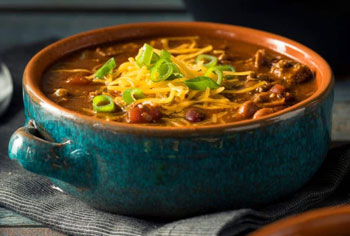
Five Alarm Chili
Chili con Carne
In the U.S. northeast, chili is red in color and gets this coloring mainly from tomatoes, not from dried red chilis as does Chili con Colorado (see below). The beans/no beans dispute is not heard much - chili comes with beans. Red kidney and pinto beans are traditional, although black and other beans have been used in recent years.
This is the chili that became popular after chili powder was first produced commercially in the 1890s, making the chile ingredients easily accessible in regions where chili peppers are not readily grown and sold.
Recipe for Mom's Chili con Carne
Recipe for Norm's Chili
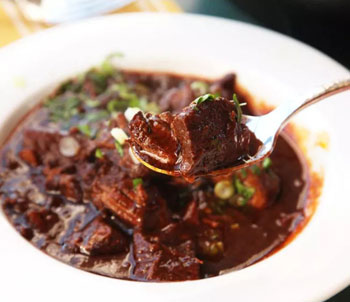
Texas Red
Texas Red Chili
In Texas, a bowl of Texas Red refers to Beef Chili, without beans. The question of whether beans "belong" in chili has been a matter of contention among chili cooks for a long time. The chili that was invented in San Antonio is said to be a bowl of "red": tender, individual stewed chunks of beef swaddled in a spicy, cumin-spiked sauce made from red chiles, which lend the dish an appealing russet hue. They contain no beans and little or no vegetables other than the chili peppers.
The main rule of thumb is that it definitely cannot contain a filler of any kind, the most warned-against offender being beans. A healthy debate persists over whether tomatoes can be included, and a chili recipe published in the New York Times in January 2015 merited a full-article rebuttal in Texas Monthly, which targeted in particular the inclusion of coriander seed.
In all likelihood, beans have long been a part of chili, even in Texas. And while purists will argue the point until they're red in the face, that fight doesn't hold sway with historians like Guerra. Cowboys mixed chili and beans on their tin plates according to the Chili Appreciation Society International.
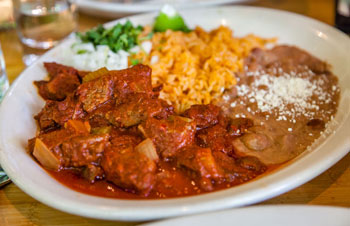
Chili Colorado with Mexican beans & rice
Chili con Colorado
Chile Colorado is a famous Mexican dish incorporating colorful, infused chiles into a hearty, meaty stew. Hailing from Chihuahua, Mexico, it has become one of the staple dishes of Mexican cuisine. This dish is called Chile Colorado because it is a variation of ‘chili’ and has a beautiful deep color. ‘Colorado’ is a shout-out to its famous red color rather than the state in the US. With so many variations of chili in the world, this one is undoubtedly the best.
If you're the type of American who believes Chili was invented in Texas, then this dish isn't what you're expecting and might prefer to call it "Meat in Red Chile Sauce". Chile Colorado beef cooks in a boldly spiced and vibrant Mexican-style red chile sauce (colorado means red in Spanish) or adobo. This sauce is made with tomatoes, spices, vinegar and different dried chiles such as guajillo chiles, chile de arbol and California chiles aka New Mexican red chiles.
Carne Adovada is a similar New Mexican dish, but it is made with pork, braised low and slow in a thick chile-based sauce.
Chile Colorado is typically served with tacos, tortillas, and Mexican rice.
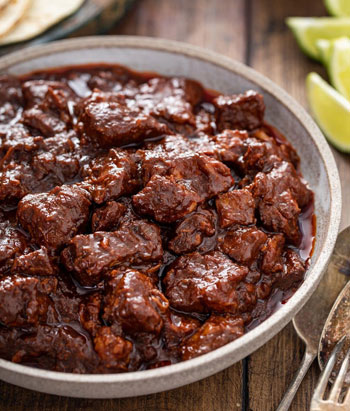
Carne Adovada
Chili Adovada
Carne adovada (Spanish for "marinated") is a New Mexico chili specialty. It’s pork-based, but the broth centers around an assortment of potent red dried peppers. Straddling the line between a stew and a well-sauced meat, it’s got a drier, thicker consistency to it that can even stay put inside a taco. In its simplest form, raw pork butt or shoulder is cut into strips or cubes and placed in a large plastic bag with New Mexico red chili powder or minced red chili peppers (Hatch or Guajillo chili peppers), garlic, oregano, cumin, lime/lemon juice and/or vinegar, and salt, then mixed and refrigerated over night. The dish is cooked by baking at low heat wrapped completely in foil or in a covered dish like a casserole dish to keep the meat moist. Serve with cooked hominy, rice, beans, or in tacos.
The New Mexican dish carne adovada is based off of a Mexican cooking process called Adobada (or sometimes enchilada) which is a general term that means to cook something in an adobo sauce—a sauce made with chiles, flavored with a few aromatics and vinegar. Mexican carne adobada can come in all shapes in sizes from simmered chunks to shreds. New Mexican-style carne adovada, on the other hand, is a defined dish consisting of chunks of pork simmered in a chile-based stew. The smokiness from the ancho chiles, the earthiness of pasilla peppers, and a hint of sweetness from chipotle peppers give carne adovada stew its signature flavor profile.
Carne adovada is served any number of ways—as a stew, or as a filling for burritos and sopapillas—perhaps outnumbering the many ways in which Americans across the nation enjoy their chili.
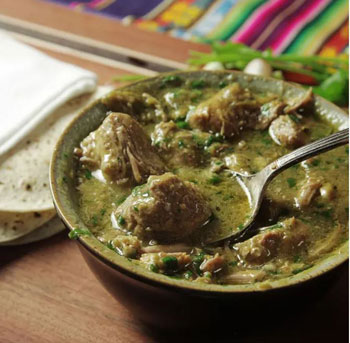
Pork Chili Verde
Chili Verde
Although there are a number of green chilis out there, the most famous of them all is the New Mexican version, which features chunks of pork simmered in local Hatch peppers. Chili verde (green chili) is a moderately to extremely spicy Mexican and Mexican-American stew or sauce usually made from chunks of pork that have been slow-cooked in chicken broth, garlic, tomatillos, and roasted green chilis. Tomatoes are rarely used.
The spiciness of the chili is adjusted with poblano, jalapeño, serrano, and occasionally habanero peppers. The consistency is usually much thinner than Texas-style chili and is usually served with tortillas or sopapillas. It is often ladled over burritos, enchiladas, hamburgers, and fried eggs.
Recipe for Chili Verde (pork shoulder)
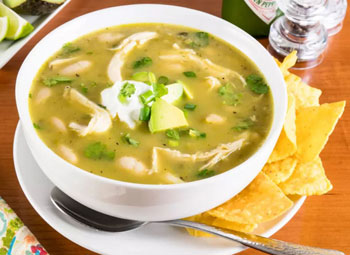
White Chicken Chili
White Chili
While traditional chili contains red meat and beans, white chili is usually made with white beans, like cannellini or Great Northern beans. Common meat options in this variation include turkey or chicken, which is usually either ground or shredded. Peppers, onions, and other vegetables may also be added. It still manages to fit in a good deal of hot peppers and spice, though.
Recipe for White Chicken Chili
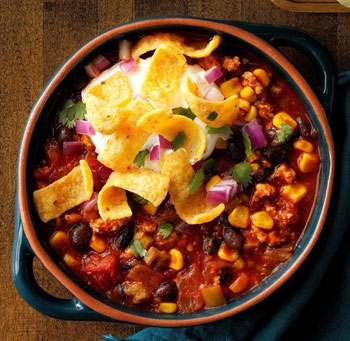
Black Bean Chili
Black Bean Chili
Black bean chili is a popular chili option that relies heavily on black beans over other types of beans. Some black bean chili recipes are vegetarian, while others will include ground beef or bite-sized pieces of steak. This type of chili often features black beans, corn, tomatoes, bell pepper, and onion cooked with spices. It’s sure to be a hit at chili cook-off!
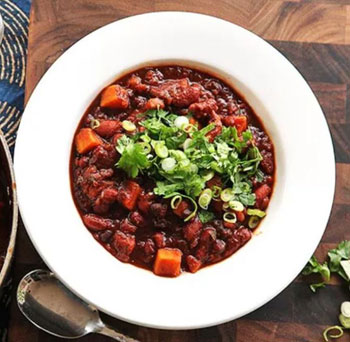
Vegetarian Sweet Potato Chili with Beans & Hominy
Vegetarian Chili
Vegetarian chili is an innovation that arose from the vegetarianism craze of the 1960s and '70s. A meat substitute is sometimes used, such as tofu or tempeh to mimic the texture of meat, but adding beans or other vegetables, like sweet potatoes (which contribute not only great flavor to a chili but an interesting texture as well), will often suffice to make a dish that's every bit as piquant and complex as more conventional chilis.
Of course, given that vegetarian chili isn't a style so much as a meatless variation on the dish, it can be made with a fresh- or dried-chile base, and there are no proscriptions against any ingredient other than meat. Some recipes use the more traditional chili ingredients and flavorings; others are more inventive such as the Spring Chili With Greens.
Spring Chili With Greens (cannellini beans, chilis and flavorings, chicken broth, escarole)
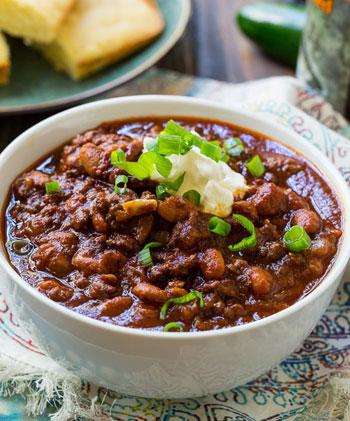
Five Alarm Chili
Five Alarm Chili
Ever wonder what they mean by “five alarm chili"? A “chili alarm” refers to the number of sources of, and ergo the level of, heat—you can often count five different types of peppers in these recipes, such as jalapeno, chipotle in adobo, chili powder, cayenne, and ancho. Quite a few recipes I looked at added beer to the mix.
Top with a little sour cream and avocado to tame the heat and you have a delicious cold weather meal. And don’t forget your side of cornbread!
