DIY Instant Ramen Noodles
Ramen is a Japanese noodle soup dish made with Chinese-style wheat noodles. In 1958, instant noodles were invented by Momofuku Ando, the Taiwanese-Japanese founder and chairman of Nissin Foods.
The Food Lab: Make Your Own Just-Add-Hot-Water Instant Noodles (and Make Your Coworkers Jealous)
Sep 29, 2014, J. Kenji López-Alt, http://www.seriouseats.com/
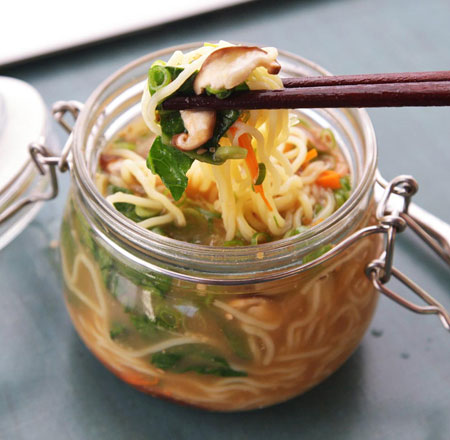
Vegetable With Sesame-Miso Soup Flavor
"Wouldn't it be great if you could get all of the convenience and pleasure of instant noodles—the portability, the just-add-water cooking, the lunch-sized portions—but pack it full of fresh vegetables and real, honest-to-goodness flavor? Here's a secret: you can, and it's easier than you think. . .
I often get unduly excited by good food and clever ideas, even (or especially) when they aren't my own. The original inspiration for this recipe came last week as I was unpacking one of my 37 boxes of cookbooks after my cross-country move. I accidentally dropped my prized signed copy of Hugh Fearnley-Whittingstall's River Cottage Veg and it flopped open to a page I must have just glossed over in the past. On that page Hugh has a recipe called DIY 'Pot' Noodles (what we call Cup Noodles or instant ramen over here).
The idea is simple and genius: combine par-cooked noodles, a bit of vegetable base, some raw sliced veggies, and a few seasonings inside a jar. Add boiling water, wait a few minutes, and you've got yourself a lunch with all the appeal of instant noodles, but with actual flavor and freshness trapped under that lid.
For the last couple weeks, I've taken that idea and run with it, experimenting with different types of noodles, different flavor combinations, different meats and vegetables, and different methods of storage, all with one goal in mind: to change the way you think about brown-bagging forever.
Today, I'm going to keep the talking to the minimum, walk you through one flavor—Spicy Kimchi Beef Flavor—give you basic instructions for the other three flavors—Chicken and Dill Flavor, Vegetable With Sesame-Miso Soup Flavor, and Thai Coconut Curry Shrimp Flavor—and leave you a few helpful tips for designing your own instant pot noodles because really, this is a method more than a strict recipe.
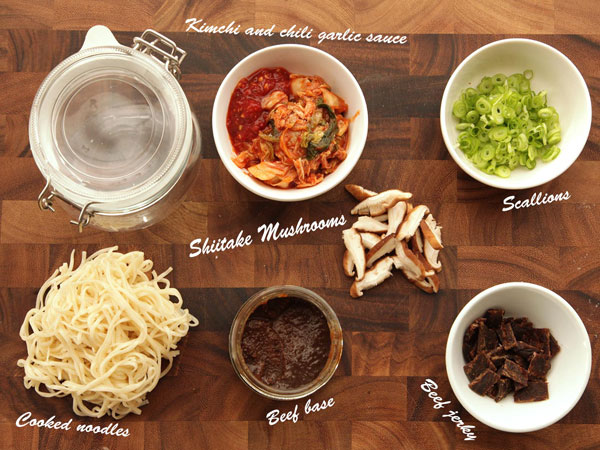
For this flavor we're using beef base, shiitake mushrooms, beef jerky, kimchi, chili-garlic sauce, scallions, and noodles.
How to Make Spicy Kimchi Beef Flavor Instant Noodles
Layer the following in a jar.
1. The Flavor Base:
Choosing a high quality flavor base is key here. You can use the powdered stuff, but you end up with a pot of noodles that doesn't taste all that different from actual instant noodles. Better is to use a moist base made with a high proportion of real meat, like Better Than Bouillon. I use about a tablespoon (the soup also gets plenty of seasoning from the kimchi and chili-garlic sauce).
2. Kimchi and Chili-Garlic Sauce
I like to use old kimchi that is super sour for soups, along with plenty of its pickling liquid. Chili-garlic sauce adds heat and garlic.
3. Shiitake Mushrooms
Thinly sliced mushrooms get layered on next.
4. Beef Jerky
I tried beef a few different ways, including raw slices (I disqualified them, as I made a rule of having no raw meats in order to increase the shelf life of the un-cooked jar), ground and pre-cooked, and pre-cooked and sliced. None worked particularly well in terms of balancing flavor with convenience. It wasn't until I hit the checkout lane at the supermarket one day that I saw the solution staring at me: beef jerky.
5. Ready for the Noodles
You should have a relatively dry top surface ready to receive the noodles now. The first few times I made these pots, I was layering ingredients—including wet ingredients—directly on top of the noodles, which ended up saturating them. Instead, it's better to lay the wet down at the bottom, then add the noodles at the top. Even if they get shaken around a bit on your way to work, a couple of hours in contact with the wet ingredients won't hurt them.
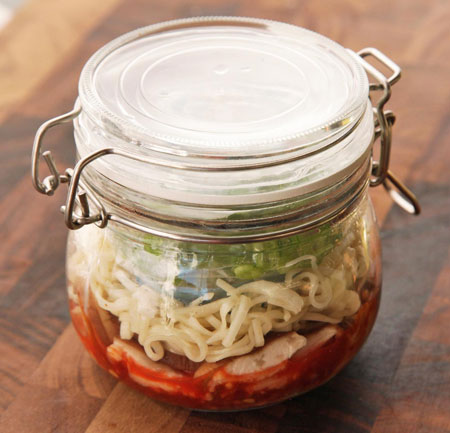
Add the noodles to the pot. A wide variety of noodles will work here, including pre-cooked ramen or pre-cooked Chinese-style egg noodles (both are generally available in Asian markets). If you can't find pre-cooked wheat-based noodles, Thai or Vietnamese-style thin rice noodles (the kind you get in a bowl of pho) are available dry and will cook perfectly in the hot water. If you're willing to go through a little more effort, you can also par-cook fresh ramen or pasta in boiling water, drain it a moment or two before it is fully cooked, shock it under cold water, and toss it with a bit of oil before packing it into jars.
6. Build the Flavor Packet
The other big dilemma I had was that my fresh elements—my chopped herbs, sliced scallions, and other "finishing" flavors—were all getting soft and losing their brightness as they steeped in the boiling water. To solve this problem, I decided to store them separately in a zipper-lock bag.
Tuck the Flavor Pack into the small space at the top of the jar.
7. Seal and Store
Seal up the jar and store it in the refrigerator. Because all of the ingredients are either fresh vegetables, cooked noodles, dried meats, or very salty flavor bases, it has quite a long shelf life. I kept a few for over a week (the herbs suffer the most), but anywhere up to four days is when they're at their best. Once you take them out of the fridge, these pots should be safe to sit around at room temperature for up to around four hours (and probably way, way longer). If you have a mini-fridge at school or at the office, it doesn't hurt to throw them in there though.
8. Pack it for Lunch and Add Boiling Water
When you're ready to eat it, open it up and set the Flavor Pack to the side. Add boiling water straight out of a desktop water kettle (or if you have a hot water dispenser nearby, that'll work too; your local deli can probably give you some hot water out of the coffee machine). Close the lid and seal it off. Wait For It... Sit and wait for all the ingredients to reheat. Add the contents of the Flavor Pack to the top of the bowl and stir to combine, making sure to get all of the flavor base and juices from the bottom of the jar.
4 tablespoons high quality beef base such as Better Than Bouilllon
2 cups kimchi with juices
4 tablespoons chili-garlic sauce (more or less to taste)
1 cup thinly sliced shiitake mushroom caps
4 ounces beef jerky, cut into 1/2-inch squares
4 small nests rice noodles or pre-cooked ramen or Italian pasta
1 cup thinly sliced scallions
Makes 4 servings
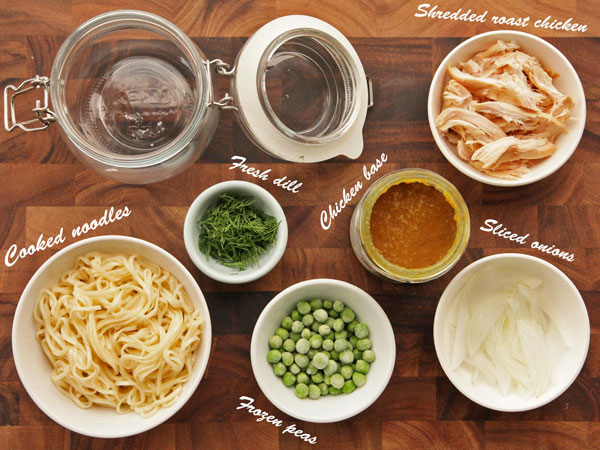
How to Make Chicken and Dill Flavor Instant Noodles
This version starts with chicken meat I picked off of a rotisserie chicken from the supermarket, along with chicken base, sliced onions, frozen peas, and cooked noodles. The Flavor Pack gets filled with minced dill.
Frozen, finely cut vegetables work really nicely in these pots because they are generally par-cooked by blanching, which means that all they need to do is thaw in the hot water.
I also made a version of this using par-cooked egg noodles for a more traditional take on chicken noodle soup.
4 tablespoons high quality chicken base such as Better Than Bouillon
1 cup frozen peas
1 small onion, thinly sliced
12 ounces shredded chicken meat from 1 rotisserie chicken
4 small nests rice noodles or pre-cooked ramen or Italian pasta
Kosher salt and freshly ground black pepper
1/2 cup minced fresh dill leaves
Makes 4 servings
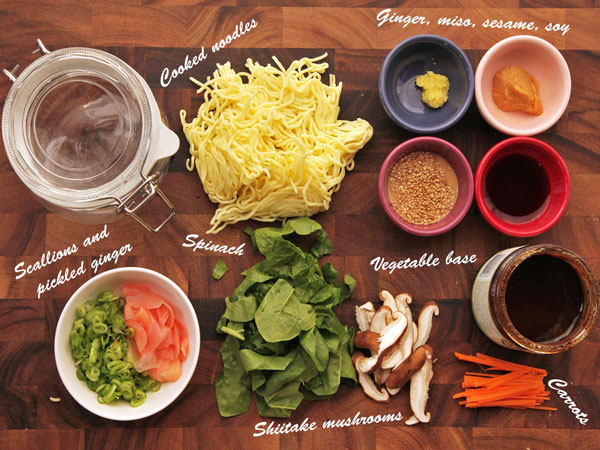
How to Make Vegetable With Sesame-Miso Soup Flavor Instant Noodles
This one is very similar to Hugh's original recipe, though I've bumped up the flavor of the vegetable base with some grated ginger, miso paste, soy sauce, and sesame tahini. For the vegetables, I'm using a mix of julienned carrots, sliced shiitake mushrooms, and torn spinach.
The noodles in this batch are the pre-cooked Japanese ramen packs that come in ready-to-fry yakisoba kits.
For the Flavor Pack, I'm going with thinly sliced scallions as well as some pickled ginger to double up on that ginger flavor.
2 teaspoons grated fresh ginger
8 teaspoons miso paste
8 teaspoons high quality vegetable base such as Better Than Bouillon
4 tablespoons tahini
4 teaspoons toasted sesame seeds
4 teaspoons soy sauce
1 cup shredded carrots
1 cup thinly sliced shiitake mushroom caps
2 cups roughly torn fresh spinach leaves
4 small nests rice noodles or pre-cooked ramen or Italian pasta
1 cup minced fresh scallions
1/2 cup pickled ginger
Makes 4 servings
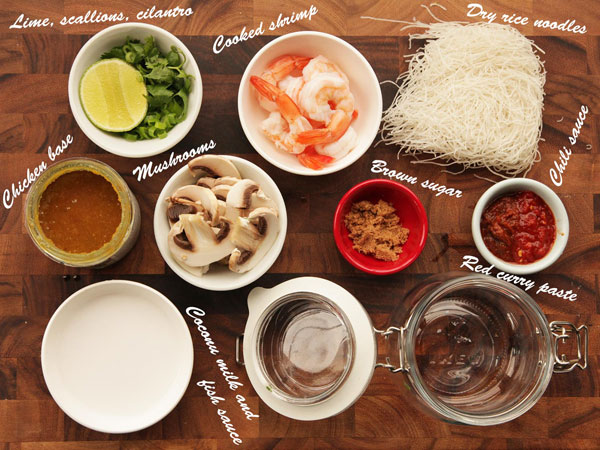
How to Make Thai Coconut Curry Shrimp Flavor Instant Noodles
This is about as complicated as these get, and most of these ingredients are pantry staples (at least 'round my part they are).
The flavor starts with chicken base mixed with Thai red curry paste, some chili-garlic sauce (for extra heat), a dash of fish sauce, some brown sugar, and a bit of coconut milk. Cooked shrimp and thinly sliced mushrooms go on top, followed by a nest of rice vermicelli.
In the Flavor Pack, I use a mix of scallions and chopped cilantro, along with a wedge of lime to be squeezed into the soup after cooking.
This is probably my favorite flavor of all. It comes out really nicely balanced with hot, sour, and sweet flavors.
8 teaspoons high quality chicken base such as Better Than Bouillon
4 teaspoons brown sugar
8 teaspoons red curry paste (such as Mae Ploy)
4 teaspoons chili-garlic sauce (more or less to taste)
4 teaspoons fish sauce
16 to 20 medium cooked shrimp
1 cup thinly sliced button or shiitake mushrooms
1 cup coconut milk
4 small nests rice noodles or pre-cooked ramen or Italian pasta
1 cup thinly sliced scallions
1 lime, cut into 4 wedges
Makes 4 servings
How to Make Your Own Flavors!
The Flavor Base
- I'd never really used Better Than Bouillon in the past, but it was by far the best concentrated soup base I tried out of the half dozen or so I could find in the area. It makes sense—real meat and vegetables are high up on their ingredients lists, compared to most powdered bases which are primarily salt and MSG-like glutamates.
- The key for really good flavor is to use the base as the background, bumping it up with other flavorful sauces and pastes. Miso paste, curry paste, and sesame tahini are three good ones. Any number of Chinese-style sauces like chili-garlic sauce, black bean sauce, or Sichuan chili bean paste work well. A touch of sugar can balance out heat. Freshly grated ginger and garlic will add freshness and bite. Soy sauce and fish sauce bring a powerful umami punch to a pot. Canned tomatoes or chipotle peppers are nice for a non-Asian flavor. Just make sure to scale back the soup base when you add other salty ingredients.
Adding Noodles
- Don't try and use uncooked ramen or Italian pasta—the water doesn't stay hot long enough to cook them and they end up gummy and mushy!
- The easiest noodles to use are the rice vermicelli sold under Thai and Vietnamese brands. Pad Thai-style wider rice noodles also work.
- For wheat-based noodles, I recommend par-cooked noodles sold in the refrigerated sections of Asian supermarkets. Generally, these noodles are meant to be fried, so will be sold as fried lo mein or as yakisoba.
- You can par-cook fresh or dried ramen, udon, soba, or Italian pasta. Cook it until slightly underdone, shock it in cold water, toss it with a little oil, and you're good to go.
- Shirataki and other no-cook noodle alternatives work well.
Adding Meats and Other Proteins
- Stick with fully cooked, cured, or dried meats. My favorites (and the easiest) are picked roast chicken, beef jerky, cooked shrimp, canned tuna, chunks of cured meats like chorizo or pepperoni, bacon (because it's thin, bacon can actually be added raw and will cook in the boiling water), firm or fried tofu, smoked salmon, or finely flaked and rinsed salt cod.
Adding Vegetables
- The thing to remember is that nothing really cooks when you add the hot water. Things absorb water and can be slightly softened, but that's it. Make sure you stick with vegetables that can be eaten raw.
- For firmer vegetables like carrots, cabbage, leeks, larger mushrooms, and the like, either grate the vegetables on the large holes of a box grater, or cut them into thin julienne-style matchsticks.
- More tender vegetables like mushrooms or tomatoes can be cut into bite-sized pieces. Leafy greens like kale and spinach should be freed of any thick, fibrous stems, if the have them, and then can be simply torn.
- Frozen vegetables like peas or corn can be added direct from the freezer, though if you plan on cooking the pots immediately, it's best to thaw them under the tap first so that you don't lose too much heat when you add your boiling water.
The Flavor Packs
- This is where your fresh elements come in. Think fresh chopped herbs, citrus that can be juiced at the end, and pickled items like capers or ginger. Sliced chilies and scallions are also great.
