Escarole Braised with Cannellini Beans
Adapted from All About Braising: The Art of Uncomplicated Cooking by Molly Stevens
This recipe begins by cooking dry cannellini beans in chicken stock with onion, carrot and some other ingredients to give them a good full-bodied flavor. You could use canned cannellini beans to cut down on the time. If you do, be sure to add the chicken stock, onion, carrot and other ingredients to approximate the flavor you would get from cooking them from scratch. The liquid from cooking the beans is used to flavor the dish.
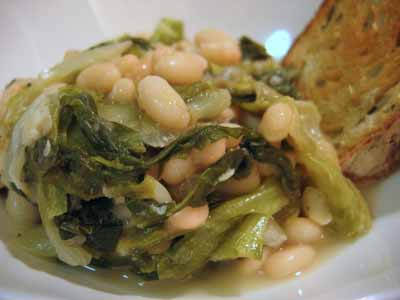 The Beans:
1 cup (8 ounces) dried cannellini beans, picked over and rinsed
1 cup chicken stock
Water as needed
1 small onion (about 4 ounces), peeled and quartered
1 small carrot, peeled and quartered
2 garlic cloves, peeled and bruised
1 bay leaf
1 T. extra-virgin olive oil [optional]
Coarse salt
The Braise
1 medium head escarole (about 1 pound)
2 T. extra-virgin olive oil
3 garlic cloves, thinly sliced
Pinch of crushed red pepper flakes
Coarse salt & freshly ground black pepper
½ lemon
Best-quality extra-virgin olive oil for drizzling
Soaking the beans, according to the cookbook: Place the beans in a medium bowl, cover with water, and let soak for 8 to 12 hours at room temperature. Drain and rinse.
Soaking the beans, a quick way: Place the beans in a medium saucepan, cover with water, and bring to a boil over high heat. Let it boil for 2 minutes, then remove from heat and let soak for 1-2 hours. Drain and rinse.
Cooking the beans: Place the soaked beans in a medium heavy-based saucepan (2 ½- to 3-quart). Add the stock and enough water to cover by 1 ½ inches, then add the onion, carrot, garlic, bay leaf, and oil. Bring to a simmer over medium heat. Once the liquid simmers, partially cover the pot, lower the heat to a gentle simmer, and cook until the beans are tender, 1 to 1 ½ hours. (The cooking time will vary according to the dryness of the beans.) If at any time the level of the liquid threatens to drop below the level of the beans, add just enough water to cover. Ideally, when the beans are tender, they should have absorbed enough of the cooking liquid so that the pot is moist but not soupy. Season with salt to taste, and set aside to cool in the cooking liquid. (The beans may be made 1 to 2 days ahead. If they will be sitting for more than 2 hours, transfer the beans and the cooking liquid to a bowl and keep them covered and refrigerated.)
Washing and trimming the escarole: [Stevens’ method is fairly time-consuming and complicated. The person who posted this recipe cut her escarole into 1 ½-inch strips and dunked it in two changes of cold water, then pulled the floating leaves from the water and transferred to a colander.]
The aromatics: Combine the oil, garlic, and crushed red pepper in a large lidded skillet (12- to 13-inch) over medium heat. Warm just until the garlic becomes fragrant and golden around the edges, about 2 minutes. Don’t allow the garlic to become dark brown or you’ll have to start over.
Wilting the escarole: Add the escarole a handful at a time, stirring and allowing it to wilt some before adding the next handful. (It’s fine if the escarole still has water clinging to it, this will help it begin to braise.) Season with salt & pepper.
The braise: Pull the carrot and onion pieces and the bay leaf from the pot of beans and discard. But don’t be too fussy and try to get every last piece of onion, as some may have disintegrated right into the beans along with the garlic. When all the escarole has wilted, spoon the beans and cooking liquid into the skillet (you should have about 1/2 cup), season with salt & pepper, gently stir to incorporate the beans. Bring to a gentle simmer. Cover, adjust the heat to maintain a low simmer, and braise until the greens are very tender and the cooking liquid has thickened some from the starch released by the beans, about 20 minutes.
The finish: Stevens prefers this dish soupy, so she serves it as is. If you’d like it less soupy, remove the lid and boil to reduce the liquid for about five minutes. Season with a generous squeeze of lemon juice and salt & pepper. Serve warm or at room temperature, with a thread of best-quality olive oil drizzled over the top.
Serves 6
