Crispy Mashed Potato Casserole With Bacon, Cheese, and Scallions
from https://www.seriouseats.com/
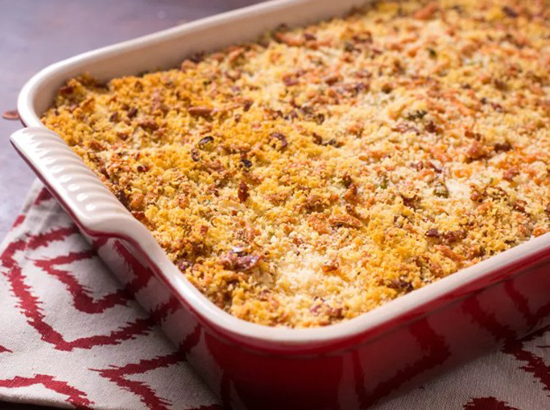
The key to an easy Thanksgiving is to make as much of the food ahead as possible. But cold mashed potatoes don't reheat very well and are best made at the last minute. Even when loaded with cream and butter, mashed potatoes tend not to reheat well: They harden when chilled and, without the addition of moisture, never regain their freshly-made taste and texture when reheated. The trick, then, is to add an ingredient that will help maintain the mash's moisture level so that it softens back to its original light, fluffy texture when cooked again.
There are already a lot of recipes for this, and most call for adding cream cheese or sour cream to the mix. Sour Cream: My personal favorite, it creates reheated mashed potatoes that are moist and light, with a pleasant tang. The flavor makes me think of baked potatoes with sour cream. [He (Daniel Gritzer] tested several other dairy addins and liked sour cream the best.]
I wanted to create a really flavorful crispy topping to make this casserole feel like special-occasion, not everyday mashed potatoes. The flavors of a fully loaded baked potato with bacon, cheese, and scallions seemed like an obvious candidate, especially once you consider the tangy dairy that'll be joining the mash. To make a casserole topping that incorporates all those ingredients, I mixed panko bread crumbs with crispy diced bacon along with its rendered fat, thinly sliced scallions, and grated cheddar. The result is a mashed potato casserole that can be made well in advance, and then reheated to produce light, fluffy and moist potatoes with a subtle sour-cream tang and flavorful crunchy topping that recalls the best fully loaded baked potatoes.
5 pounds (2.3 kg) russet potatoes, peeled and cut into 3/4-inch cubes
Kosher salt
1 stick unsalted butter (4 ounces; 115 g), cubed and slightly softened
1 cup (8 ounces) sour cream (see notes)
1 cup (240 ml) heavy cream
6 thin slices bacon, diced
1 1/2 cups (180 g) panko bread crumbs
1/4 cup thinly sliced scallions, white and light-green parts only
6 ounces (170 g) grated cheddar cheese
Preheat oven to 350°F (180°C). Set cubed potatoes in a colander and rinse under cold water until water runs clear. Transfer to a large saucepan and cover with cold water by at least 2 inches. Season water with salt until water is salty like tears. Bring water to a boil over high heat, then reduce heat to medium-low and simmer until a knife easily pierces potatoes with no resistance, 10 to 15 minutes. Drain potatoes in colander, then rinse with hot running water for 30 seconds.
Spread potatoes in an even layer on 2 rimmed baking sheets and transfer to oven until excess moisture has evaporated and surface of potatoes is dry, about 6 minutes.
If using a potato masher, transfer cooked potatoes to a large mixing bowl, add butter and sour cream, and mash until only very small lumps remain, then add heavy cream and fold with a rubber spatula until fully incorporated. If using a ricer, rice potatoes into a large mixing bowl, then fold in butter, sour cream, and heavy cream until fully incorporated. If using a food mill, pass potatoes and butter through food mill into a large mixing bowl, then add sour cream and heavy cream and fold with a rubber spatula until fully incorporated. Season with salt.
Transfer potatoes to a 9- by 13-inch baking dish and smooth surface. Cover with plastic and refrigerate for up to 5 days.
Two hours before serving, remove potatoes from refrigerator and let stand for 1 hour. Meanwhile, preheat oven to 350°F (180°C). In a saucepan, cook bacon over medium-high heat until fat has rendered and bacon is browned and crispy, about 6 minutes. Add panko to a large mixing bowl and scrape bacon and its rendered fat into it. Stir well to combine. Stir in scallions and cheese and season with salt. Spread bread crumb topping on potatoes.
Bake casserole until topping is browned and potatoes are heated through, about 45 minutes. Serve.
Make-Ahead and Storage: The casserole can be prepared through step 4 and refrigerated for up to 5 days. One hour before serving, proceed with step 5.
10 to 15 servings
