Corpse Reviver
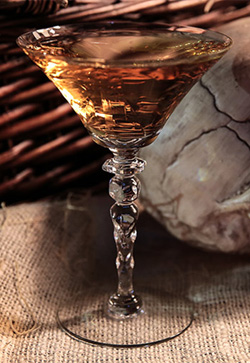
Corpse Reviver No.1
The Corpse Reviver family of cocktails are intended as 'hair of the dog' hangover cures, hence the name. The reviver was popular during the late nineteenth and early twentieth century but began to die out after prohibition when complex "up" drinks went out of fashion, and now the category is all but dead.
The exact nuances that separated a Corpse Reviver from any other cocktail have been lost to time, as indeed have most of the recipies. Of those that remain the most famous are the two listed in The Savoy Cocktail Book (1930) by Harry Craddock, the second of which, the Corpse Reviver No. 2, comes highly recommended by nearly everyone.
The corpse reviver appears in literature as early as an issue of Punch in 1861. An early recipe for the corpse reviver is found in literature as early as 1903.
Corpse Reviver (No. 1)
2 shots Cognac
1 shot apple brandy or Calvados
1 shot sweet vermouth
Stir well with ice and strain in to a cocktail glass.
Harry Craddock writes that the Corpse Reviver No. 1 should be drank "before 11am, or whenever steam and energy are needed." Frankly, while not a terrible cocktail, I really cannot imagine ever wanting to drink this before the evening, especially if I were hung over! It is a very rich mixture, with a heavy brandy taste lightened only slightly by a hint of apple from the Calvados and a floral sweetness from the vermouth. Perfectly drinkable, but ultimately unremarkable.
Corpse Reviver (No. 2)
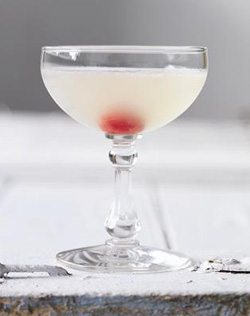
Corpse Reviver No. 2
1 shot gin
1 shot Cointreau (or other orange-flavored liqueur)
1 shot Lillet Blanc (French aperitif wine)
1 shot fresh lemon juice
Dash of absinthe or substitute (I used roughly ¼ teaspoon)
Shake well with ice and strain in to a cocktail glass. Garnish with a maraschino cherry.
Now this is remarkable. The Corpse Reviver No. 2 is a wonderfully complex drink, each ingredient clearly identifiable yet perfectly balanced with the others. You get the tartness of the lemon, the slightly sweet orange hints of Cointreau, the floral notes of the Lillet, all backed up with a good gin base. The dash of absinthe provides a very subtle anise finish, which is only just perceptible but works great.
You have to be really careful with measurements in a drink like this. The balance is very precarious, and an extra ¼ oz here or there will really change the profile of the drink. Especially important is the "dash" of absinthe. Dashes are always a difficultly when approaching classic cocktail recipes – a dash of bitters is often very different to a dash of, say, lemon juice. In this case I found about ¼ teaspoon worked about right, just be careful not to overdo it – less is more.
This drink, along with others like the Last Word and the Purgatory, really reminds us of what cocktails are all about – taking base ingredients and creating something greater than the sum of the parts. Just be careful; as Harry advises "four of these taken in straight succession will unrevive the corpse again"…
