Homemade Bagels
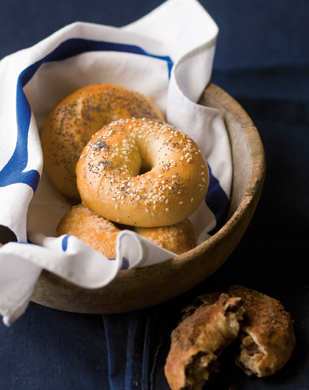
Also see Peter Reinhart’s Homemade Bagels
FMM: I followed Deb Perelman’s adaptation (https://smittenkitchen.com/) of Peter Reinhart’s bagel recipe from, The Bread Baker’s Apprentice and was making so many notes to myself in that recipe that I decided to write up my own instructions to make the recipe easier to follow.
The bagels I made had a wonderful crispy crackly crust and the dough inside was nice and light, not heavy at all. I liked them. The only thing negative was the taste. They were not flavorful enough; the dough was bland, almost like it needed more salt or something. I used barley malt syrup in the dough, and both the malt syrup and baking soda in the bath water. I have since read that many do not like to use baking soda in the bath water. They find the taste from an alkaline bath off-putting as it gives them a pretzely taste. Second, I felt that the bagels were missing salt even though I know I added it to the dough. Since this first time making this recipe, I have omitted the baking soda and used both the barley malt syrup and salt in the bath water. This fixed the taste issue.
Secondly, my bagels stuck badly to a pan that had been greased and sprinkled with cornmeal. I read some suggestions on the Internet as a way to get around this. It appears a lot of people have this problem. The next time I made bagels, I first drained them briefly on a rack after boiling them, and then placed them on a buttered parchment lined baking sheet, which was sprinkled with cornmeal. I no longer have the issue of the bagels sticking to the pan. Removing the excess water was key.
A typical bagel is about 4 ounces or 113 grams before baking, but you can make them smaller. I find the 4 ounce size perfect. I can get 15 or 16 3.8 to 4-ounce bagels out of this recipe, expecially if I am making half with dried blueberries which adds some weight. I have never been able to add all the flour called for, which is 3 3/4 cups. It should be a stiff, but pliable dough, but by mixing in the flour by hand I can add only about 2 1/2 - 2 3/4 addtitional cups of flour. Total weight of the dough when I weighed it once was 3 pounds 9.9 ounces. I used 2 pounds to make 4 4-ounce bagels with dried onion topping and 4 with sesame seed topping, and the rest to make blueberry bagels. I ended up with 8 blueberry bagels. Total number of bagels was 16.
(The next time I made them, the dough weighed 3 pounds 2.5 ounces (I only added 2 additional cups of flour) - without the added raisins or blueberries. I got 15 bagels from this batch, 5 sesame seed (around 3.5 ounces), 5 cinnamon raisin (3.8), 5 blueberry (3.8). They were a little smaller than I usually get from this recipe.)
One other problem I ran into was my onion topping did not stick when I switched to dehydrated chopped onion. I sprinkled with some water to rehydrate so the onion wouldn’t burn. Maybe the onion pieces were too big, but none of them stuck and fell off after baking. I had drained th bagels first before adding the topping, which might have been my problem also. I should have added the topping as soon as they came out of the bath, then drained them. I think using an egg white wash would have helped. I haven't figured this one out yet, but when I make them again I will add onion to the dough so they have the flavor of onion. This is the way they make them at the Acme.
Ideas for Bagels other than Plain:
Cinnamon Raisin Bagels: For cinnamon raisin bagels, increase the yeast in the final dough to 1 teaspoon, and add 1 tablespoon of ground cinnamon and 5 tablespoons of granulated sugar to the final dough. Add 1 1/2 - 2 cups of loosely packed raisins during the final 2 minutes of mixing. Proceed as directed, but do not top the bagels with any garnishes after boiling them. When they come out of the oven and are still hot, you can brush the tops with melted butter and dip them in cinnamon sugar to create a cinnamon-sugar crust, if desired.
[This is way too many. I added 1/2 cup to 1/3 of the recipe and I had a hard time keeping the raisins in. Plus, the raisins absorbed moisture during the overnigh rise, and created wet spots in the dough that would not stick together. This may be a good reason to do the overnight rise after they are shaped. I would try just 1 cup for the full recipe. You can also try flouring the raisins or blueberries.]
Blueberry Bagels: use about the same amount of dried blueberries as raisins that is in the cinnamon raisin version (1 1/2 to 2 cups) [This is way too many. See my note in [ ] in the raisin recipe. Same problem here.], and again like the cinnamon raisin bagels, increase the yeast in the final dough from 1/2 teaspoon to 1 teaspoon to compensate for the dead weight of the dried fruit. Since the dried blueberries are pretty sweet, no additional sugar needs to be added to the dough.
Rye or Whole Grain Bagels: You can replace any amount of the bread flour with an equal amount of whole grain flour (by weight), such as wheat or rye. If you do so, increase the water in the dough by 1 tablespoon (0.5 oz / 14 g) for every 2 ounces (56.5 g) of whole grain flour you substitute. Other Ideas: Oat - Wheat dough with oat flour, for those who like their oats. Seven Grain - Wheat, rye, cracked corn, oats, millet, barley, rice and flaxseed, all in a wheat bagel. Top Pumpernickel bagels with caraway seeds.
Egg Bagels: Add 1 egg (or just 1 yolk for a richer egg bagel) per 1 cup of flour. Since eggs have water content, there needs to be an adjustment of the water that goes into the recipe. As a general rule of thumb, each whole egg contains 1.5 ounces of water, while yolks contain about 0.5 ounce of water.
Onion Bagels: After boiling the bagels, brush with egg white mixed with a little water. Dip in dehydrated onion flakes, that has been soaked in a little water, or sprinkle on top. You could also use onion powder or dried minced onion to flavor the dough.
Bagel Toppings: Top your bagels with any combination of the following garnishes. The toppings will stick even better if you first brush the top of each bagel with an egg white wash made by whisking 1 egg white with 1 tablespoon (0.5 oz / 14 g) of water. If using coarse salt as a garnish, remember that a little goes a long way.
- poppy seeds
- sesame seeds
- rehydrated dried onions or garlic - or chopped fresh onions or garlic that have been tossed in oil. (Soak dried onions or garlic in water to cover for at least 1 hour before applying. Then drain well.)
Everything Bagel Topping
4 teaspoons poppy seeds
4 teaspoons sesame seeds
4 teaspoons dried garlic (minced or flaked)
4 teaspoons dried onion (minced or chopped)
2 teaspoons kosher salt (or other coarse salt)
*Peter Reinhart’s Bagels
From https://smittenkitchen.com/
Adpated from The Bread Baker’s Apprentice
FMM: This is my modified version with revised instructions.
Sponge
1 teaspoon instant yeast
4 cups unbleached high-gluten or bread flour
2 1/2 cups water, room temperature
Note: Plan which flavor bagels you want to make before mixing the final Dough. Some require you to add ingredients to the dough and are easier to add before all the flour has been added.
Dough
1/2 teaspoon instant yeast
3 3/4 cups unbleached high-gluten or bread flour (FMM: I only use 2 - 2 1/2 cups*)
2 3/4 teaspoons kosher salt (or 1 1/2 tsp. table salt)
2 teaspoons diastatic malt powder or 1 tablespoon dark or light malt syrup, honey, or brown sugar [using barley malt syrup fixed the problem with the flavor of the bagels, do not omit]
Optional flavorings, such as cinnamon, raisins, blueberries (see above)
* Next time try to add more. Bagel dough should be fairly stiff. The water content in bagel dough is typically lower, usually around 55-65% hydration. The last time I made them, I used only 2 cups extra flour and the resulting bagels could have used more strength, especially the raisin and blueberry ones. Part of the problem may have been that I did not take into account the lower amout of flour, so added too much fruit, and the dried fruit made working with the dough difficult. The moisture in the fruit made the dough wet in some places and it would not stick yogether.
To Finish
1 1/2 tablespoons barley malt syrup
1 teaspoon salt
[do not use baking soda, it makes the bagels taste more like pretzels]
Cornmeal or semolina flour for dusting baking sheets
1.Day one: To make the sponge, stir the yeast into the flour in a 4-quart mixing bowl. Add the water, whisking or stirring only until it forms a smooth, sticky batter (like pancake batter). Cover the bowl with plastic wrap and leave at room temperature for approximately 2 hours, or until the mixture becomes very foamy and bubbly. It should swell to nearly double in size and collapse when the bowl is tapped on the countertop.
2. To make the dough, in the same mixing bowl (or in the bowl of an electric mixer), add the additional yeast, salt and malt syrup to the sponge and stir. Then add 2 cups of the flour. Stir (or mix on low speed with the dough hook) until the ingredients form a ball, slowly working in the remaining 1 3/4 cups flour as needed to to stiffen the dough. Use your index finger to feel the dough. If it feels sticky and not very dense, add more of the flour.
Blueberries or cinanmon and raisins should be added in at this time. If you are making cinnamon raisin bagels, you need to mix the cinnamon and sugar in with the mixer. You can never get this kneaded in.
3. Transfer the dough to the counter and knead for at least 10 minutes (or for 6 minutes by machine). The dough should be firm, stiffer than French bread dough, but still pliable and smooth. There should be no raw flour – all ingredients should be hydrated. If the dough seems too dry and rips, add a few drops of water and continue kneading. If the dough seems tacky or sticky, add more flour to achieve the stiffness required. The kneaded dough should feel satiny and pliable but not be tacky.
Now is the time to add raisins and cinnamon, or blueberries to the dough. Once mixed, place each dough in separate bowls to proof.
A typical bagel is about 4 ounces or 113 grams before baking, but you can make them smaller. I find the 4 ounce size perfect. I can get 15 or 16 3.8 to 4-ounce bagels out of this recipe, expecially if I am making half with dried blueberries which adds some weight. I have never been able to add all the flour called for. It should be a stiff, but pliable dough, but by mixing in the flour by hand I can add only about 2 1/2 - 2 3/4 addtitional cups of flour. Total weight of the dough when I weighed it once was 3 pound 9.9 ounces. I used 2 pounds to make 4 4-ounce bagels with dried onion topping and 4 with sesame seed topping, and the rest to make blueberry bagels. I ended up with 8 blueberry bagels. Total number of bagels was 16.
See variations above for amount of raisins, blueberries, etc. to add.
Let the dough rise until double in bulk and punch down. Shape into a ball, place in a greased bowl covered with plastic wrap and put in the refrigerator to proof overnight. I don’t want to overproof shaped bagels as overproofing can cause the bagels to deflate, plus I don’t have room in my frig for a bunch of bagels on trays, so I break from Peter Reinhart’s recipe at this point.
The following day: Take the dough out of the frig, let it warm up, then shape the bagels as in the next steps. If using dried onions or garlic, soak in water to cover for about 1 hour before applying so they don’t burn. Then drain and dry them a bit.
4. Divide the dough into 3.8 - 4 ounce pieces for standard bagels, or smaller if desired. Form the pieces into round rolls.
5. Cover the rolls with a damp towel and allow them to rest for approximately 20 minutes. I just leave the balls of dough on the counter while resting, Line 2 sheet pans with baking parchment and mist lightly with spray oil or grease with some butter.
6. Proceed with one of the following shaping methods:
Method 1 [the one I use]: Poke a hole in a ball of bagel dough and gently rotate your thumb around the inside of the hole to widen it to approximately 2 1/2 inches in diameter. The dough should be as evenly stretched as possible (try to avoid thick and thin spots.)
Method 2: Roll out the dough into an 8-inch long rope. (This may require rolling part of the way and resting if the pieces are too elastic and snap back, in which case, allow them to rest for 3 minutes and then extend them again to bring to full length. Wrap the dough around the palm and back of your hand, between the thumb and forefinger, overlapping the ends by several inches. Press the overlapping ends on the counter with the palm of your hand, rocking back and forth to seal.
7. Place the shaped bagels on greased sheet pans. Cover the bagels and let them raise until they look puffed. Do not overproof as this could cause them to wrinkle when boiled.
In the meantime:
- Set a rack on top of another sheet pan for draining the bagels briefly after boiling. This also helps keep the bagels from sticking to the baking pan, which I had problems with the first time I made them.
- Ready a large pot of water for boiling the bagels (the wider the pot the better) and add the barley syrup and salt [important for flavor] . Have a slotted spoon or skimmer nearby.
- If using toppings, get them ready now, along with an egg or egg white wash to hold the onion or garlic toppings on. Seeds should stick as long as you put the seeds on as soon as they come out of the water bath. If not, brush them with water before adding seeds.
(8. Float test - skip as I am not putting the shaped bagels in the frig overnight.)
9. Boiling the Bagels: When the bagels are almost done rising:
- Preheat the oven to 475 degrees F with the two racks set in the middle of the oven. High heat gives you a crisp crust.
- Bring the pot of water to a boil.
10. When the bagels are ready to boil them, gently drop them into the water, boiling only as many as comfortably fit (they should float within 10 seconds). After 1 minutes flip them over and boil for another minute. (As you remove bagels from the pan for boiling, spinkle cornmeal or semolina flour in the spots the bagels occupied. This keeps the bagels from sticking to the pan.)
If you like very chewy bagels, you can extend the boiling to 2 minutes per side. They will puff up quite a bit while boiling. Reduce the heat of your boil so that it isn’t a rolling boil. You want the water to be just on the cusp of boiling. This is easier to work with, and it keeps your dough from wrinkling and dimpling.
Note: Boiling is meant to gelatinize the exterior and set the crust. A short boil (1 minute per side) will give the bagel a thinner crust allowing them to rise in the oven and making it fluffier on the inside. Boiling a bagel for a little longer sets the crust and hinders the bagel from continuing to rise in the oven during the baking process. The level of gelatinisation of the flour will be determined by levels to which the starches in the bagel dough are heated. This will impart a much denser, heavier inner bagel. You want your yeast activation to mostly come in the oven, not the boil.
Remove from the water and drain for a few seconds on the rack you have ready over a sheet pan. If you want to top the bagels, do so as soon as they have dripped for a few seconds; the dough should still be wet for the seeds to stick. Brush the bagels that will have onion or garlic on top with egg white to help the topping stick.
[To see what technique works better. Add onion while wet, and others brush with egg white.] Place each of the shaped pieces 2 inches apart on the prepared pans.
11. Baking: When all the bagels have been boiled, place the pans on the 2 middle shelves in the oven. Bake for approximately 5 minutes, then rotate the pans, switching shelves and giving the pans a 180-degree rotation. (If you are baking only 1 pan, keep it on the center shelf but still rotate 180 degrees.) After the rotation, lower the oven setting to 450 degrees F and continue baking for about 5 minutes, or until the bagels turn light golden brown. Don’t over-brown as they will probably be toasted. The bottom should be crispy and golden-brown, as well. When bagels are not cooked all the way, the bottom of the bagels will still be white and soft.
[Mine take 13 - 17 minutes, total, to get golden-brown. The sweeter bagels, blueberry and cinnamon raisin, brown faster than those topped with seeds or onions.]
12. Remove the pans from the oven and let the bagels cool on a rack for 15 minutes or longer before serving.
Yield: 12 extremely large, 16 regular large or 24 miniature bagels [I get around 14 - 16 3.8-ounce to 4-ounce bagels, and find them plenty big]
