Espagnole Sauce
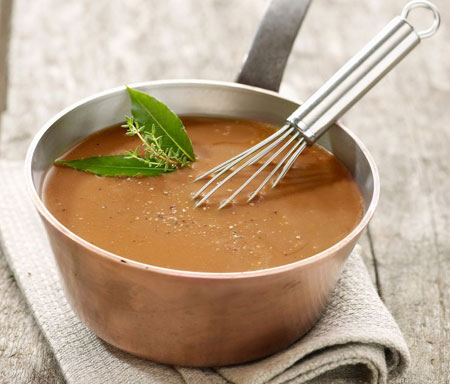 Recipe courtesy of Emeril Lagasse, 1998
Espagnole sauce is one of the mother sauces that are the basis of sauce-making in classic French cooking. In the late 19th century, Auguste Escoffier codified the recipe, which is still followed today. It is basically a type of brown gravy that doesn't rely on having a pan full of drippings. It uses stock as its base.
The Espagnole Sauce, also sometimes called Brown Sauce, is a slightly more complex mother sauce. Espagnole is made by thickening brown stock with roux. So in that sense, it's similar to a velouté. The difference is that Espagnole is made with tomato purée and mirepoix (celery, onion and carrot) for deeper color and flavor. Moreover, brown stock itself is made from bones that have first been roasted to add color and flavor.
Espagnole is traditionally further refined to produce a rich, deeply flavorful sauce called a demi-glace. The demi-glace is then the starting point for making the various small sauces. A demi-glace consists of a mixture of half Espagnole, half brown stock, which is then reduced by half.
Espagnole has a strong taste and is rarely used directly on food. This is due to its strong and often bitter flavour which is difficult to pair with many dishes.
1 gallon brown stock, hot
1 1/2 cups brown roux
1/4 cup bacon fat
2 cups chopped onions
1 cup chopped carrots
1 cup chopped celery
Salt
Freshly ground black pepper
1/2 cup tomato puree
1 bouquet garni
In a stock pot, whisk the hot stock into the roux.
In a large saute pan, heat the bacon fat. Add the vegetables. Season with salt and pepper. Saute until wilted, about 5 minutes. Stir the tomato puree into the vegetables and cook for about 5 minutes.
Add the tomato/vegetable mixture to the stock/roux mixture. Add the bouquet garni and continue to simmer, skimming as needed. Season with salt and pepper. Simmer the sauce for about 45 minutes. Strain the sauce through a China cap.
Yield: 1 gallon
Derivative Sauces:
As a mother sauce, however, it serves as the starting point for many derivative sauces. There are hundreds of other derivatives in the classical French repertoire.
Sauce Africaine - As its name suggests, sauce africaine gets its flavor from African/Creole seasonings. This hearty sauce complements steak, chops, and chicken. Though not as quickly prepared as some other sauces, its basic method is the same as most other "small" brown sauces: special flavorings are cooked (tomatoes, onion, bell pepper, with herbs such as basil, thyme, and bay leaf), reduced in wine, then combined with the sauce Espagnole.
Sauce Bigarade
Sauce Bourguignonne
Sauce aux Champignons
Sauce Charcutière (Charcutière Sauce)
Sauce Chasseur (Chasseur Sauce)
Sauce Chevreuil
Demi-glace
Marchand de Vin Sauce (Red Wine Reduction) - The Marchand de Vin (French for "wine merchant") Sauce is the classic red wine reduction sauce. It's made by reducing red wine and chopped shallots and then simmering in a basic demi-glace. The Marchand de Vin sauce is delicious served with roasts and steaks.
Robert Sauce - The Robert (pronounced "ro-BAIR") Sauce is a finished sauce made with onions, mustard and white wine simmered in a basic demi-glace. The Sauce Robert is an ideal accompaniment for grilled pork and other meat dishes.
Lyonnaise Sauce
Bercy Sauce
Mushroom Sauce
Madeira Sauce
Port Wine Sauce
