German Gingerbread (Lebkuchen)
The name "Lebkuchen" comes either from the old German word "lebbe" (very sweet) or from the Latin word "libum" (cakes).
The history of the Lebkuchen begins with the Honigkuchen (Honey Cake). The Egyptians, around the year 1500 BC, baked these cakes to be placed in the graves of kings. The Egyptians believed that honey was a gift for the gods. The Romans called their honey cakes "panus mellitus" (sweet bread). They not only used honey as a sweetener in the dough, but they also glazed the cakes with honey.
The Lebkuchen that we know today was originally founded in Belgium. It was introduced into Germany through the city of Aachen, where it was then taken over by the Franconian (fränkishe) monastaries. It was the nuns that created the Lebkuchen shapes that are used today. As "Pfefferkuchen," the cookies were introduced to the city of Ulm in 1296. Later in 1395 they were discovered in the city of Nürnberg, where they were baked by the local monks. The cookies were first called "Lebkuchen" in 1409.
The seasonings needed for the Lebkuchen were not available locally and had to imported from distance lands. Because of this, the Lebkuchen grew in popularity mainly in those larger cities that had significant trade partners. This included the cities of Nürnberg, Ulm, Cologne (Köln), and Munich (München).
The reputation of Nürnberg as the Lebkuchen-Bakers grew quickly. The city had an advantage: the local Lorenzer Forest. This was a colorful, foresty countryside filled with many different kinds of flowers and blooms - the perfect environment for bees and honey production. Likewise, the city imported the required seasonings from Venice and the Orient, giving bakers easy access to all the necessary ingredients.
Commerical production of the Lebkuchen in Nürnberg began in the 14th century. In 1643 the city officially recognized the Lebkuchen-Baker profession by creating the "League of Lebkuchen-Bakers." In 1645, the league created strict guidelines that commerical bakers had to follow in order to sell their lebkuchen. Industrial production (by machine) of the Lebkuchen began in 1867.
There are three distinct types of gingerbread that are made today: brown gingerbread (Braune Lebkuchen), wafer(oblaten)-based gingerbread (Oblaltenlebkuchen and Elisenlebkuchen) and honey gingerbread (Honiglebkuchen). Interestingly, molasses is forbidden when making lebkuchen. That’s quite different than American-style gingerbread that developed due to the easy availability of molasses in America.
Other variations:
Lebkuchenherzen ("Lebkuchen hearts") is harder and crunchier than other types of lebkuchen. They’re typically made in the shape of a heart, with delicate icing detailing on the top. This variation gained popularity after becoming a staple at Oktoberfest, and are often delivered with loving or funny messages. They are particularly associated with carnivals and street markets such as the Christmas markets that occur in many German towns. The hard gingerbread is made in decorative shapes, which are then further decorated with sweets and icing. The tradition of cutting gingerbread into shapes takes many other forms and exists in many countries, a well-known example being the gingerbread man. Traditionally, these were dunked in port wine.
Kaiserlein Lebkuchen have pictures drawn or imprinted on the cookies. In the year 1487 emperor Friedrich III in Nuremberg held Reichstag and decided to invite all Nuernberger children to the emperor’s castle. Almost 4000 children were presented at that time with Lebkuchen with a portrait of the emperor printed on each Lebkuchen. This was probably the first time that printing was done on these products.
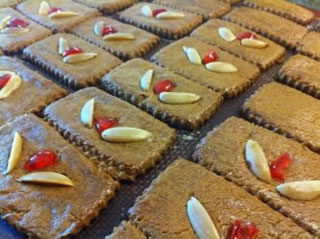
BROWN GINGERBREAD (Braune Lebkuchen)
This includes all gingerbread dough made from a honey or syrup dough. and baked without using a wafer base. The dough is either molded, cut or formed and is baked without oblaten (wafer). Braune Lebkuchen is made with more flour than other types which include a high proportion of ground nuts. For every 2 parts flour, at least 1 part sugar or sweetener should be used. Ground seeds are optional. The baked cookies are often covered with a sugar glaze or chocolate.
The brown Lebkuchen have flour as the first ingredient and are low in fat, kept moist by honey or artificial honey (i.e., invert sugar). The German food code specifies that brown Lebkuchen have to contain at least 50% sugar and can contain at most 3% added oils or fats. There are different levels of brown Lebkuchen. The feine (fine) brown Lebkuchen must contain at least 10% nuts and the feinste (finest) must contain at least 20% nuts and no added fats.
Mom's Lebkuchen (American version that uses molasses)
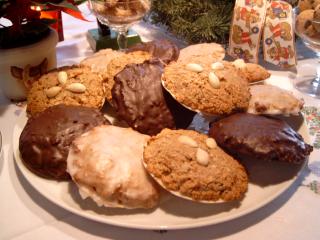
Nürnberger Lebkuchen
WAFER GINGERBREAD (Feine Oblatenlebkuchen)
This type of gingerbread contains at least 12.5% almonds and/or walnuts and is baked with a wafer (oblaten) base. If necessary, substitute a 14% ground seed mixture.
Oblaltenlebkuchen, on the other hand, have sugar rather than flour as the first ingredient, and a higher proportion of nuts (at least 7% for the normal ones and at least 12.5% for the Feine grade) and a lower proportion of flour or starch. No added fats or oils are allowed. The author much preferred this type of Lebkuchen. In fact, their favorite Lebkuchen were the Elisenlebkuchen. These can also be referred to as feinste (finest), extra fein, edel (noble), or Spitzequalität (top quality).
Nürnberger Lebkuchen~ These are Lebkuchen that are baked in the city of Nürnberg, and are worldwide the most well known. They are often baked on oblaten (thin wafers), and they are known for their light, soft texture. Marzipan is often an ingredient of these cookies
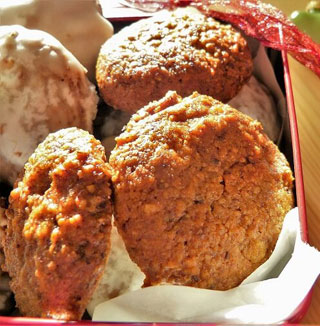
Elisenlebkuchen
Elisen Lebkuchen~ These are the highest quality Oblaten Lebkuchen available. They must have at least 25% almonds, hazelnuts, or walnuts (no other kind of nuts are allowed). Likewise, they must contain no more than 10 % flour or 7.5% starch. The Elisenlebkuchen from Lebkuchen Schmidt are seasoned with orange peel, chocolate, dried figs, lemon peel, spices (like cinnamon), honey, and “natural aromas.” They’re tasty, but not exactly health food—the first ingredient is sugar, and 100g of Lebkuchen has 41g of sugar.
Elisen gingerbread w/ marzipan & rum
Nuremberg Lebkuchen (softer gingerbread)
White (Weisse) Lebkuchen~ Another type of Lebkuchen is called “White Lebkuchen.” It is a kind of Oblatenlebkuchen, but it has a higher percentage of egg (at least 15%) and not more than 40% flour. White Lebkuchen (Weisse Lebkuchen) get their name from their very light color. The color comes from a high amount of whole eggs and/or egg whites in the dough. They are usually decorated with almonds and/or candied lemon and orange peels.
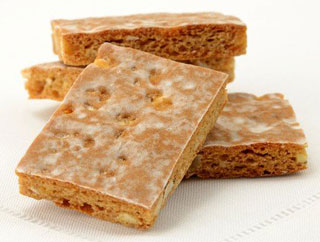
HONEY GINGERBREAD (Honiglebkuchen)
This is one of the oldest types of gingerbread. Made with honey, eggs, flour and the finest spices, the dough mass can be modified using additional flavors should you choose. In Honiglebkuchen at least half of the sweetener has to consist of honey.
Recipe from http://www.germanfoodguide.com/
Honiglebkuchen (Honey Gingerbread)
1 1/2 cup Honey
1 cup Sugar
1 1/2 tablespoons Lebkuchen Seasoning
1 1/2 cups ground Almonds
1 1/2 cups ground Hazelnuts
1 tablespoon Raisins
2 tablespoons Dried Currants
1/2 cup chopped Walnuts
2 ounces (50g) Candied Orange Peel (Orangeat), finely chopped
2 ounces (50g)Candied Lemon Peel (Zitronat), finely chopped
4 cups All Purpose Flour
3 Eggs
5 teaspoons Baking Powder
For the Glaze:
1 3/4 cups Powdered Sugar
2 tablespoons Lemon Juice
2 tablespoons Water, hot
Whole Almonds (skins removed) to decorate cookies (optional)
Preheat oven to 300°F (150°C).
Mix eggs and sugar until creamy.
Heat up honey to make it more liquidy. Drizzle honey into egg mixture, stirring constantly. Mix in remaining ingredients.
Cover a work surface with parchment paper. Roll out dough to about a fingers-width thick. Garnish with whole almonds (optional). Transfer dough (with the parchment paper) to a cookie sheet. Bake for 40 minutes.
To prepare the glaze, combine the powdered sugar, lemon juice, and hot water. The glaze should be a thick liquid. If too thin, add a bit more powdered sugar.
While Lebkuchen is still warm, brush it with glaze.
Once Lebkuchen is cool, cut into squares.
