Difference Between Egg Rolls and Spring Rolls
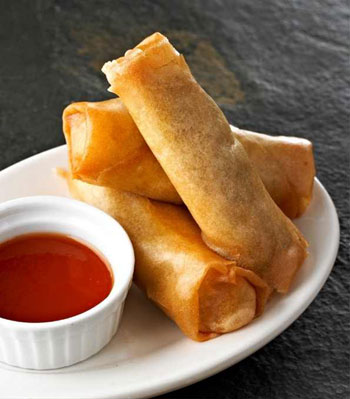
Spring Rolls
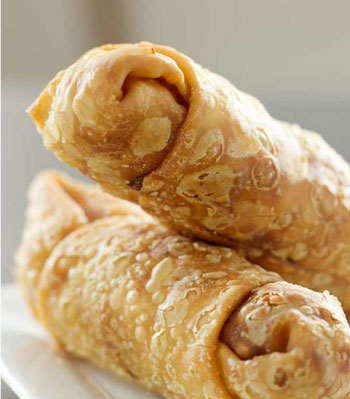
Egg Rolls
If you think about the difference between egg rolls and spring rolls, you might not be able to come up with anything off the top of your head. They’re both delicious wrapped appetizers served with bright, flavorful dipping sauces. But, if you were to look at the two side by side, the difference would become apparent immediately: One is flaky and light while the other is dense, crunchy and chewy.
The most significant difference between an egg roll and a spring roll begins with an essential visual distinction. Small bubbles cover an egg roll's surface, while a spring roll's surface is perfectly smooth.
And then there's the matter of the bite—at first chomp, an egg roll crunches and is a little chewy, while the outside of most spring rolls will shatter into several thin flecks of light and crispy dough as soon as your teeth crack the surface.
Egg roll wrappers are made out of flour and, as the name suggests, eggs, giving the wrapper a sturdier texture. The dough is also made to be a little thicker allowing it to be filled, wrapped, and deep-fried without breaking. Spring roll dough is thinner and contains no egg, making it lighter and crispier than the egg roll when fried.
What are Spring Rolls?
Spring rolls originated in China but there are several regional variations, each with its own specific characteristics. The original spring rolls were likely thin pancakes rolled around spring vegetables, but the dish morphed over time to become a thin disc of dough rolled around a filling made with vegetables and sometimes meat.
This paper-thin wrapper crisps up as it bakes, but it’s not as dense or chewy as egg roll wrappers. Spring rolls usually feature minimal ingredients, and they often don’t contain meat, so they’re also thinner and lighter than egg rolls. Spring rolls can be fried, steamed, or baked. Since they are made from a lighter dough, they’re semi-translucent, and they have a flaky, crispy texture when fried.
To make a crispy fried spring roll, look for spring roll wrappers made without eggs (the ones with eggs are likely egg roll wrappers). Prepare a filling of cooked meat (chicken and pork are common, though shrimp work well here, too) and fresh, shredded vegetables tossed with a little sesame oil and soy sauce. Spoon two tablespoons of the filling down the center of each wrapper. Roll the wrapper tightly around the filling to form a long cylinder and moisten the wrapper’s edges with water before sealing. Deep fry the rolls in 375°F oil for 6 to 8 minutes, turning occasionally.
Regional variations on spring rolls
In Vietnam and Thailand, spring rolls are often made with rice flour instead of wheat flour. These rice paper wrappers don’t need to be cooked; they just need to be soaked in hot water until they’re soft enough to roll around the fillings. Thai and Vietnamese spring rolls usually contain rice vermicelli noodles, cooked shrimp, raw vegetables (like cucumber and carrot), fresh herbs, (Thai basil, mint, or cilantro) and peanuts. The rolls are served chilled with a dipping sauce, like a savory peanut sauce or nuoc cham, a sweet and tangy Vietnamese sauce made with fish sauce. Vietnam also has a fried version of spring rolls, cha gio, where the rice paper-wrapped rolls are deep-fried until crispy.
In the Philippines, Taiwan, and Malaysia you will find other variations.
Recipes:
Chinese Spring Rolls (flour wrapper as picture above)
Vietnamese Summer Rolls (Gỏi Cuốn - rice paper wrapper)
Vietnamese Summer Rolls w/ Shrimp & Ground Pork (rice paper wrapper)
Vietnamese Bì Cuốn (Shredded Pork Roll - rice paper wrapper)
Vietnamese Crispy Spring Roll w/ Minced Pork (Chả Giò - deep fried rice paper wrapper)
What are Egg Rolls?
Although you’ll find egg rolls at almost every Chinese restaurant in the U.S., they’re not from China. There are several egg roll origin stories floating around, but most of them agree that egg rolls were likely created at Chinese-American restaurants in the early 20th century to appeal to American diners. American egg rolls are their own creature when compared to their Eastern cousins. There’s fried dough paired with some sweet and sour sauce, or hot mustard, or duck sauce. Inside, you’ll find cabbage, pork, and carrots. Sometimes, there will be shrimp instead for people who can’t or don’t care to consume pork. Other possible fillings include bamboo shoots and water chestnuts.
While these are in a sense, spring rolls, this American variant includes wheat and eggs in the recipe for the dough, which makes it much thicker. It’s the egg that gives an egg roll its thick, crunchy texture when fried. They blister up and become pocketed with delightful, oil-filled bubbles when deep-fried, making them simultaneously crunchy and chewy. They’re stuffed to the brim with fillings, which are traditionally made from cabbage and pork, although several filling variations exist. While spring rolls can be fried, steamed, or baked, egg rolls are always fried.
To make an egg roll, pick up a package of egg roll wrappers, shredded cabbage and carrots (or coleslaw mix, if you’re looking for a shortcut), green onions, soy sauce and spices. Most homemade recipes use seasoned ground pork or bulk pork sausage, but you can swap-in chopped or shredded char siu pork if you can find it. Cook the filling until the cabbage is wilted and soft, then add 1/4 cup of filling to each wrapper. Roll the wrapper tightly around the filling and seal the edges with a lightly beaten egg. Deep fry the rolls in 375° degree oil for about 2 minutes per side. See link to recipe below.
Regional variations on egg rolls
Many food experts believe that spring rolls came first and were adapted into egg rolls. The filling for egg rolls usually consists predominantly of shredded cabbage, along with Chinese BBQ Pork, shrimp, and/or other vegetables. As a standby on Chinese American takeout menus for decades, they are usually served with sweet duck sauce, plum sauce, and/or Chinese hot mustard. Unlike spring rolls, American Chinese egg rolls are made with thick, doughy wrappers made with wheat flour and eggs that resembles a sheet of pasta.
There are a ton of regional variations to egg rolls in the U.S. Try making southwestern egg rolls filled with black beans, corn and rice, or southern-style egg rolls with turnip greens, black-eyed peas and pepperjack cheese. For a taco-inspired egg roll, use ground beef, cheddar cheese and picante sauce.
Recipes:
Egg Roll and Wonton Wrappers
Egg Rolls
