General Tso's Chicken
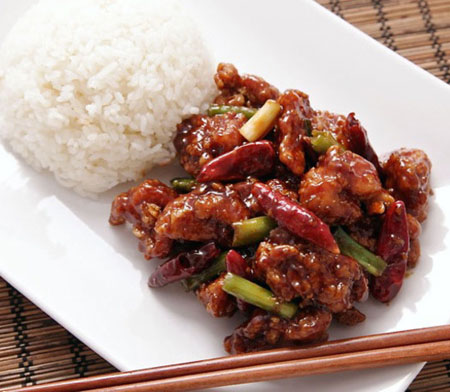
This restaurant favorite is based on an authentic Hunan dish that translates roughly as "ancestor meeting place chicken." The association with General Tso Tsung-tang, or Zuo Zongtang, a Qing dynasty general and statesman, is unclear. The dish is atypical of Hunanese cuisine, which is traditionally very spicy and rarely sweet.
Instead, the dish is believed to have been introduced to New York City in the early 1970s as an example of Hunan- and Szechuan-style cooking. The dish was first mentioned in The New York Times in 1977.
Eileen Yin-Fei Lo states in her book The Chinese Kitchen that the dish originates from a simple Hunan chicken dish, and that the reference to "Zongtang" in "Zuo Zongtang chicken" was not a reference to Zuo Zongtang's given name, but rather a reference to the homonym "zongtang", meaning "ancestral meeting hall" (Chinese: 宗堂; pinyin: zōngtáng).
General Tso's Chicken commonly consists of dark-meat pieces of chicken that are battered and deep-fried, then coated with a sauce made of hoisin sauce (not all recipes contain this), ginger, garlic, soy sauce, rice vinegar, Shaoxing wine or sherry, sugar, sesame oil, scallions, and hot chili peppers. Besides white rice, General Tso's Chicken is often served with steamed broccoli.
Difference between Kung Pao Chicken and General Tso's Chicken: Kung Pao Chicken and General Tso's Chicken have similar sauces but Kung Pao is hot and spicy, whereas General Tso is sweet and spicy. There are no peanuts in General Tso, whereas peanuts are integral to Kung Pao. Vegetables such as bell peppers are often added to Kung Pao. Also the chicken in General Tso is breaded and deep-fried, where in Kung Pao it is marinated and stir-fried.
FMM: We made Emeril Lagasse's recipe and found that there was really no breading on the chicken. It was okay but nothing special; ginger and pepper were the main flavors. Next time we will try this recipe.
General Tso's Chicken
from https://www.marthastewart.com/
Invented in 1950s Taiwan by chef Peng Chang-Kuei, this fried chicken dish was adapted for American palates with a chile-spiked sweet-and-sour sauce and has since become a takeout classic.
For the chicken
Marinade:
1 pound 4 ounces boneless skinless chicken thighs, cut into 3/4-inch chunks
1 large egg white, beaten until frothy
2 teaspoons soy sauce
1 tablespoon Shaoxing rice wine
Kosher salt
Breading:
1/2 cup cornstarch
1/2 cup unbleached all-purpose flour
1/2 teaspoon baking powder
For the sauce
3 tablespoons soy sauce
1 tablespoon cornstarch
3 tablespoons Shaoxing rice wine
3 tablespoons sugar
4 teaspoons distilled white vinegar
1/3 cup low-sodium chicken broth
Safflower oil, for frying
4 spicy dried red chiles, broken in half [or more]
1 tablespoon minced garlic
1 tablespoon peeled and finely chopped ginger [use 2 tsp.]
2 scallions, sliced 1/4 inch thick (1/2 cup) and green parts reserved for serving
1 teaspoon toasted sesame oil
Steamed broccoli and cooked rice, for serving
Directions:
Combine chicken, egg white, soy sauce, wine, and 1/2 teaspoon salt in a bowl.
Whisk together cornstarch, flour, baking powder, and 1/4 teaspoon salt in another bowl. Let stand while making sauce.
Make the sauce: Whisk soy sauce into cornstarch. Then whisk in wine, sugar, vinegar, and broth.
Heat 1 1/2 inches oil in a deep pot (preferably cast-iron) to 350 degrees. Working in batches, remove chicken from marinade (do not worry about removing excess liquid) and toss in cornstarch mixture. Carefully add to oil and cook until crisp and light golden brown, 2 to 2 1/2 minutes. Transfer to paper towels to drain.
Heat 2 tablespoons oil in a wok over medium. Add chiles, garlic, ginger, and scallion whites. Cook until fragrant, about 1 minute. Stir in sauce mixture and bring to a boil. Add chicken and toss to coat in sauce. Remove from heat. Stir in sesame oil. Garnish with scallion greens and serve immediately with broccoli and rice.
