Kung Pao Chicken
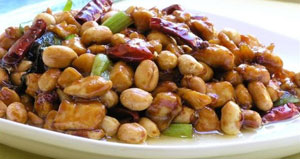 Kung Pao chicken is a classic dish in Sichuan cuisine, originating in the Sichuan Province of central-western China. The dish is named after Ding Baozhen (1820-1886), a late Qing Dynasty official. Born in Guizhou, Ding served as head of the Shandong province and later as governor of the Sichuan province. His title was Gong Bao, or palatial guardian. The name "Kung Pao" chicken is derived from this title.
Kung Pao chicken is traditionally made with lots of specialty ingredients, like Sichuan peppercorns, Chinese black vinegar, Chinese rice wine, and whole dried red chilies.
The dish exists in both traditional Sichuan and Westernized versions; the latter is more popular in the United States and Canada. The Westernized version commonly consists of diced marinated chicken stir-fried with skinless unsalted roasted peanuts, red bell peppers, sherry or rice wine, hoisin sauce, oyster sauce, and chili peppers. Although chicken is traditionally used, seafood items such as shrimp or scallops, or other meats such as beef or pork, are sometimes used in place of the chicken. It can also be prepared with tofu instead of meat.
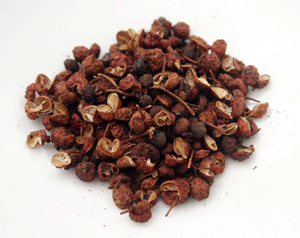
Sichuan peppercorns
Gong bao ji ding, the original Sichuan version of "Kung Pao," is made of diced chicken and is typically mixed with a prepared marinade. The wok is seasoned and then the chiles and Sichuan peppercorns are flash fried to add fragrance to the oil. Then the chicken is stir fried and vegetables, along with peanuts, are added. Fresh moist, unroasted peanuts are often used instead of roasted peanuts. In such situations, the peanuts are dropped into the hot oil on the bottom of the wok first, then deep fried until golden brown before the other ingredients are added. Shaoxing wine is used to enhance flavor in the marinade.
Only Sichuan-style chiles, such as chao tian jiao or qi xing jiao, are used. Smaller, thinner Sichuanese varieties may also be used. The most important component of the dish is handfuls of the Sichuan peppercorns. It is these peppercorns that give authentic gong bao ji ding its distinctive numbing flavor.
The Western version does not use Sichuan peppercorns - see Wolfgang Puck's recipe below. From 1968 until 2005 it was illegal to import Sichuan peppercorns into the United States. They were viewed as potential carriers of citrus canker, a tree disease that can potentially harm citrus crops. The ban has now been lifted in light of new processing methods. However, the 37-year ban resulted in a distinct American version of the recipe that does not incorporate Sichuan peppercorns.
Many recipes also add red or green bell pepper. Other vegetables such as carrots, water chestnuts, celery, zucchini and broccoli could also be added.
Also see Kung Pao Sauce.
Difference between Kung Pao Chicken and General Tso's Chicken: Kung Pao Chicken and General Tso's Chicken have similar sauces but Kung Pao is hot and spicy, whereas General Tso is sweet and spicy. There are no peanuts in General Tso, whereas peanuts are integral to Kung Pao. Vegetables such as bell peppers are often added to Kung Pao. Also the chicken in General Tso is breaded and deep-fried, whereas in Kung Pao it is marinated and stir-fried.
Kung Pao Chicken
Recipe courtesy Wolfgang Puck, 2003
FMM: Brian and I made this dish and it was quite good. The chicken was tender. The sauce was definitely spicy from the hot peppers and had a hint of sweetness in the background. If you do not like heat, cut back on the dried red chiles. I would like some vegetables added, such as red or green bell pepper, or some water chestnuts for added crunch. This would also lessen the heat.
Chicken:
8 ounces boneless, skinless chicken breast, cut into 1/2 inch cubes
Marinade:
1 tablespoon rice wine [or dry sherry]
1 tablespoon peanut oil
1 tablespoon soy sauce
1/2 teaspoon salt
1 tablespoon cornstarch
Sauce:
3 tablespoons light soy sauce
2 tablespoons rice wine [or dry sherry]
3 tablespoons rice vinegar
2 tablespoons sugar
2 tablespoons hoisin sauce
Ingredients for cooking:
2 tablespoons peanut oil
4 dried red chiles remove stems and cut in halves
1/2-inch piece ginger, peeled, thinly sliced, smashed (about 2 tsp.; if using ground, use only 1 tsp.)
1 garlic clove, smashed
1 green onion, cut the white part into 1/2 -inch pieces, julienne the green parts
1/4 cup deep-fried peanuts
2 tablespoons chicken stock plus 1 tablespoon cornstarch, mixed together to make slurry
Steamed White Rice, for serving
In a non-reactive bowl, prepare the marinade. Combine the rice wine, peanut oil, soy sauce, salt and cornstarch. Stir in the chicken pieces and refrigerate for 20 to 30 minutes.
In a small bowl, combine the ingredients for the sauce. Set aside.
Over high heat, in a wok, bring the peanut oil to almost smoking temperature. [Recipes since 2005 now add Sichuan peppercorns to the oil at this point, see above] Stir-fry the chilies in the oil until chilies start to turn dark, remove and set aside. Add the chicken and stir-fry for 1 to 2 minutes, until golden in color, remove and set aside. See Velveting Chicken. Add the ginger, garlic, white part of the green onions, and bell peppers if using for 30 to 40 seconds. [Instructions revised]
Add the sauce and bring to a boil. Add the chicken, chilie peppers and peanuts. Thicken with the slurry and continue to cook until glossy. Transfer to a serving plate and garnish with julienne green onions.
Serve with steamed rice.
2 servings
Real-Deal Kung Pao Chicken
from
J. KENJI LÓPEZ-ALT
Homemade Kung Pao chicken is marinated with soy sauce, fresh ginger, and spices before cooking in a smoking hot wok. This classic Chinese chicken stir-fry is laden with Sichuan peppercorns, chili peppers, and spices. Cooking the mixture in a very hot wok gives it that extra smokiness known as wok-hai.
Chicken Marinade:
1 1/2 pounds boneless skinless chicken thighs, trimmed of excess fat, and cut into 1/2 to 3/4-inch pieces
2 teaspoons soy sauce
2 teaspoons Shaoxing wine (or dry sherry, if unavailable)
1 teaspoon cornstarch
Scallion Greens:
1/2 to 1 tablespoon Sichuan peppercorns
3 scallions, greens finely sliced (whites reserved separately)
Scallion Whites:
3 scallions, whites finely minced
2 cloves minced garlic (about 4 teaspoons)
1 tablespoon minced fresh ginger
Sauce:
4 teaspoons soy sauce
4 teaspoons Shaoxing wine
2 teaspoons cornstarch
1 tablespoon Chinese black vinegar (or distilled white vinegar if unavailable)
1 tablespoon Sichuan fermented chili-bean paste (or generic Asian chili-garlic sauce if unavailable)
2 teaspoons sugar
To Prepare Oil:
1/3 cup peanut oil
1/2 to 1 tablespoon toasted Sichuan peppercorns
12 hot Chinese dry chili peppers, seeded
For Stir Fry:
2 small leeks, white and light green parts only, cut into 1/4-inch slices (about 1/2 cup total)
1/2 cup fried fresh peanuts or roasted unsalted peanuts
Steamed White Rice, for serving
Toast 1 to 2 tablespoons Sichuan peppercorns (total amount for recipe) in hot skillet for 30 seconds until fragrant. Divide into two.
Combine chicken, 2 teaspoons soy sauce, 2 teaspoons Shaoxing wine, and 1 teaspoon cornstarch in medium bowl and mix thoroughly. Allow to marinate in fridge for at least 30 minutes, and up to two hours.
Grind half of the Sichuan peppercorns in mortar and pestle. Combine with scallion greens and reserve.
Combine scallion whites, garlic, and ginger in small bowl.
Combine remaining soy sauce, remaining Shaoxing wine, remaining corn starch, black vinegar, chili-bean paste, and sugar in small bowl and mix until cornstarch is fully dissolved. Set the sauce aside.
Set fine-meshed strainer over small heat-proof bowl. Heat peanut oil in wok over high heat until shimmering. Add remaining Sichuan peppercorns and dried chiles and cook until fragrant, about fifteen seconds. Drain in strainer. Pick out chiles and reserve. Discard peppercorns.
Return wok to high heat until smoking. Add 1/4 of oil and immediately add half of marinated chicken. Spread in even layer with spatula. Cook without moving for 1 minute, then cook, stirring and tossing constantly until barely cooked through, about 1 minute longer. Transfer to a medium metal bowl.
Wipe out wok with paper towel, add another1/4 of oil, and repeat with remaining chicken.
Wipe out wok with paper towel, add another 1/4 of the oil, and cook leeks until charred in spots but still slightly crisp, about 1 minute. Add peanuts, reserved chiles, reserved chicken, and remaining oil to wok and push to side to make space in the center of the wok.
Add garlic/ginger mixture and cook, stirring mixture constantly until aromatic, about 15 seconds. Toss entire contents of wok together and add sauce. Cook, stirring and tossing constantly until chicken is coated in glossy layer of sauce. Stir in scallion greens and ground Sichuan pepper mixture. Transfer to serving plate and serve immediately with steamed white rice.
Yield: 4 servings
