Sambhar
from http://www.tarladalal.com
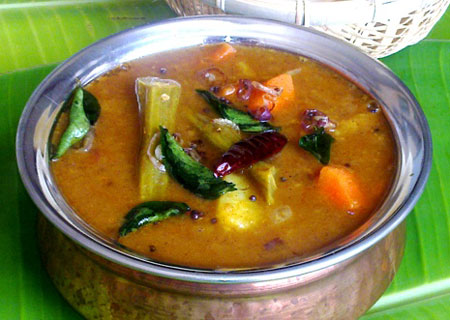
Sambar is a vegetable stew or chowder based on a broth made with tamarind and toovar dal (Yellow Split Pigeon Peas), and is very popular in the cooking of southern regions of India especially in Andhra Pradesh, Karnataka, Kerala and Tamil Nadu. In fact, Sambar is the most staple curry you will find in any South Indian home. Serve Sambar piping hot with Idlis (steamed rice cakes), Vadas (savory fried snacks made from lentils and shaped like a donut), or just plain and simple boiled rice. Road side restaurants often offer free refills of sambar for iddli and vadas. Sambar is also served as a side dish for dosa (Indian version of crepes).
My colleague and friend from work says his family eats Sambhar with Dosas or Uttapams.
In south Indian cuisine, at both both formal and everyday dinners, sambar is usually served with steamed rice as one of the main courses. A two-course meal of Sambar mixed with rice and eaten with some sort of vegetable side dish followed by yoghurt mixed with rice, is a prime southern Indian staple. Vada sambar and iddly sambar are popular for breakfast or evening snack in the south Indian states.
Carrots, eggplant, drumsticks (see below), yellow pumpkin, shallots, radish, tomatoes, okra, bottle guard and french beans are some of the vegetables which are traditionally added in the sambar. You can always choose a combination of vegetables per your taste and preferences. You will find different types of sambar are available: Vendakka sambar (lady's finger/okra), Kathrikai sambar (brinjal/eggplant), Mullangi sambar (radish), Vengaya sambar (onion), etc. Just a single vegetable will be enough to prepare sambar.
The best sambars are perfectly balanced neither too tangy nor too hot. The secret to that lies in the amount of tamarind you use. So master the tamarind and you’ve got sambar covered.
See Types of Dal for the many dals listed in the masala recipe.
For the sambhar masala: (masala = spice)
6 to 8 red chillies
1 tablespoon coriander seeds
1 teaspoon fenugreek seeds (methi)
1 tablespoon toovar dal (arhar - yellow split pigeon peas)
1 tablespoon split Bengal gram (chana dal - split chickpeas)
1 tablespoon split black gram (urad dal - black beluga lentils)
1 teaspoon turmeric powder (haldi)
1/2 teaspoon asafoetida (hing)
1 teaspoon oil
For the sambhar:
1 cup toovar dal (arhar) - glassy dark yellow split pea (pigeon pea)
1 tomato, chopped
1 onion, chopped
2 eggplant (brinjals), cubed
1 drumstick, cut into 4 pieces (vegetable: see note below) [sub green beans]
1 potato, peeled and cubed
2 cups water, plus 4 cups more
1 tablespoon tamarind pulp (imli)
salt to taste
For the tempering:
1 teaspoon mustard seeds
6 curry leaves
1/4 teaspoon asafoetida (hing)
2 tablespoons oil
For the sambhar masala: Heat the oil and roast all the ingredients for the sambhar masala in it. Grind to a fine paste in a blender using a little water. Keep aside.
For the sambhar: Wash and pressure cook the dal, tomato, onion, brinjals (eggplants), drumstick (a vegetable - see below) and potato with 2 cups of water [until vegetables and dal are cooked]. Then add the tamarind pulp, sambhar masala, salt and 4 cups of water and bring to a boil. [If cooking on the stovetop, you may need to add more water to cook the dal and vegetables and add less later. It all depends on how thick you want the curry. Sambar with a thin consistency is served with idli, dosa and vada, whereas a slightly thicker version is served with steamed or boiled rice.]
Prepare the tempering by heating the oil and frying the mustard seeds, curry leaves and asafoetida until the mustard seeds crackle.
Add this to the sambhar and simmer for 15 minutes. Serve hot.
Serves 4 to 6.
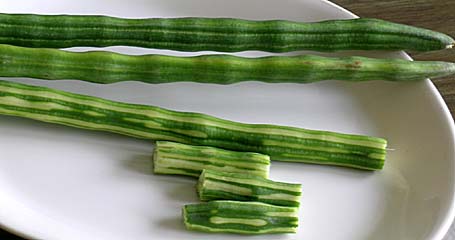
Note: Drumstick, Munaga kaaya or Munaga kaara, is a common vegetable grown all over India. It is a long green pod, bearing some resemblance to musical drumsticks, grown on medium sized trees with many arching branches. It is grown as a backyard tree in most of the South Indian homes.
It has drumstick like pods, small white flowers and small and round leaves which are cooked and eaten. Drumsticks, also referred to as cooking sticks by local Kerala people, are often served in a South Indian lentil soup called Sambar. It is cut into one inch piece and only the fleshy inner part of the pod is consumed. The outer part of the pod is quite fibrous and is discarded.
