Types of Daal or Dal and other legumes
from indianfood.about.com
Also see Types of Dried Beans
Dal or Parippu (also spelled dahl, dhal, or daal) is a preparation of pulses which have had the outer husk removed and the remaining lentil is then split. This ensures a quicker cooking time and a softer, creamier texture when cooked. The word dāl derives from the Sanskrit verbal root dal- 'to split'. Culturally, pulses are sometimes called lentils but many are actually beans or peas, e.g. "black lentils" (actually urad beans).
Dal also refers to the thick, spicy stew prepared therefrom, a mainstay of Nepali, Indian, Pakistani, and Bangladeshi cuisine. It is regularly eaten with rice and vegetables in Southern India, and with both rice and roti (wheat-based flat bread) throughout Northern India. Dal is a mainstay in Indian vegetarian cooking, since it provides the requisite proteins for a balanced diet. Sri Lankan cooking of dal resembles that of southern Indian dishes. A stew or soup made with any kind of pulses, whole or split, is known as dal. If the whole pulse is cooked into a dry curry or stir fried simply with spices but not much liquid, it's called kathor in Gujarati. Just remember, wet is dal, dry is kathoor.
Dishes Prepared with Dal
In South India, dal is primarily used to make the dish called sambar. Sambhar is a spicy soup of toor dal and vegetables and is cooked with tamarind (high in iron), turmeric (natural antiseptic to prevent stomach irritation), asafoetida (anti-gas) and some vegetable. The choice of vegetables affects the taste of the dal. It is eaten with rice and rice dishes.
Most dal recipes are quite simple to prepare. The standard preparation of dal begins with boiling a variety of dal (or a mix) in water with some turmeric, salting to taste, and then adding a tadka (also known as tarka, chaunk or baghaar) at the end of the cooking process. Tadka/Chaunk (often translated as tempering) is a garnish and/or cooking technique used in the cuisines of India, Bangladesh, and Pakistan, in which whole spices (and sometimes also other ingredients such as minced ginger root or sugar) are fried briefly in oil or ghee to liberate essential oils from cells and thus enhance their flavors, before being poured, together with the oil, into a dish.
The ingredients in the tadka for each variety of dal vary by region and individual tastes, but common tadka combinations include cumin, Indian chilli powder [similar to cayenne powder], and onion or mustard seeds and garlic. In some recipes, ginger, tamarind, unripe mango, or other ingredients are added while cooking the dal, often to impart a sour flavor.
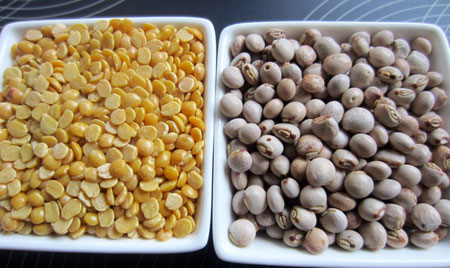
Toor/ Tuvar or Arhar Daal (thoor/ thoo-vurr or urr-hurr)
Yellow Split Pigeon Peas
Toor Dal (also known as tropical green pea, Hindi: toor, Gujarati: tuver) is a glassy dark yellow split pea (pigeon pea), similar to chana dal, which exhibits a thick gelatinous/meaty consistency. When whole, they are tan in color; their interior is yellow. They have a mild, nutty flavor, and they're often cooked as a side dish or ground into flour. They take a little longer to cook than moong or masoor dal/dahl (mung bean), but does not require to be soaked in advance.
It is especially popular in west and south India. This is the most important pulse in a Gujarati household. The fresh peas are highly prized and used for curries and stuffing in spicy handpies. They have a delicious nutty flavor that is very distinctive. The dried and split peas are a staple in everyday cooking as well. The famous “Gujarati Dal” is made with this pea where the balance between spicy, sweet and sour is most important.
These yellow split peas can be made into dal which is served with side dish of vegetables, rice or flat breads. The South Indian delicacy sambhar, which is an accompaniment for dosa (crepe-like rice bread), idli (steamed rice bread) or even rice, is cooked with toor dal.
Yellow and green split peas, commonly used to make "split pea soup", are from another legume species. In north India, yellow split peas are generally known as matar ki daal, sometimes used as a cheaper variation for the very popular chhole on stalls offering it.
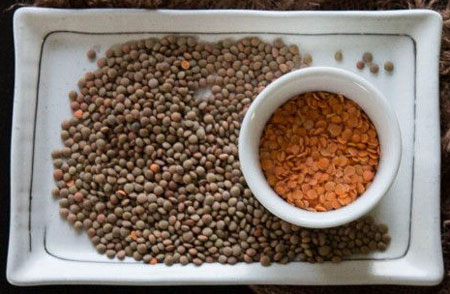
Masoor Dal (muh-soor)
Split Red Lentils (true lentil)
Masoor (also known as red lentil, Hindi: masoor, Gujarati: masoor) is probably the most commonly used Daal in India, especially in Northern India. It is available whole and with its skin - (brown-colored Saabut Masoor) or split and without skin (known as Masoor). It does not need soaking prior to cooking as it is a "soft" Daal and cooks quickly. When cooked Masoor turns a soft golden color.
They have a dark, earthy flavor and a creamy texture. These lentils pair well with tomatoes and kheema/mince meats, sausages, and may be served on their own as a side dish, or incorporated into soups, stews, salads and Indian dal.
Masoor is a brown skinned lentil that is orange on the inside. Masoor dal has a pleasant earthy flavor and is very common in Northern India. It is commonly used to make dal, soups and stews.
Saabut Masoor Daal (saa-booth muh-soor)
Whole Red Lentils
Saabut means whole and the brownish skin is left on in this type of Masoor Daal. It can be used in all the same dishes as Masoor Daal (split and skin removed). Saabut Masoor takes slightly longer to cook than Masoor Daal.
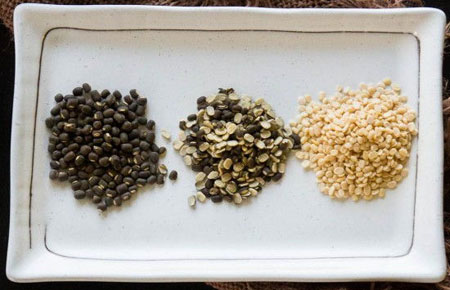
Urad Dal (whole and split) (oo-rid, oo-rud)
White Lentils/ Black Lentils, skin removed - Urad bean
Also called Black Beluga Lentils. Whole Urad dal/dahl is used more like a chili or stew than a soup or dal/dahl. These lentil-like beans have black skins covering creamy white interiors. Whole urad dal/dahl derive their strong, rich, earthy flavor from the black skins and have an uncanny ability to absorb flavors.
Split and without the skin, Urad dal is creamy white in color and has a milder flavor than whole Urad Daal. It does not need soaking before it is cooked and is used along with rice to make dosas, the crisp pancakes of southern India and other rice preparations. In South India, Urad dal is used as a seasoning with mustard seeds for curries.
Split Urad (with skin) (oo-rid/ oo-rud)
Split Black Lentils - Urad bean
Urad (also known as black gram, black lentil, Hindi: urad, Gujarati: adad) is very similar to a mung bean in size and shape but tastes entirely different. Urad has an earthy flavor can be bought whole with its skin on, split with its skin on or split with its skin removed. This black lentil has a creamy white interior when split. Whole and with its skin on, it is known as Saabut Urad and has a stronger, more distinct flavor than the split, skinless variety. It is a "harder" lentil and takes longer to cook. A little soaking is best prior to cooking this Daal.
Urad has been eaten in India for thousands of years and is highly prized.
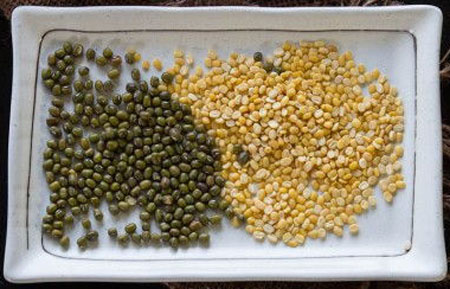
Saabut Moong Daal (whole moong) (saa-booth moo-ng)
Whole Yellow Lentil (mung beans)
Mung beans (also known as green gram, Hindi: moong, Gujarati: mug) have been eaten by Indians for thousands of years. Mung beans are used for both sweet and savory dishes in Indian cooking. They are eaten whole, sprouted, split with the skins on and split with the skins removed.
Saabut Moong Daal is whole Moong or Moong with the green skin left on. It cooks faster if soaked in advance as it is a "harder" Daal. Saabut Moong tastes great when sprouted and is a lovely, healthful addition to salads. Mix a handful of sprouted Saabut Moong Daal in a bowl of yogurt, season with salt and some Chaat Masala (available at most Indian grocery stores) and you'll have yourself a delicious and filling snack!
Mung beans with their skins on have a flavor reminiscent of green leafy vegetables but the mung dal with the skins removed has a mild sweet flavor and is often used for desserts as well as making kichidi and mung dal.
Mung dal/Moong Dal (whole and split) (moo-ng)
Split Yellow Lentils (mung beans)
Moong dal is split moong beans with the skin left on (green skin yellow lentil) on or without the skin (yellow lentil). It is used to make delicious dals and curries. Moong lentils in particular is very easy to digest and take on seasonings and spices very well. Moong does not need soaking prior to being cooked as it is a "soft" daal.
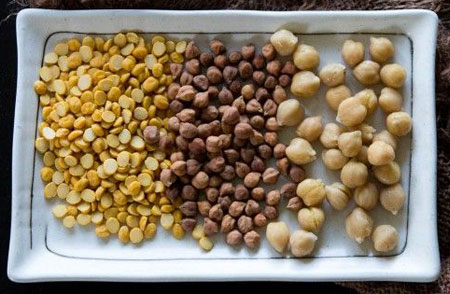
Chickpea (Channa) – Split Channa, Desi Chana and
Kabuli Channa. Kabuli Channa is the familiar Garbanzo
bean common in the Mediterranean diet.
Chana dal (chun-naa)
Split Bengal gram (Desi type chickpeas) - Chickpea/ Large Split Yellow Lentils
There are two types of garbanzo beans, the smaller dark skinned beans known as desi channa and the larger white skinned beans known as Kabuli channa. Garbanzo beans are commonly eaten in India in as whole beans, as split lentils and a multitude of dishes are also made with garbanzo bean flour (known as besan). Channa Masala is the most popular dish made with Kabuli channa. Channa are slightly nutty in taste. The brown ones are earthier in flavor and tend have a drier texture.
The words "chana dal" mean "split chickpeas." (Chana gram is a whole chickpea). Chana dal are the smaller Desi type chickpeas that have been split and polished. One of the most important crops in India, these chickpeas are closer to the wild chickpeas of southeastern Turkey than are the familiar, larger Mediterranean (Kabuli chana) type. Desi is the preferred type for growing in hotter regions.
Chana Daal has a nutty flavor and is used in dry curries or with vegetables or meats and also as a flour (Bengal gram flour). It cooks fairly quickly and does not need soaking prior to being cooked.
Kabuli Chana (kaa-boo-lee chun-naa)
Chickpeas
Also known as Chole, Garbanzo Beans and Egyptian Peas, White Chickpeas or Bengal Gram, Kabuli Chana has a lovely nutty flavor. In India it is used to make curries, added to salads and even in dips. Kabuli Chana is especially popular in North India. It must be soaked for several hours before cooking as it is a "very hard" bean. You can also use canned Kabuli Chana which is easily avaible in supermarkets these days but nothing beats the taste of Kabuli Chana freshly soaked and boiled just before cooking.
Chole (Chickpea Curry)
Chatpata Channa Raita (chickpea condiment in yogurt)

Split Yellow Pea (Pisum sativum) aka Matar Dal
Yellow Split pea, also known as the Field Pea, Soup Pea, dry pea or Matar Dal, belongs to the species Pisum sativum, together with the fresh garden peas, Sno-Pea and Sugar Snap Pea.
Pea (Hindi: Matar dal, Gujarati: vatana). Although split peas are uncommon in Indian cuisine, whole dried peas have a mild earthy flavor and a hearty mouth feel and texture. They are used for one the most beloved street food stews called ragda. Ragda is a curry or gravy preparation made from dried white peas and used in chaat items like Pani Puri, Ragda Puri, Ragda Patties, Dahi Ragda Puri or Ragda Chaat.
Split yellow peas have a mild, earthy flavour and soft texture. Since the mature seeds are rich in protein they can be cooked as a vegetable or added to soups and stews
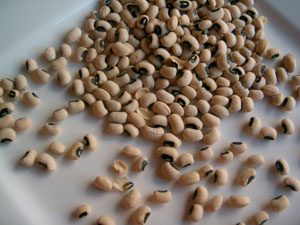
Lobiya/Chawli (low-bee-aa or ch-ow-lee)
Black Eye Peas (cow peas)
Black-eyed pea (also known as cow pea, Hindi: lobia, Gujarati: chora). Black-eyed peas have a distinctive flavor and are an all around pulse in Indian cuisine. They’re used to make curries, dals, papads and fritters.
There is no need to soak this relatively "soft" bean as it cooks easily. Watch carefully when cooking as it should not get mashed. Lobia can be used almost similarly to Kabuli Chana (White Chickpeas) even though it tastes different.
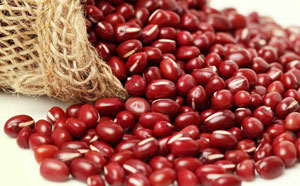
Azuki bean
(also known as red cow pea, Hindi: chori, Gujarati: lal chora).
Azuki bean (also known as red cow pea, Hindi: chori, Gujarati: lal chora). Azuki beans have a sweet nutty flavor and are another all around pulse. They are used very much like black-eyed peas.
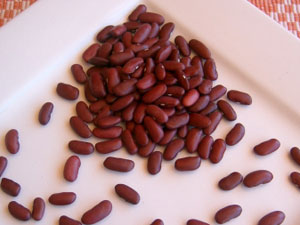
Rajma (raaj-maa)
Red Kidney Beans
Slightly larger than the Mexican red bean, Rajma or Red Kidney (Hindi: rajma, Gujarati: rajma) beans are very popular in North India where a well-loved dish is named after them. They are made into a delicious curry simply called rajma. It is delicious eaten with rice. Kidney beans have a strong earthy flavor and nice silky texture. Not only do they taste great on their own, they make a terrific combination when cooked with vegetables and meats too. Rajma must be soaked for several hours before cooking so as to be softened. As with all beans (like Kabuli Chana, Lobia, etc), which are high in fiber and full of nutrition, Rajma too has gas-producing enzymes. The trick to beating these, is to change the soaking water every few hours (before cooking) and cook them till soft.
