Italian Antipasto
Antipasto means "before the meal" and is the traditional first course of a formal Italian meal. Some have compared antipasto to hors d'oeuvres, but there are several distinctions. Hors d'oeuvres are served while guests are still standing, and tend to be served off trays in the most formal settings, or placed on a table. They are enjoyed with drinks prior to the meal. On the other hand, antipasto is served at the table and signifies the beginning of the Italian meal. Most table settings will feature a central antipasto plate, and small plates for each diner to enjoy this warm-up to the other courses.
Though antipasto varies in form, and numerous adaptations and recipes exist, its main purpose is to extend the meal. Traditional European dining is nothing like the fast-paced meals we most often consume today. Instead, the food is enjoyed slowly, and is only one part of the dining experience. The other part, is of, course, good conversation. A typical meal, consisting of antipasto, salad, soup, pasta and a meat dish, perhaps followed by a light dessert, is supposed to take time, as it is meant to build and maintain relationships with friends and family.
Ingredients
Antipasto can consist of many things. The most traditional offerings are cured meats, marinated vegetables, olives, peperoncini, which are marinated small hot peppers, and various cheeses, perhaps provolone, or fresh mozzarella. Other additions may be anchovies, or bruschetta, toasted bread, upon which one may stack the meats or cheeses. The antipasto is usually topped off with some olive oil.
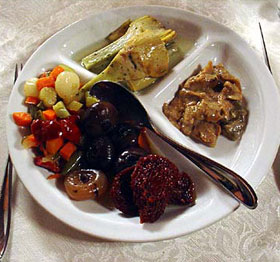
Antipasti vary considerably from place to place in Italy,
but they will often include a selection of pickles and other
firm vegetables. In this platter, prepared by the
Trattoria il Borgo, a restaurant not far from Brescia,
we have Pickled Artichokes, Stewed Mushrooms,
Sun-dried Tomatoes, Pickled Onions, and Giardiniera,
a pickled vegetable medley.
Meats for antipasto may include mortadella, but more traditionally, smoked ham, types of salami, prosciutto and coppa are usually offered. It really does not much matter which meats one chooses, as antipasto dishes are quite individual and can be suited to one's taste.
An Example Antipasti Platter
Roasted red and yellow peppers
Grilled eggplant
Marinated Mushrooms
Green and black olives, plain (or Zesty Lemon Olives, or Marinated Olives)
Marinated artichokes
Sun-dried tomatoes in oil
Fresh cherry or grape tomatoes
Assorted Italian cheeses such as Mozzarella, Parmesan, Gorgonzola
Assorted Italian cold cuts such as Soppresata, Mortadella, Parma
Breadsticks
Bruschetta
Caprese Salad (alternative)
Sometimes, instead of serving an antipasto, an Italian meal will begin with a variant like caprese salad. This dish is a layering of tomatoes, fresh mozzarella and leaves of basil, resembling the white, red and green flag of Italy. The dish is usually topped with olive oil, vinegar (often balsamic), and salt and pepper. Like antipasto, it is not served in a salad bowl, but is usually accompanied by a small fork, and served from a shared dish. Diners take a few slices of each item, and may also have bruschetta to accompany the dish.
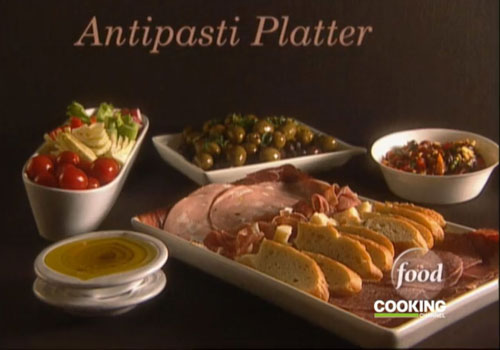
Giada De Laurentiis Antipasti Platter
1 pound assorted sliced deli meats (such as salami, spicy capocollo, prosciutto, mortadella, and bresaola)
1/2 pound Parmigiano-Reggiano, cut into irregular chunks
Pinzimonio (fresh vegetables with olive oil dip), recipe follows
Marinated Olives
Roasted Pepper Salad
1 loaf focaccia bread, sliced
Arrange the meats, cheeses, and foccacia on a large platter. Arrange a platter of Pinzimonio. Place the Marinated Olives and Roasted Red Pepper Salad in small serving bowls. Serve, allowing guests to compose their own assortment of antipasti on their plate.
Pinzimonio:
1/2 cup olive oil
2 teaspoons salt
1 teaspoon freshly ground black pepper
Assorted cut-up vegetables (such as carrots, celery, fennel bulb, radishes, red and orange bell peppers, and cherry tomatoes), for serving
Stir the oil, salt, and pepper in a small bowl to blend. Arrange the vegetables on a platter. Serve the vegetables with the dip.
Antipasto from Martha Stwart
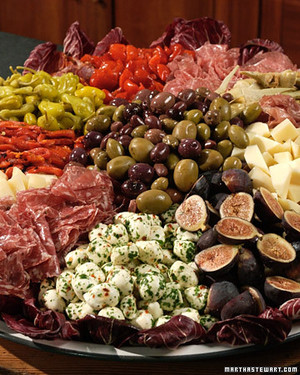
Antipasto means "before the meal," and this antipasto recipe doesn't disappoint. Serve up this antipasto of cured meats, fresh cheeses, and herbs that will satisfy guests until the next course is ready.
1 pound bocconcini (small balls of fresh mozzarella cheese)
1 1/2 tablespoons extra-virgin olive oil
1 tablespoon chopped fresh flat-leaf parsley
1/2 teaspoon crushed red-pepper flakes
Coarse salt and freshly ground pepper
1 cup roasted red peppers, drained
1 small clove garlic, thinly sliced
2 large heads radicchio di Treviso, separated into leaves
8 fresh figs, halved lengthwise
2 cups artichoke hearts, drained and quartered
1 pound Pecorino cheese, cubed
1 pound provolone cheese, cubed
3/4 pound air-dried sopressata, thinly sliced
3/4 pound refrigerator-dried sopressata, thinly sliced
1 1/2 cups pepperoncini, drained
1 1/2 cups mixed olives, drained
1 1/2 cups brine-packed peppadew peppers [similar to hot cherry peppers, but sweeter, heat is comparable to the poblano pepper]
3/4 pounds salami, thinly sliced
3/4 pounds prosciutto, very thinly sliced
Breadsticks, for serving
In a medium bowl, combine bocconcini, olive oil, parsley, and red-pepper flakes. Season with salt and pepper; stir to combine. Set aside. In a medium bowl, combine roasted red peppers and garlic; set aside.
Line a large platter with radicchio leaves. Arrange ingredients, with the exception of the breadsticks, on a platter in a decorative pattern. Serve with breadsticks.
12 servings
