Tacuinum Sanitatis
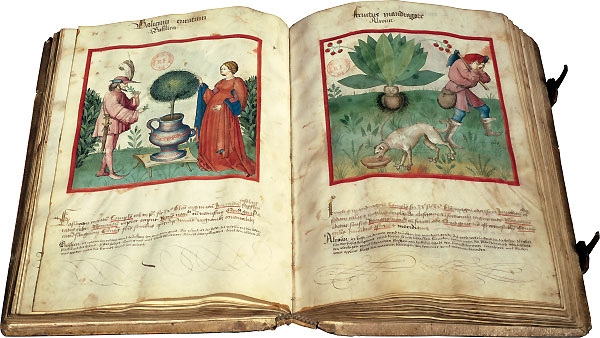
The Tacuinum Sanitatis is a medieval handbook on wellness, based on the Taqwim al‑sihha تقويم الصحة ("Maintenance of Health"), an eleventh-century Arab medical treatise on curing disease and and achieving health through diet, regimen and lifesyle that presented information in the form of tables.
The treatise was written in Arabic by Ububchasym de Baldach, or Ibn Butlân as he was also known, a Christian physician born in Baghdad and who died in 1068. He sets forth the six elements necessary to maintain daily health: food and drink, air and the environment, activity and rest, sleep and wakefulness, secretions and excretions of humours, changes or states of mind (happiness, anger, shame, etc). According to Ibn Butlân, illnesses are the result of changes in the balance of some of these elements, therefore he recommended a life in harmony with nature in order to maintain or recover one’s health. The secret of the preservation of health was in the proper balance of all these elements, in a nutritional control that enhanced the virtues of each, their warmth/coolness and dryness/humidity according to the prescriptions of classic antique medical texts and the precepts of the School of Salerno. A bad balance could cause the illness. More specifically, theTaqwim al‑sihha follows Hippocratic theory in the interpretation given by Galen by specifying how four humors or bodily fluids could be kept in balance for good health.
Illustrations: Tacuinum Sanitatis
Ibn Butlân’s Taqwin al-sihha were translated into Latin in Palermo, at the court of Manfred, king of Sicily from 1258 to 1266, under the title of Tacuinum Sanitatis. Lavishly illustrated manuscripts known as the Tacuinum Sanitatis were first commissioned by northern Italian nobility during the last decades of the 14th century, the starting point for a series of copies that spread beyond Italian frontiers. Each folio was illuminated with an illustration and a legend in Latin stating the nature of the element, the characteristics of what is deemed best for human health, its benefits, any harm it may cause and the remedy for such harm.
For instance, on sale at the confectioner’s illustration, full of coloured vessels and shining glass jars, are delicious pine nuts with a spiced sugar coating, one of the sweets most popular in the Middle Ages. Also on sale are dried fruit and nuts, figs and raisins, particularly the “large raisins from Gerasa” that Ibn Butlân recommended old people eat in winter since “they are effective against intestinal pain, strengthen the liver and the stomach, and if they burn the blood, this can be remedied with lemon” (f. 54).
Ibn Butlân also recommended that brown bread be eaten because “it soothes the stomach, although, to prevent any irritation, it must be accompanied by greasy foods”. This is the most commonplace bread since white bread was reserved for the table of the most privileged. The miniaturist has painted three women, after preparing the dough, putting the loaves in the oven (f. 61v). Other miniatures depict cheese, pasta and butter being made; merchants of salt, birds and almond oil; and vendors of salted meat, candles, silk fabrics, etc.
Harvests of cherries, pomegranates, apricots, walnuts, chestnuts and countless other fruits and vegetables occupy many of the folios in these tables of health explaining the beneficial and harmful effects of each element.
Ibn Butlân also teaches us to enjoy each season of the year, the consequences of each type of climate, wind and snow. He points out the importance of spiritual wellbeing and mentions, for example, the benefits of listening to music, dancing or having a pleasant conversation. This codex is not only an interesting source of medical information but also a remarkable iconographic source for the study of every-day life in the Middle Ages.
Illustration Versions
The illustrated manuscripts housed in Paris, Vienna and Rome can be associated with the patronage of Giangaleazzo Visconti and his circle and were illustrated in the workshop of Giovannino dei Grassi. The Liège Tacuinum, however, has been separated on linguistic grounds from the other three. The variant spelling of several words in the Liège Tacuinum indicates an origin in the western part of the Veneto.
This images and text below are from the following manuscripts:
The Tacuinum of Paris, Bibliothèque nationale - late 14th century (1380 - 1390)
The Tacuinum of Vienna - late 14th or early 15th century
The Vienna 2644 Tacuinum, which contains the most accurate plant depictions, includes some 26 vegetables, 33 fruits, 3 flowers, 21 culinary and medicinal herbs, and 1 mushroom (truffles) in addition to 9 cereals.
The Tacuinum of Rome, Biblioteca Casanatensis - late 14th century
The Tacuinum of Liège
The Tacuinum of Rouen - early 15th century - the series in Rouen comprises 70 drawings
The Tacuinum of Rouen contains 391 miniatures (almost double compared to the first Tacuina) drawn with sepia ink and painted with polychrome colours with a prevalence of various shades of green, red, purple, orange, blue, okra-yellow.
The illustrations are divided into four distinct series.
The first series goes from fol. 1r to fol. 53v, the second series from fol. 55r to fol. 62v, the third series from fol. 64r to fol. 76v, the fourth series from fol. 78r to fol. 87v.In the first section (fol. 1r – 53v) the herbal book is presented with very accurate botanically drawings and brief captions describing the vices and virtues of the herbs, according to a complicated classification of that period (cold, damp, warm, dry, in first, second and third degree), in alphabetical order according to the botanical tradition of Dioscoride’s De re materia. The miniatures are set out in chequered pattern, two per page, 212 in all.
This section is followed by a series on fruit trees (fol. 55r – 62v) which includes, four per page, a total of 64 trees.
The illustrations in the third and fourth series are much more elaborate than the prior series. They represent everyday life scenes, populated with one or more characters, describing all the stages of food: the cultivation, the harvesting, the sale or the purchase of the product, its preparation in the kitchen and finally its consumption; traders selling their products in shops; kitchen gardeners and farmers cultivating the fields; harvesting and selling the vegetables; producers and consumers of bread; butchers; hunters; cheese makers; people at the table; scenes from kitchens; harvesting grapes.
These last two series consist of 96 miniatures in all, laid out in a chequered pattern, on a quarter of a page. They are developed in the following manner: activities connected to the sale of fish, the production and sale of cheese, the harvesting of vegetables, the cultivation of cereals. This is followed by a series connected to the hunting and butchering of meat and the series scanned by two drawings on half a page and 12 drawings on ¼ of a page, laid out in a chequered pattern without textual comments. The text explaining the drawings stops at fol. 87v.
The Physician Speaks: "The Tacuinum Sanitatis is about the six things that are necessary for every man in the daily preservation of his health, about their correct uses and their effects. The first is the treatment of air, which concerns the heart. The second is the right use of food and drinks. The third is the correct use of movement and rest. The fourth is the prohibition of the body from sleep, or excessive wakefulness. The fifth is the correct use of elimination and retention of humors. The sixth is the regulating of the person by moderating joy, anger, fear, and distress. The secret of the preservation of health, in fact, will be in the proper balance of all these elements, since it is the disturbance of this balance that causes the illnesses which the gloriuos and most exalted God permits. Listed under these six classifications are many very useful varities whose nature, God willing, we shall explain. We shall speak, furthermore, about the choices suitable to each person owing to his constitution and age, and shall include all these elements in the form of simple tables because the discussions of the sages and the discordances in many different books may bore the reader. Men, in fact, desire from science nothing else but the benefits, not the arguments but the definitions. Accordingly, our intention in this book is to shorten long-winded discourses and synthesize the various ideas. Our intention also, however, is not to neglect the advice of the ancients."
- from the Tacuinum of Rouen
Also see Lists all the items included the Taqwīm al-Sihha and six of the Latin translations.
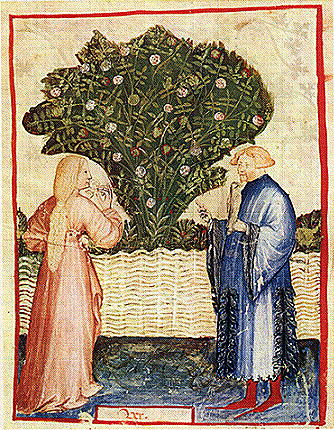
Spring (Ver)
Nature: Moderate humidity in the second degree.
Optimum: Its central period.
Usefulness: Good for all animals and for the products that germinate from the earth.
Dangers: Bad for unclean bodies.
Neutralization of the Dangers: By cleaning the body.
From the Tacuinum of Paris
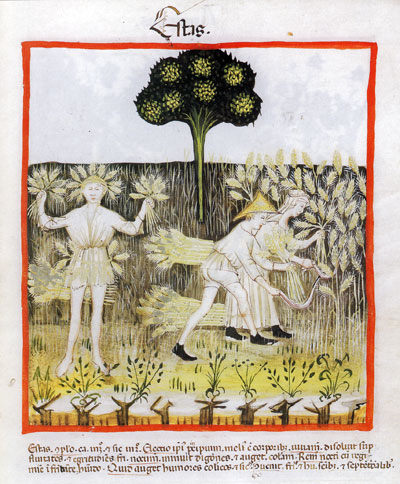
Summer (Estas)
Nature: Warm in the third degree, dry in the second.
Optimum: For the body - its beginning.
Usefulness: It overcomes superfluities and cold diseases.
Dangers: It slows down digestioin and increases bilous humors.
Neutralization of the Dangers: With a humid diet in a cool environment.
Effects: Increases bilous humors and dry substances. It is good for cold temperaments, for old people, and in Northern regions.
From the Tacuinum of Vienna
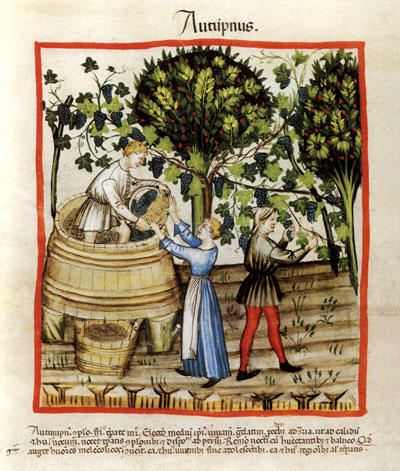
Autumn (Autumpnus)
Nature: Moderately cold in the second degree.
Optimum: Its central period.
Usefulness: when one proceeds gradually toward opposites, ar for example, toward warmth and dampness.
Dangers: It is harmful to moderate temperatures and to those predisposed toward consumption.
Neutralization of the Dangers: By the application of moist elements, and with baths.
Effects: Increases melancholy humors. It is suitable to warm and damp temperaments, to the young and adolescent, in warm and damp regions, or in temperate areas.

Winter (Hyemps)
Nature: Cold in the third degree, humid in the second, when it is normal.
Optimum: Its final period.
Usefulness: Good for diseases of the liver and helpful to the digestion.
Dangers: It is harmful to phlegmatic diseases and increases phlegm.
Neutralization of the Dangers: With fire and heavy clothing. It is good for warm and dry temperaments, for the young, in Southern regions and in those close to the sea.
From the Tacuinum of Vienna
Sour Cherries (Ceresa Acetosa)
Nature: Cold at the end of the first degree, humid in the first.
Optimum: The pulpy ones with a thin skin.
Usefulness: Good for phlegmatic stomachs burdened with superfluities.
Dangers: They are digested slowly.
Neutralization of the Dangers: By eating them on an empty stomach.
From the Theatrum of Casanatense
Oranges (Cetrona id Est Narancia)
Nature: The pulp is cold and humid in the third degree, the skin is dry and warm in the second.
Optimum: Those that are perfectly ripe.
Usefulness: Their candied skin is good for the stomach.
Dangers: They are difficult to digest.
Neutralization of the Dangers: Accompanied by the best wine.
From the Tacuinum of Rouen
Sour Pomegranates (Granata Acetosa)
Nature: Cold in the second degree and humid in the first.
Optimum: Those that are very watery.
Usefulness: Good for a warm liver.
Dangers: Bad for the chest and the voice.
Neutralization of the Dangers: With honeyed foods.
From the Tacuinum of Rouen
Grapes (Uve)
Nature: Warm in the first degree, moist in the second.
Optimum: The kind with a thin skin, watery, which protects against poisons.
Usefulness: They are nourishing, they purify the system, and they fatten.
Dangers: They cause thirst.
Neutralization of the Dangers: With sour pomegranates.
From the Theatrum of Casanatense
xxx
xxx
xxx
xxx
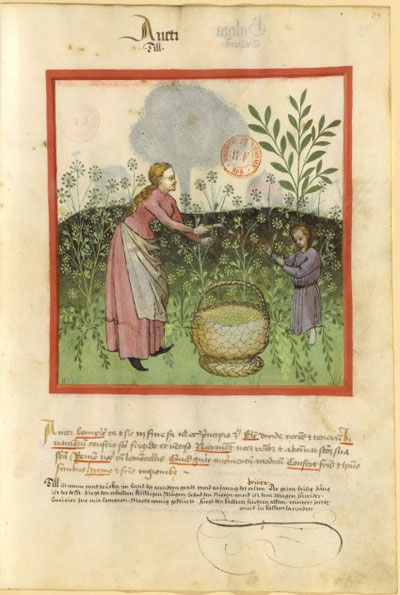
Dill (Aneti)
Nature: Warm and dry toward the end of the second degree and the beginning of the third.
Optimum: The kind that is green, fresh, and tender.
Usefulness: Brings relief to a stomach that is cold and windy.
Dangers: It is harmful to the kidneys and causes nausea with its essence.
Neutralization of the Dangers: With lemoncellis - the juice of small lemons.
Effects: Moderately nourishing. It is good for cold and damp temperaments, for old people, in Winter and in cold regions.
From the Tacuinum of Vienna
Sweet Marjoram (Maiorana)
Nature: Warm and dry in the third degree.
Optimum: The very small and aromatic variety.
Usefulness: It is good for a cold and humid stomach.
Dangers: None.
Effects: It purifies the blood. It is good for cold and humid teperaments, for old people, in Winter, in Autumn, and in cold regions.
From the Tacuinum of Vienna
Rue (Ruta)
Nature: Warm and dry in the third degree.
Optimum: That which is grown near a fig tree.
Usefulness: It sharpens the eyesight and dissipates flatulence.
Dangers: It augments the sperm and dampens the desire for coitus.
Neutralization of the Dangers: With foods that multiply the sperm.
From the Tacuinum of Paris
Sage (Saluia)
Nature: Warm in the first degree and dry in the second.
Optimum: The domestic kind and, above all, its leaves.
Usefulness: It is good for paralysis and for the nerves.
Dangers: It removes the dark color from the hair.
Neutralization of the Dangers: With a potion in which there is myrtle and garden crocus.
From the Theatrum of Casanatense
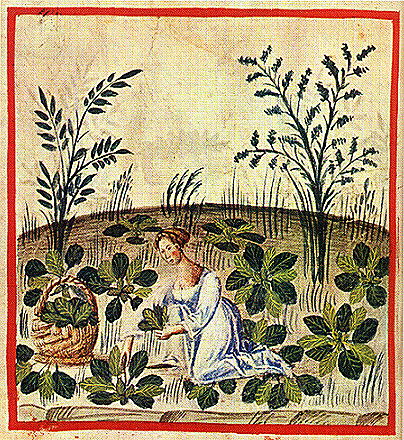
Beets (Blete)
Nature: Warm and dry in the first degree.
Optimum: Those with a sweet taste.
Usefulness: Their juice eliminates dandruff.
Dangers: They set the blood on fire.
Neutralization of the Dangers: With vinegar and mustard.
From the Tacuinum of Rouen
Asparagus (Sparagus)
Nature: Its nature is moderately warm and moist in the first degree.
Optimum: The fresh kind whose tip is turned downward toward the earth.
Usefulness: It influences coitus positively and removes occlusions.
Dangers: It is bad for the stomach lining.
Neutralization of the Dangers: Boiled and then seasoned with salted water.
From the Tacuinum of Paris
Spinach (Spinachie)
Nature: Cold and humid in the first degree, of moderate warmth at other times.
Optimum: Those leaves still wet with rain water.
Usefulness: They are good for a cough and for the chest.
Dangers: They disturb the digestion.
Neutralization of the Dangers: Fried with salted water, or with vinegar and aromatic herbs.
Effects: Moderately nourishing. They are good for warm temperaments, for the young, at all times, and in every region.
From the Tacuinum of Vienna
Cabbage (Caules Onati)
Nature: Warm in the first degree, dry in the second.
Optimum: The fresh and fleshy ones.
Usefulness: They remove obstructions.
Dangers: They are bad for the intestines.
Neutralization of the Dangers: With much oil.
From the Tacuinum of Rouen
Fennel (Feniculus)
Nature: Warm and dry in the second degree.
Optimum: The domestic variety.
Usefulness: Good for the eyesight and for prolonged fevers.
Dangers: It is bad for the menstruel flow.
Neutralization of the Dangers: With carob.
From the Theatrum of Casanatense
Watermelons and Cucumbers (Cucumeres et Cetruli)
Nature: Cold and humid in the second degree.
Optimum: Those that are large and full.
Usefulness: They cool hot fevers and purify the urine.
Dangers: They cause pain in the loins and in the stomach.
Neutralization of the Dangers: With honey and oil.
From the Tacuinum of Paris
Indus or Palestinian Melons (Melones Indi Idest Palestini)
Nature: Cold and humid in the second degree.
Optimum: Those that are sweet and watery.
Usefulness: Good in illnesses.
Dangers: Bad for the digestion.
Neutralization of the Dangers: With barley-sugar.
From the Tacuinum of Rouen
Squash (Cucurbite)
Nature: Cold and humid in the second degree.
Optimum: Those that are fresh and green.
Usefulness: They quench thirst.
Dangers: They constitute a swift laxative.
Neutralization of the Dangers: With salted water and mustard.
Effects: A moderate and cold nourishment. They are good for choleric temperaments, for the young, in Summer, in all regions, and above all in Southern areas.
From the Tacuinum of Vienna
Turnips (Napones)
Nature: Warm in the second degree, humid in the first.
Optimum: Those that are long and dark.
Usefulness: They increase sperm and make the body less subject to swellings.
Dangers: They cause occlusions of the veins.
Neutralization of the Dangers: Stewed twice and eaten with very fat meats.
From the Tacuinum of Paris
Leeks (Pori)
Nature: Warm in the third degree, dry in the second.
Optimum: The kind called naptici, that is, from the mountains and with a sharp odor.
Usefulness: They stimulate urination, influence coitus and, mixed with honey, clear up catarrh of the chest.
Dangers: Bad for the brain and the senses.
Neutralization of the Dangers: With sesame oil and with the oil of sweet almonds.
Effects: They cause hot blood and an acute crisis of the bile. They are primarily indicated for cold temperaments, for old people, in Winter, and in the Northerly regions.
From the Tacuinum of Vienna
Acorns (Glandes)
Nature: Cold in the second degree, dry in the third.
Optimum: Those that are fresh and large.
Usefulness: They help rentention.
Dangers: They prevent menstration.
Neutralization of the Dangers: By eating them roasted and with sugar.
From the Tacuinum of Rouen
Chestnuts (Castanee)
Nature: Warm in the first degree, dry in the second.
Optimum: The marrons of Brianza, well ripened.
Usefulness: They exercise an influence over coitus and are very nourishing.
Dangers: They inflate, and cause headaches.
Neutralization of the Dangers: Cooking them in water.
From the Tacuinum of Rouen
Pine Cones (Pinee)
Nature: Warm in the second degree, dry in the first.
Usefulness: They stimulate the bladder, the kidneys, and the libido.
Dangers: Worms hatch in their bark.
Neutralization of the Dangers: Trim the tree often.
From the Tacuinum of Paris
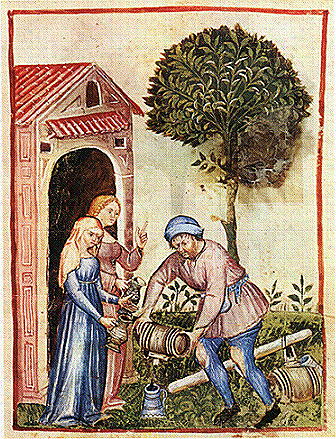
Olive Oil (Oleum Oliue)
Nature: Warm and humid.
Optimum: Good month.
Usefulness: It fattens and is easily digestible.
Dangers: It weakens the mechanism of digestion.
Neutralization of the Dangers: Mixed with foods.
From the Tacuinum of Paris
Oil of Almonds (Oleum Amigdolarum)
Nature: Moderately warm in the second degree, humid in the first.
Optimum: The fresh and sweet variety.
Usefulness: Good for the stomach, the chest, and for a cough.
Dangers: Bad for weak intestines.
Neutralization of the Dangers: With mastic.
Effects: Generates moderate humors. It is particularly recommended for temperate bodies, for adolescents, in Spring, and in the Eastern regions.
From the Tacuinum of Vienna
The Fruit of the Mandragora (Fructus Mandragora)
Nature: Cold in the third degree, dry in the second.
Optimum: The highly fragrant variety.
Usefulness: Smelling it helps alleviate headaches and insomnia; spreading it on the skin works against elephantiasis and black infections.
Dangers: It stupifies the senses.
Neutralization of the Dangers: With the fruits of ivy.
Effects: It is not comestible. It is good for warm temperaments, for the young, in Summer, and in the Southern regions.
From the Tacuinum of Vienna
Millet (Milium)
Nature: Cold and dry in the second degree.
Optimum: That which is left in the fields for three months.
Usefulness: Good for those who wish to refresh the stomach and dry out superfluous humors.
Dangers: Not very nourishing.
Neutralization of the Dangers: Consumed together with nourishing foods.
From the Tacuinum of Paris
Savich or Barley Soup (Savich, id est Pultes Ordei)
Nature: Cold and dry in the second degree, temperate when it is toasted.
Usefulness: Promotes the flow of bile.
Dangers: It generates flatulence.
Neutralization of the Dangers: With sugar.
Effects: Encourages positive humors. It is good for hot temperaments, for the young, in Summer, and in the warm regions.
From the Tacuinum of Vienna
Wheat (Fermentum)
Nature: Warm and humid in the second degree.
Optimum: Plump and heavy grains.
Usefulness: Opens abcesses.
Dangers: Causes obstructions.
Neutralization of the Dangers: When it is well prepared.
From the Theatrum of Casanatense
Savich or Wheat Soup (Savich, id est Pultes Tritici)
Nature: Warm and dry in the second degree.
Optimum: Cooked over moderate heat.
Usefulness: Good for humid intestines.
Dangers: It irritates the respiratory passages.
Neutralization of the Dangers: By mixing it with warm water.
Effects: It causes the blood to be moderately warm. It is good for moderate temperaments, for old people, in Winter and Spring, and in all regions.
From the Tacuinum of Vienna
Rye (Siligio)
Nature: Cold and dry in the second degree.
Optimum: That which has been thoroughly ripened.
Usefulness: It breaks down the concentration of humors.
Dangers: Bad for those suffering from colic or melancholia.
Neutralization of the Dangers: With plenty of wheat.
From the Theatrum of Casanatense
Spelt (Spelta)
Nature: Warm quality.
Optimum: The heaviest and most ponderous.
Usefulness: Good for the chest, for the lungs, and for a cough.
Dangers: It is harmful to the stomach and is less nourishing than wheat.
Neutralization of the Dangers: By consuming it with anise.
From the Theatrum of Casanatense
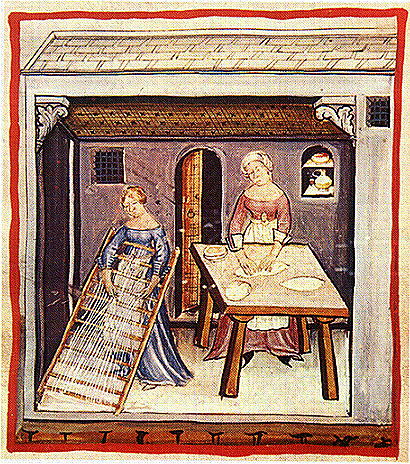
Pasta (Trij)
Nature: Warm and moist in the second degree.
Optimum: That which is prepared with great care.
Usefulness: It is good for the chest and for the throat.
Dangers: It is harmful to weak intestines and to the stomach.
Neutralization of the Dangers: With sweet barley.
Effects: Very nourishing. It is good for a hot stomach, for the young, in Winter, and in all regions.
From the Tacuinum of Vienna
Warm Water (Aqua Calida)
Nature: Cold and humid in the second degree.
Optimum: Lukewarm and sweet.
Usefulness: It cleans the stomach lining.
Dangers: It weakens the mechanism of digestion.
Neutralization of the Dangers: By mixing with rose water.
Effects: Can cause moist swellings. It is primarily recommended for cold temperaments, for old people, in Winter, and in cold regions.
From the Tacuinum of Vienna
Partridges (Perdices)
Nature: Of moderate warmth.
Optimum: Those that are moist and fat.
Usefulness: Good for convalescing people.
Dangers: Bad for those engaged in heavy labor.
Neutralization of the Dangers: Cooking them with leavened dough.
From the Theatrum of Casanatense
Ricotta (Recocta)
Nature: Cold and humid.
Optimum: That obtained from pure milk.
Usefulness: It nourishes the body and fattens it.
Dangers: It causes occlusions, is difficult to digest, and favors colic.
From the Tacuinum of Paris
Roses (Roxe)
Nature: Cold in the first degree, dry in the third.
Optimum: The fresh ones from Suri and Persia.
Usefulness: Good for inflamed brains.
Dangers: They can cause headaches in certain people.
Neutralization of the Dangers: With camphor.
From the Tacuinum of Paris
Roses (Roxe)
Nature: Cold in the first degree, dry in the third (others in the second).
Optimum: The fresh ones from Suri and Persia.
Usefulness: Good for inflamed brains.
Dangers: In some persons they cause a feeling of heaviness and constriction, or blockage of the sense of smell.
Neutralization of the Dangers: With camphor, and at other times with the crocus.
Effects: They are good for warm temperaments, for the young, in warm seasons, and in warm regions.
From the Tacuinum of Vienna
Roses (Roxe)
Nature: Cold in the second degree, dry in the third.
Optimum: The fresh ones from Suri and Persia.
Usefulness: Good for inflamed brains.
Dangers: In some persons they cause headaches.
Neutralization of the Dangers: With camphor.
From the Theatrum of Casanatense
Theriac (Triacha)
Nature: Warm and dry.
Optimum: The kind that frees the rooster from poison and has been aged for ten years.
Usefulness: Good against poisons and both cold and warm illnesses.
Dangers: When it is over ten years old it causes insomnia.
Neutralization of the Dangers: With cooling substances such as barley-water. It is primarily good for cold temperaments, for old people, in Winter, in cold regions and, if necessary, anywhere else.
From the Tacuinum of Vienna
Southerly Wind (Ventus Meridionalis)
Nature: Warm in the second degree, dry in the first.
Optimum: The kind that sweeps across favorable regions.
Usefulness: Good for the chest.
Dangers: Weakens the senses.
Neutralization of the Dangers: With baths.
From the Tacuinum of Paris
Woolen Clothing (Vestis Lanea)
Nature: Warm and dry.
Optimum: The thin kind from Flanders.
Usefulness: It protects the body from cold and holds warmth.
Dangers: It causes skin irritation.
Neutralization of the Dangers: With thin linen clothing.
From the Theatrum of Casanatense
Linen Clothing (Vestis Linea)
Nature: Cold and dry in the second degree.
Optimum: The light, splendid, beautiful kind.
Usefulness: It moderates the heat the body.
Dangers: It presses down on the skin and blocks transpiration.
Neutralization of the Dangers: By mixing it with silk.
Effects: It dries up ulcerations. It is primarily good for hot temperaments, for the young, in Summer, and in the Southern regions.
From the Tacuinum of Vienna
Sugar (Cucharum)
Nature: Warm in the first degree, humid in the second.
Optimum: The white, clear kind.
Usefulness: It purifies the body, is good for the chest, the kidneys, and the bladder.
Dangers: It causes thirst and moves bilous humors.
Neutralization of the Dangers: With sour pomegranates.
Effects: Produces blood that is not bad. It is good for all temperaments, at all ages, in every season and region.
From the Tacuinum of Vienna
Coitus (Coytus)
Nature: It is the union of two for the purpose of introducing the sperm.
Optimum: That which lasts until the sperm has been completely emitted.
Usefulness: It preserves the species.
Dangers: It is harmful to those with cold and dry breathing.
Neutralization of the Dangers: With sperm-producing foods.
From the Tacuinum of Paris
