Verjuice
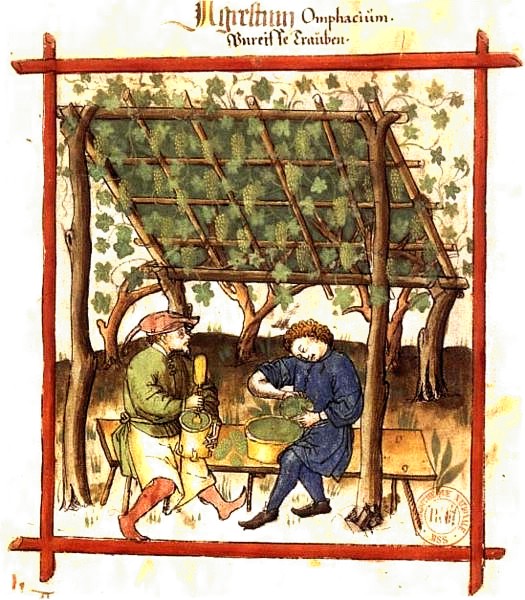
Verjuice is a seasoning made by pressing unripe fruit. It has a very tart flavor thanks to a high acid content and it can be used like vinegar or lemon juice in a variety of recipes. Traditionally, verjuice is made from unripened grapes, and many definitions describe it as being made from grapes, but it can also be made from crab apples, unripe plums or gooseberries (in England a ‘fake’ verjuice was often made from mashed sorrel and water).
Its name derives from the French ‘vert’ (green) ‘jus’ (juice). As verjuice has traditionally been made from white and red grapes, leaving the juice on the skins long enough to colour it, the ‘vert’ refers to youth (unripe), rather than colour. It probably originated when vignerons thinned out the grapes to strengthen the vines and produce full flavoured fruit, and couldn’t bear to waste the unripe, pruned grapes.
If a recipe calls for verjuice and none is available, people can use other tart ingredients as a substitute.
One source says, "These days verjuice can be bought commercially, but one part cider vinegar, one part water with a dash of lemon and lime juice also makes an acceptable substitute."
How Verjuice is Used
This seasoning became extremely popular during the medieval era, and was seen in numerous recipes during this period. It was widely used as an ingredient in sauces, as a condiment, or to deglaze preparations. It was once used in many contexts where modern cooks would use either wine or some variety of vinegar, but has become much less widely used as wines and variously flavoured vinegars are more accessible nowadays.
Unlike lemon juice and vinegar, it will not alter the perception of flavors in the wines served with food, and may be recommended as a seasoning for meals that will be served with wine so that the wine and food pairings do not clash. It can be used in dressings and sauces, as well as to deglaze pans and add a tart flavor to marinades and a variety of dishes ranging from fish to red meats.
Some traditional French recipes call for this acidic juice product and occasionally, modern chefs from all culinary traditions develop an interest in verjuice and start using it in their recipes. This product is often obtainable in regions where wine grapes are grown, especially if popular chefs are using it in their food, and it can sometimes be obtained through importers. Once opened, verjuice should be kept refrigerated or frozen if it is going to be kept in the long term.
The flavor of verjuice is distinctive. Cooks who are just learning to use it may want to experiment before using it in staple dishes. Experimentation will also provide people with information about how they can substitute it for other ingredients or how other ingredients can be used to replace verjuice when it cannot be obtained. This product is not alcoholic because it is not fermented, and can safely be consumed by people with dietary restrictions on alcohol consumption.
Verjus
from http://18thccuisine.blogspot.com/
Condiments are sometimes the bases of sauces. Verjus (literally green juice) is one such condiment. Verjus was very popular in Medieval French cuisine, and is enjoying somewhat of a comeback today. However, from perusing the Internet, it would appear that the verjus available from vintners today is just a bottled grape juice, either white or red, with whole grapes sometimes included in the bottle.
Verjus in 18th Century France/Canada may or may not have been fermented, but it was more than just green grape juice and a few grapes in a bottle. Frugal French housewives did not waste much. During the harvest, all grapes that were not ripe were set apart from the mature grapes ready for the wine vats. The nicest looking green grapes were then pricked with a fork and put into jars. The rest of the green grapes were pressed to extract the juice from the skins and seeds (today we use a Chinese hat and pestle). The juice is then added to the bottles of grapes and a little sugar and 90 proof alcohol (marc-distilled from the pressings after the wine is made [bouilleur du cru-itinerant distillers still can be seen in rural France-going from one small holding to another making marc]) and wine vinegar is added to the jars—where grapes were not available, crabapples, other fruits and even sorrel were used and are referenced. After two months or more, the verjus is ready. It adds intense flavor and sprightly sourness to sauces, but it does not clash with wine as vinegar does.
"'The basic distinction in modern French cooking between sweet and salt was not routinely made. Vinegar was much used, both in the cooking of meats, where the acid would break down tough muscle fibers, and as one of the principal liquids in sauces. Verjus, a pungent acid liquid-actually a strong vinegar, was extensively used. Sorrel purée was sometimes added for color and flavor (Wheaton:14)." Toussaint-Samat mentions that "verjus was first made of the acid juices of sorrel, then unripe plums. In the 16thC, grapes, as well as oranges and lemons were rare, and verjus used the wasted grapes. Outside the grape areas, crabs and unripe apples were used." In Canada: Saragard talks about really good grapes that could be made into wine in the Huron country, early 17thC. Champlain makes many references to grapes. Kalm in speaking about Montreal "Several people here in town have gotten the French grapevines and planted them in their gardens. They have two kinds of grapes, one is pale green, or almost white; the other, of a reddish brown. From the white ones they say a white wine is made, and from the red ones, red wine (1749). Patricia Mitchell mentions "capons in unfermented wine" was popular. So it would be appropriate to use grape verjus in Canada; however, it would probably be more authentic to use crabapple or other early-drop apples. It is possible that they would have returned to the earlier practice of using plums.
Use verjus to deglaze the pan with chicken or fish. Reduce a bit of it down and add it to game sauces for that indefinable something extra. In recipes where the phrase unfermented wine appears, what is probably being referenced or remembered is verjus. This taste spans time all the way to present French cuisine and bistro fare. Verjus can also be used in water with a bit of sugar to make a refreshing summer drink. Try it added to other fruit juices or beer for that extra bitter edge to excite the appetite, creating your own apéritif.
Here is Madeleine Kamman's recipe for verjus:
"2 pounds green grapes (berries only), as green and sour as possible but already juicy (1 kg.)
sugar
90 proof alcohol or Armagnac
wine vinegar.
Select about 30 very large berries and prick them with a fork in 4 different places. Put the berries in a half-gallon jar. Crush the remainder of the grapes. Rinse and squeeze dry a large piece of cheesecloth. Line a strainer with the cheesecloth and strain the grape juice, squeezing well to extract all the juice. Measure it accurately. For each cup (1/4 liter) of grape juice obtained, measure 1/4 cup (75 g) of sugar, 2 cups (1/2 liter) of 90 proof alcohol and 1/2 cup wine vinegar (1 generous dl). Dissolve the sugar in the grape juice. Add the alcohol and vinegar; pour over the berries in the half-gallon container. Store in a cool place (60-65(F) for at least 2 months before using. It keeps forever, and is good in all chicken dishes, with ham, ducks and so forth. A supply made with 1 quart of grape juice, 2 quarts of alcohol and 2 cups of vinegar lasts one year." (Try this with apples off that flowering crab in your front yard; the taste should be very close to true Canadien.)
1976 Kamman, Madeleine. When French Women Cook. Atheneum, New York, Pp. 70-71.
1991 Mitchell, Patricia B. French Cooking in Early America. Sims-Mitchell House Bed & Breakfast, Chatham, VA, p.3.
1994 Toussaint Samat, Maguelonne. A History of Food. Blackwell Publishers, p. 528.
1983 Wheaton, Barbara Ketcham. SAVORING THE PAST : The French Kitchen And Table from 1300 to 1789. Touchstone, New York, NY.
