A Brief Tour of Mexican Cheeses
BY Robin Grose, https://www.thespruce.com/, updated 12/10/16
Nowadays the thought of Mexican cuisine without cheese is ludicrous, but it hasn’t always been so. Before the arrival of Europeans in what now is Mexico, cows and goats—and their milk products—were unknown there. These animals (and most other common livestock animals) arrived with the Spaniards.
The Spanish word for cheese is queso, pronounced KEH-soh.
There are dozens of delicious, genuine Mexican quesos, each one with its own charm, so don't settle for the often uninspiring product labeled “Mexican cheese” or “Mexican blend” that is so often sold in the United States. It is well worth your time to look for a Hispanic store or merchant who sells authentic Latin American cheeses so that you can savor the rich varieties of products that are out there.
Popular Mexican melting cheeses include quesadilla, chihuahua, asadero, and quesillo. You can also substitute Monterey Jack, mozzarella, or Muenster cheese.
The types of cheese pictured here just scratch the surface of the vast variety of quesos mexicanos.
Also see Cooking with Traditional Mexican Cheeses by Diana Kennedy. Her suggestions for Substitution have been added to this page.
Fresh Cheeses:
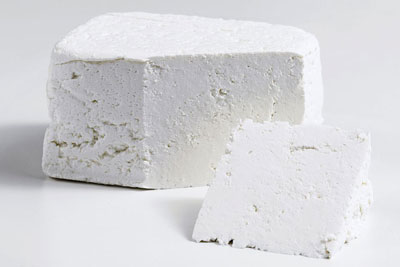
Queso Blanco
The name translates as “white cheese,” and this is another soft, crumbly cheese. This creamy, white cheese is made from skimmed cow's milk, and has been described as being a cross between cottage cheese and mozzarella. It is traditionally coagulated with lemon juice, giving it a fresh, distinctive lemon flavor, although nowadays it is often commercially made with rennet.
Upon being heated it becomes creamy without melting completely, making it perfect for sprinkling on hot foods such as refried beans or enchiladas. Queso blanco is quite versatile, though, and is delicious sprinkled on salads or other cold or room-temperature foods, too.
According to Diana Kennedy: "Queso blanco is not a type of Mexican cheese. It's a general term for "white cheese," used primarily in Central and South American recipes."
Queso Blanco vs Queso Fresco:
The terms queso fresco ("fresh cheese") and queso blanco ("white cheese") are often used interchangeably, and they are both mild, semi-soft, crumbly, unaged cow's milk cheeses made in South America. It is very difficult to distinguish between Queso fresco and Queso blanco in taste and many countries don't bother to distinguish between them at all, but there is a slight difference between the two.
Queso fresco is made with rennet, an enzyme that curdles the milk. The curds are pressed slightly. Queso fresco will melt when heated.
Queso blanco, on the other hand, is made from milk that has been curdled with an acid, like lemon juice. Queso blanco does not melt well, but softens and becomes more creamy when heated. Queso blanco is often labeled as a "frying" cheese, or "queso para freir" because it can be sliced and heated without losing its shape. Both cheeses are usually salted.
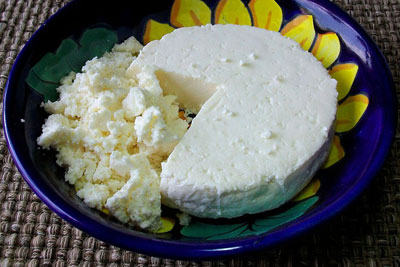
Queso Fresco
Queso fresco (“fresh cheese”) is made with whole milk and is soft and almost spongy in texture. It is usually made with a combination of cow's milk and goat's milk. In Mexico, queso fresco is often a raw milk cheese, but in the United States the cheese is made from pasteurized milk, due to concerns about bacteria in raw milk. This type of cheese was introduced to Mexico from Burgos, Spain. In Mexican markets queso freso is often sold wrapped in a banana or corn leaf, adding to its rustic charm.
There are salty varieties and non-salty varieties. Since it is so naturally crumbly, queso fresco is often used sprinkled over beans or antojitos, botanas - snacks - as well as on enchiladas and taquitos. It will soften and become creamy when heated, but it will not melt. A very mild feta is an acceptable substitute for the grainy and mildly acidic queso fresco.
Substitutions: Ricotta salata, French feta (milder and less salty than the Greek and Bulgarian varieties)
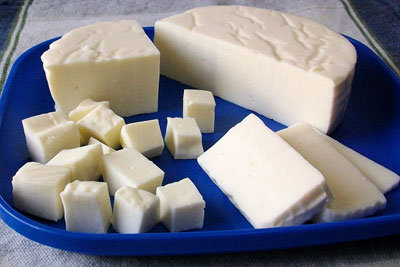
Queso Panela
Soft and white, panela cheese is made with skim milk and thus is firmer and considerably more flexible than queso fresco. Panela can be easily cut, but not crumbled. Its slightly rubbery texture makes it “squeak” a little bit when it is bitten into.
Panela cheese is slightly salty and is most often eaten alone or with other ingredients as a snack or an appetizer, or cut up into a salad. It is also often sliced thick for sandwiches or for making fried cheese, since panela will not melt when heated. It absorbs other flavors easily, and is sometimes coated with a garlic-and-chile paste, or wrapped in toasted avocado leaves, to be served with cocktails.
One variety of panela cheese is queso canasta or basket cheese, named for the rustic basket in which it is sometimes molded and packed in Mexican markets.
Substitutions: Farmer's cheese, Monterey Jack
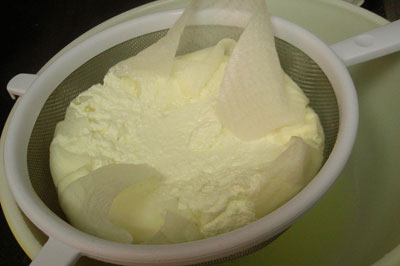
Requesón
Mexico´s answer to to ricotta cheese, requesón is so soft that it can actually be spread. It is used a lot for filling enchiladas and for antojitos such as tlacoyos and gorditas. In markets, requesón is often sold wrapped in a fresh corn leaf. A mild - not salty - ricotta can be substituted for requesón.
Substitution: Full-fat ricotta
Soft Cheeses:
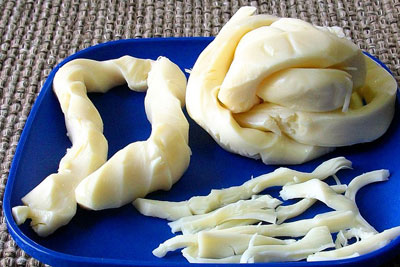
Queso Oaxaca (also known as Quesillo)
Oaxaca cheese, a type of string cheese, is also known as quesillo. It takes its name from the State of Oaxaca in southern Mexico. This cheese is creamy white and moderately soft.
Oaxaca cheese is a stretched curd cheese. Queso Oaxaca’s unusual appearance owes itself to its production process: upon curdling, many strings are formed. These strings are wound in such a way to form a ball of cheese. It should be pulled apart into thin strings before using to fill tortillas or melted on cooked food.
Oaxaca cheese can be used when strings of cheese are desired, and it melts very nicely and easily. This is by far the most popular cheese for making quesadillas. It is often used for quesadillas, stuffed chiles, or other dishes when melted—but not runny—cheese is desired.
Outside Mexico, Oaxaca cheese is often confused with "asadero cheese" (or "queso asadero" in Spanish), a cheese produced in the Northern state of Chihuahua. They are similar in texture and taste but they are produced with different methods, making Oaxaca cheese slightly drier.
Substitutions: String cheese, mozzarella, domestic Muenster
Mozzarella or string cheese can be used in its place
Semi-Soft Cheeses:
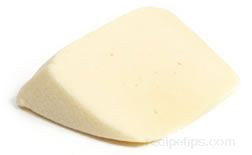
Queso Asadero (also Quesadilla)
Asadero is made in the Mexican states of Chihuahua and Michocan. Asadero is an off-white, semi-firm Mexican cheese often sold in round or square blocks for convenient and easy slicing. It is an excellent cooking cheese: when it melts, it becomes quite creamy without giving off any oil, even at higher temperatures. It has a light, fresh taste with just a bit of tang to it. It is very creamy, and layered almost like fresh Mozzarella.
Spanish for baking, asadero is a rich Mexican-style melting cheese similar to queso oaxaca that is used for cooking. This cottage industry cheese comes in several variations. "Quesadilla," a relatively mild version of asadero, originated in Northern Sinaloa, Mexico. (Queso Asadero is borrowed from Mexican Spanish (queso) asadero, literally, “(cheese) for grilling,” from Spanish asado “roasted, grilled,” past participle of asar “to roast” + -ero.)
This is specifically a melting cheese (similar to mozzarella in that it is stretchy and meltable), often used to make the Mexican fondue called queso fundido (melted cheese dish for dipping tortillas), a dish which adapts well to the inclusion of a variety of ingredients and is usually eaten as a late-night supper. The traditional use for this mild, chewy cheese is a filling for chiles rellenos and a popular Mexican dish called chile con queso. Asadero is one of the cheeses often called for when Mexicans make Quesadillas.
Queso Asadero is often referred to as Oaxaca or Queso Oaxaca cheese, because it originated in the Oaxaca region of Mexico, and may be commonly thought to be the same as cheese from the Chihuahua region. They are similar in texture and taste but they are produced with different methods, making Oaxaca cheese slightly drier.
Substitute: Fontina or Monterey jack
Also Fresh mozzarella, Provolone, Queso chihuahua, Queso manchego (though if you have a store where you can get the last two cheeses, which are Mexican, chances are they'll sell Asadero as well). It's similar to Oaxaca cheese, and Oaxaca would probably substitute readily enough.
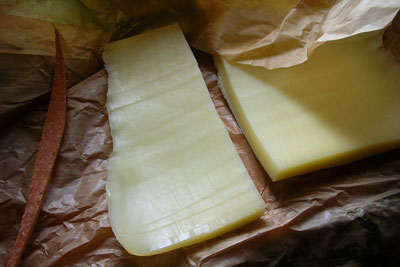
Queso Chihuahua
Named after the northern Mexican state, this cheese is also known as queso menonita because it originated in the Mennonite communities of the area. (Occasionally you will see a tall, blond, overalls-clad youth selling this cheese at an intersection in Mexico.) This cheese is now made by both Mennonites and non-Mennonites all over the country.
Unlike most Mexican cheeses, it is pale yellow rather than white. It has a stronger flavor than most Mexican cheeses, comparable in sharpness to an American cheddar.
It is used in a wide variety of dishes, and is especially good for making queso frito, a breaded, fried cheese dish. It is easy to melt and often used to make queso fundido (melted cheese eaten with chips or other “dippers”).
Substitutions: Monterey Jack, mild Cheddar
Semi-Firm Cheeses:
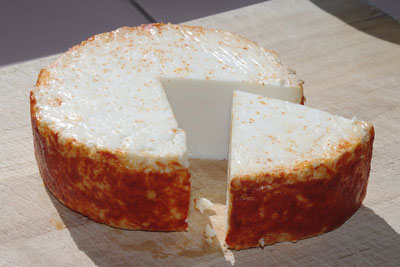
Queso Añejo
Queso añejo “(old cheese”) is the aged version of Queso fresco. It may be made with either goat or cow's milk, depending on the region, and aging starts in a mold, to compact the cheese and ensure that it will be dense. Traditionally, this cheese is rolled in paprika to give it a bit of a bite, and it is heavily salted for preservation.
It is very white and crumbly, just like its fresh cousin, Queso fresco, and is most often used sprinkled over antojitos, beans, and salads. Depending on how aged queso anejo is, it may be very crumbly, or much more dense. Denser cheeses can be grated for cooking, while younger ones can be crumbled by hand. In either case, the cheese has a salty flavor and a sharp bite, courtesy of the paprika and the aging process. However, the flavor of the cheese is not usually overly aggressive, unless it is made with goat milk, in which case it can be a bit more tangy. It is not as strong flavored as Cotija cheese (see below).
When queso anejo is cooked with dishes like enchiladas, it tends to melt very evenly, distributing its flavor throughout the dish. When crumbled over finished dishes such as tacos, the cheese retains its texture, melting a little in contact with the heat, and adding a salty flavor with a hint of creaminess.
From http://www.cooksinfo.com/: "Some suggest unhelpfully that you could substitute Mexican Cotija cheese (which has a stronger flavour, is harder and more crumbly), but any place you go to looking for cotija is probably also going to sell Añejo. Some people, (dismissing the obvious easy substitutes of Romano or Parmesan because the taste isn't the same as añejo), try mixing washed, dried feta with grated Romano, though they lament that the flavour is still not the same. Since the flavour's going to be different anyway, just use Romano or Parmesan; you think the Mexicans don't make substitutes when making our recipes?"
Diana Kennedy says "Queso añejo is not an aged version of queso fresco; it is its own kind of cheese, 'totally different in texture, moisture, and form.' Dry and salty, this cheese is generally sold pre-grated."
Substitution: Romano
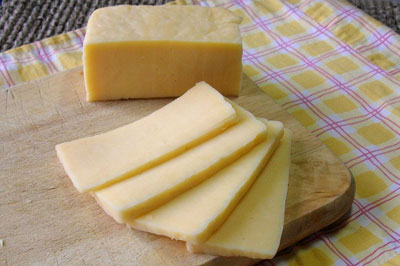
Queso Manchego
Mexican Manchego cheese shares a name with a famous Spanish cheese from the region of La Mancha that is made with goat’s milk. The Mexican version, however, is most often made with cow’s milk.
It is light yellow in color and buttery, and works deliciously plain as an appetizer or or for serving with fruit or crackers. Manchego cheese is also easy to shred and melts easily. If you can find it (not always easy to do in the United States), this is a wonderful multi-purpose Mexican cheese.
Substitute: Monterrey Jack
Queso manchego viejo:
As its name indicates, this is manchego that has been aged to the point where it hardens and becomes more intense in flavor. It is quite often shaved over botanas.
Firm Cheeses:
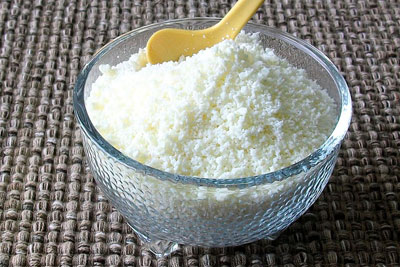
Queso Cotija
Considered Mexico’s answer to an aged parmesan, Cotija cheese takes its name from the town of Cotija de la Paz in Michoacán state where it originated. It is a strongly-smelling and –tasting salty aged cheese. It is used primarily as a garnish, crumbled or grated over a variety of dishes.
Easily shredded or crumbled, queso Cotija really comes into its own as a flavor-adding topping for salads, beans, pastas, and antojitos. It has been called "the Parmesan of Mexico" and is usually served over beans and salads.
Substitution: Parmesan
