Pho Ap Chao Bo (Vietnamese Pan-Fried Rice Noodles Sauteed with Beef)
from http://wanderingchopsticks.blogspot.com
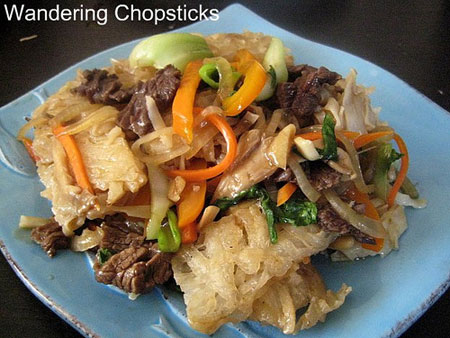 Pho Ap Chao Bo is a Vietnamese stir-fry served over fried rice noodle cakes. Ap chao means both pan-fried and sauteed. And indeed, these noodles get double treatment. The noodles are pan-fried first, then sauteed second for a crispy and chewy noodle that soaks up all the beefy juices.
1/4 lb beef, thinly sliced
6 baby bok choy, cut into 2-inch pieces
1 bell pepper, sliced
1 onion, sliced
1 carrot, julienned
1 cup oyster mushrooms, or any other mushrooms of your choice
3 cloves garlic, minced
2 tblsp oyster sauce, or black bean, hoisin, or kecap manis
1 tblsp soy sauce
1 tblsp corn starch
1 tsp fish sauce
1/2 tsp sugar
1/2 tsp ground black pepper
1 28 oz. package fresh Banh Pho (Vietnamese Flat Thin Rice Noodles). The package should say tuoi, which means fresh.
Thinly slice 1/4 lb or more beef. Marinate with 3 cloves minced garlic, 2 tblsp oyster sauce, 1 tblsp soy sauce, 1 tblsp corn starch, 1 tsp fish sauce, 1/2 tsp ground black pepper, and 1/2 tsp sugar. Mix thoroughly and set aside.
Then dice and slice your choice of vegetables. I have onions, baby bok choy, marinated beef, bell pepper, carrot, and oyster mushrooms. Set aside.
There's three versions of rice noodles, I used the fresh medium-sized banh pho noodles that you commonly find in Pho Bo (Vietnamese Beef Noodle Soup). These are soft and ready to eat. There's also another type of fresh noodles that only need a few seconds in boiling water to soften. And of course, I think most people are familiar with dried rice noodles. If you can only find dried rice noodles where you are, you'll have to boil them, then allow them to drain very, very thoroughly before you can fry them.
The banh pho tuoi sometimes come already separated. Most likely though the noodles will be sliced but in a flat package. You'll need to do two batches for this recipe. The noodles will shrink a lot after they're fried. Lightly separate half of the package of noodles.
In a shallow pan on medium-high heat, add a good portion of oil to completely cover the bottom of the pan. When the oil is hot, add in the rice noodles until they cover the bottom.
When they crisp up, flip with a spatula. This might take a while but you don't want to rush the process because you want the noodles to stick together into a big sheet. Then when you cut them, you'll get big crispy-outside, chewy-inside noodle sheets. Otherwise, the noodles will fall apart and you might as well have stir-fried the noodles instead.
The noodles will be a bit golden, but not by much so don't worry about that. Also, don't worry if they're not all completely crispy either. The beauty of this dish is the combo of crispy and chewy noodles.
When both sides are crispy, drain on paper towels. Then repeat with the other half of the package of noodles.
When the noodles are cool enough for handling, cut into 2-inch by 3-inch sheets. I just use a pair of scissors for ease. Set aside. Notice the individual "sheets" of noodles?
Now you're ready to make the sauce. In a large saucepan or wok on high heat, drizzle a bit of oil and saute the onion slices.
When the onions have softened, add the beef, reserving the marinade. Saute the mixture until the beef looks slightly charred, then add in the marinade. Add about 1/2 cup to 1 cup of water into the empty bowl so you get the last of the marinade, and add that to the pan as well. The corn starch will start thickening the beef mixture into a gravy.
Add the mushrooms, carrot, and bell pepper and saute again.
The mixture should start softening and thickening. Add the bok choy near the end so they don't get overcooked.
When the sauce is to your liking, add the pan-fried rice noodles back into the pan and quickly saute so the noodles absorb the sauce. Don't stir them around in the pan too much or the noodles will lose their crispness. You can always pour extra sauce over the noodles after you plate them.
Serve the crispy pho ap chao bo onto a deep plate that can handle extra gravy.
2 to 4 servings
