10 Essential Vietnamese Noodle Soups to Know
from https://www.saveur.com/ as well as other sources
First: Know Your Noodles
The fifth-largest exporter of rice in the world, Vietnam produces many forms of rice noodle. You can find most of them at Asian specialty groceries, mostly dry, though on occasion fresh—my family settles for nothing less.
Bánh phở: Flat rice stick noodles, used in phở as well as pad Thai.
Bún: Thin, springy rice vermicelli used in a variety of Southeast Asian soups, noodle salads, and stir-fries.
Hủ tiếu: Can refer to chewy and clear thick noodles made from tapioca (these are called hủ tiếu dai) or smaller rice stick noodles like bánh phở. Called kuy teav, in Cambodia it’s used in traditional Khmer breakfast dishes.
Mì: A little less defined, mì can refer to whole wheat noodles or egg noodles, depending on the dish. It’s unclear why, but an exception is made for Mì Quảng, which is made with rice noodles. Fun fact: Instant noodles are called mì gói, or “package noodle” in Vietnamese.
Miến: Clear “cellophane noodles” made from a starch, typically mung beans or cassava. They are used in Korean japchae and Thai glass noodles.
Also see Vietnamese Noodles
Vietnamese Soups
Beginning in the North and traveling southwards, here are the 10 essential styles of Vietnamese noodle soup.
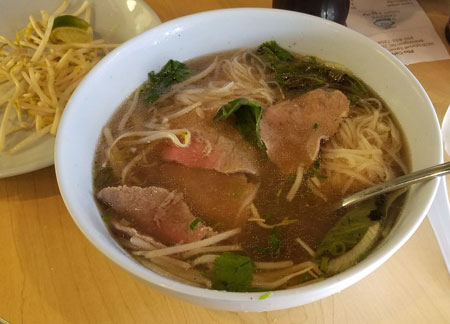
Beef Phở
Phở
The hallmark of Vietnamese cooking and the country’s national dish, the origins of phở are much murkier than its soothing broth. Though some have speculated that the phở is a Vietnam-ization of the French word feu, like the beef stew pot-au-feu, others, including Vietnamese cookbook author Andrea Nguyen, say that rice noodles entered by way of Chinese merchants in the earliest 20th century, and that phở is actually a corruption of the Cantonese word fun, or flat rice noodle.
Even more varied than phở’s origin stories are the incarnations it now takes on. Phở bắc (northern-style phở) is minimally garnished and seasoned to emphasize the pure unadulterated beef broth that is made from simmering beef leg or oxtail with onion, ginger, star anise, and any number of other herbs and spices. If served with rare, thinly-sliced beef (tái) or meatballs (bò viên), the meat is dipped into a side dish filled with accompanying sauces, rather than dumped into the bowl.
In the south, expect a more anything-goes approach, with sauce joining meat and broth and tons of vegetables—bean sprouts, mint leaves, Thai basil, Thai chilies, sawtooth herb, and more. These two styles of beef soup course do not account for any range of variations like chicken phở, seafood phở, vegetarian phở, and phở saté.
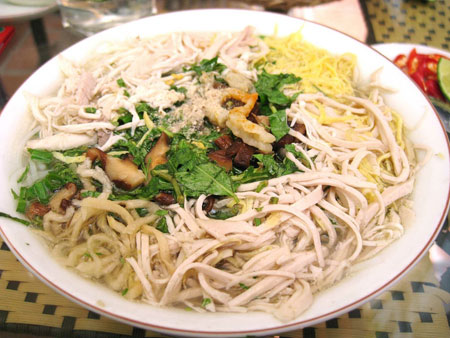
Bún Thang
Thang means “ladder” in Vietnamese, but since that doesn’t translation make much sense with regards to broth and noodles, some historians are inclined to think that it’s a translation of the Chinese word for soup, spelled tang.
Best known in northern Vietnam, it’s a fortifying, soulful dish that truly exemplifies the principle of the five elements through sight, sound, and smell. The broth is prepared from a combination of chicken and pig bones, with shrimp added in early on or stirred in later as a paste called mắm tôm, while toppings include a multi-colored spread of julienned egg, Vietnamese ham, chicken, and green onions. In its most traditional Northern iteration, the dish is also topped with one or two drops of cà cuống, the pungent pheremones extracted from a giant Southeast Asian water bug.
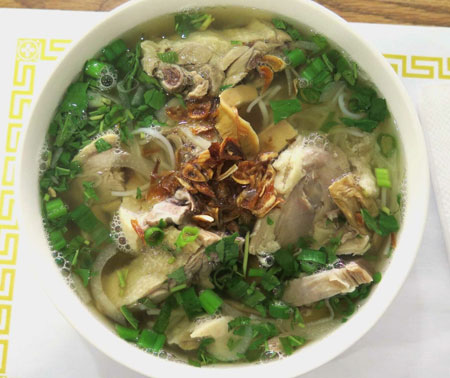
Bún Măng Vịt
Măng means bamboo and vịt means duck. While duck isn’t as common in Vietnamese cooking as it is in some other Asian cuisines, the buttery richness of whole duck—boiled for close to an hour—stands up excellently against tangy bamboo shoots and savory fish sauce. It’s finished off with or served with a side of fresh lettuce, cabbage, and mint. Other herbs like cilantro, Vietnamese coriander (Rau Ram) and green onions may also garnish the bowl.
The deep and fragrant broth of this soup comes from the juicy duck and along with dried bamboo. Using dried bamboo is a must, as the flavor and texture will not be the same if you don’t.
This noodle soup comes with the must-have ginger fish sauce (Nuoc Mam Gung - Ginger-Lime Dipping Sauce) on the side for dipping the slices of duck meat.
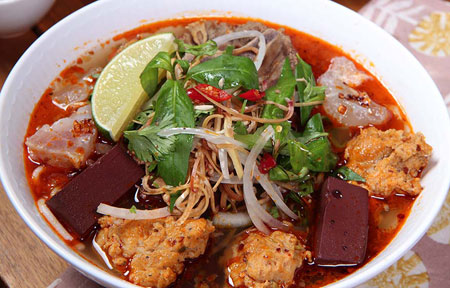
Bún Bò Huế made with shrimp balls
Bún Bò Huế
Central Vietnam’s noodle soup, found in the former imperial city of Hue, is a bold, spicy dish made with beef broth, lemongrass, and shrimp paste, giving it a dark reddish hue. The noodles, rounder and thicker than those used for pho, are combined with marinated beef shank, oxtails, pig’s knuckles and congealed pigs blood. Toppings range from lime wedges and scallions to banana blossom, Vietnamese coriander, and sawtooth herb.
I may be biased to say so, but I stand by the claim that bún bò Huế (beef noodle of Huế city) is the most underrated dish in Vietnamese cooking. Huế, the longtime imperial capital of Vietnam and home of the former royal court, is a beautiful, relatively unhurried city whose people are much more mild-mannered than those in the larger cities of Hanoi and Saigon, partly due to the stronger emphasis on Buddhism. It’s surprising then that the city’s crown dish is so boldly flavored, using the extremes of spice and sour to offset salt and sweet.
The broth calls for beef bones and beef shank boiled with a generous dose of lemongrass, shrimp paste, and sugar—the red color comes from a spicy chile oil added during simmering. The noodles used may be called bún, but they’re rounder and thicker than usual, easier for twirling up with hunks of meat like marinated beef shank, oxtail, pig’s knuckles, and pig’s blood congealed into maroon, tofu-like cubes. Upon serving, the bowl is presented with vegetables that can include lime wedges, scallions, cilantro, banana blossom, mint, basil, Vietnamese coriander, sawtooth herb, and mung bean sprouts.
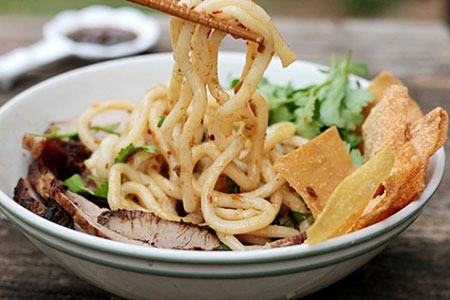
Cao Lầu
Famed in the central port city of Hoi An, this noodle soup consists of noodles, pork, and herbs such as basil and mint. Its distinguishing factor is the water used in its pork broth, which is tapped from an ancient well, as well as the noodles, which resemble Japanese soba and are unlike the round rice noodles or flat pho noodles used in other dishes.
This unique, hard-to-explain dish from the historical trading port of Hoi An, Quang Nam Province, perfectly encapsulates the intersection of Vietnam’s colonial history, its wealth of natural resources, and the ethnic diversity of its native peoples. At its core, cao lầu is a simple dish of noodles, pork, and herbs such as basil and mint. But the noodles, unlike all other you’ll eat in Vietnam, have a springy, chewy quality reminiscent of ramen of pasta. That chewiness comes from soaking rice in a solution with lye—a liquid obtained from leaching wood and ash—and water drawn specifically from an ancient well built by the once glorious Hindu empire of Champa.
That Indianized civilization, which lasted until the early 1800s before being conquered by the Vietnamese, overlapped with a period where the city was flooded with merchants from France, China, and Japan. Traces of each group remain in Hoi An, as well as its principal dish. The dish’s super-thick round noodles closely resemble Japanese udon and the pork, called xá xíu, is an adaptation of Chinese barbecue.
Cao Lau comprises of the signature Cao Lầu noodles, slices of barbecue pork, pork crackling, bean sprouts, lettuce and herbs, it is then finished with a spoonful of stock. The meat used to prepare the Cao lau must be pork loin or trotter. The pork is fried in a marinade and then roasted for 1 hour. Next, fish sauce, soy sauce, garlic, sugar, salt & pepper, thin crispy croutons, vegetables, bean sprouts and spices are thrown in, and after adding the noodles and herbs the dish is done. The dry pancakes used must be thick and have a lot of sesame. Greasy coconut essence and bitter green cabbage are also indispensable.
Depending on the cook, an array of fresh locally grown mixed greens will be piled upon or beside the pork — fragrant mint, basil, Vietnamese fish leaf, rice paddy herb, crisp lettuce, sometimes coriander from Tra Que village. Crunchy deep-fried squares of cao lau dough are sprinkled on top, while secreted beneath the noodles will be crispy bean sprouts.
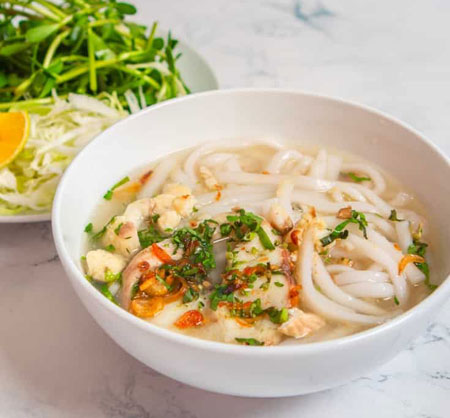
Bánh Canh
The Vietnamese answer to Chinese nian gao, or rice cake, this dish uses fat, round noodles cut directly from uncooked sheets of rice tapioca flour. The name “Banh canh” can be translated into “cake soup”, which refers to the chewy, thick noodles that are seasoned with star ingredients. The soup is prepared with different kinds of ingredients such as ham (bánh canh gio heo), snakehead fish (bánh canh ca loc), or crab (bánh canh cua), A well-known version from the southeastern district of Trảng Bàng loads the noodles with boiled pork knuckle, fried shallots, and local herbs.
This noodle soup is usually thicker than other Vietnamese soups, and the consistency of the liquid is more similar to a gravy than a brothy soup. The base is typically made from pork bones or sometimes chicken, and it's seasoned with sugar, salt, and fish sauce.
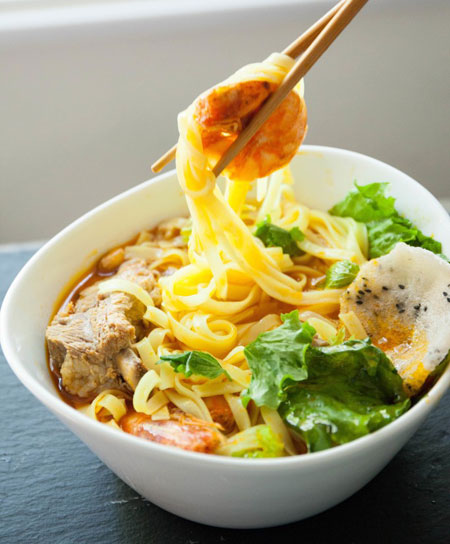
Mì Quảng
Beyond Hoi An, the central Quang Nam province is known for another distinctive noodle dish called mì Quảng, which uses a wide rice noodle sometimes laced with turmeric to give it a yellowish hue. While the broth is seasoned simply with various bones, fish sauce, black pepper, shallot, and garlic, the proteins make it a true surf-and-turf: it typically comes with shrimp and pork, but can also be trussed up with beef, chicken, and fish.
As with many Vietnamese dishes, Mì quảng is served with fresh herbs (rau); commonly used herbs include basil, cilantro (ngò or rau mùi), scallions or onion leaves, Vietnamese coriander (rau răm), sliced banana flower (bắp chuối bào), and lettuce. A variety of other herbs may also be used in mì quảng, including common knotgrass (rau đắng), water mint (rau húng lủi), perilla (rau tía tô), and heartleaf (rau giấp cá).
Mì Quảng is commonly garnished with peanuts and toasted sesame rice crackers called bánh tráng mè, which sets the dish apart from other noodle dishes.
Additional ingredients may include hard-boiled quail eggs, steamed pork sausage (chả), or shredded pork rinds (tóp mỡ). Lime juice and fresh chili peppers are often used as an added seasoning; other seasonings may include soy sauce or chili sauce.
Though mì Quảng can be served noodle-heavy with a low volume of concentrated broth, southerners often make a full soup out of it.
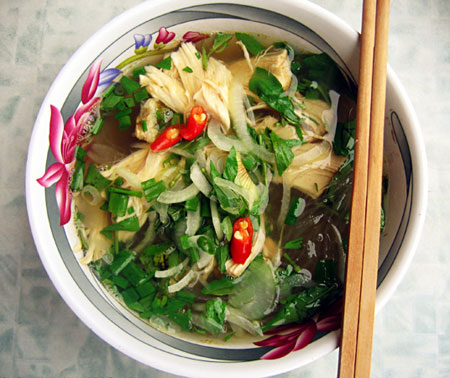
Miến Gà
Though the exact origin of this simply-prepared dish is unclear, the use of miến, or cellophane glass noodles, lends well to the notion that it is a Chinese-influenced northern recipe. But it’s become a notorious dish at a number of restaurants in Saigon, namely Mai Xuân Cảnh in District 1, which is known for its southern takes on northern chicken dishes.
Light yet savory, the soup is served in homes during the Lunar New Year, as well as on the anniversary of a funeral or passing of a loved one. Seasoned only with the basic set of Vietnamese seasonings—black peppercorn, fish sauce, ginger—it’s a chicken noodle soup remedy in the purest form.
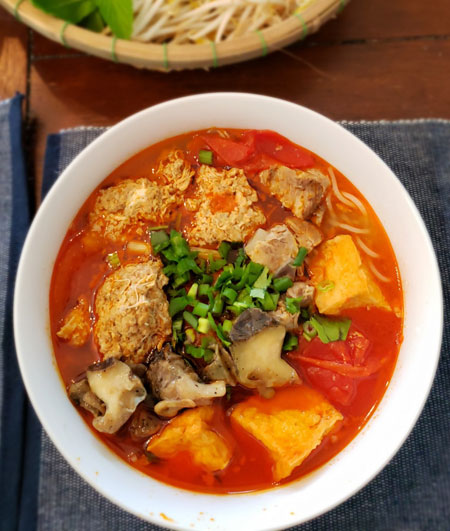
Bún Riêu
Beloved in the north and south alike, this bright-red vermicelli noodle soup features a distinctive tomato broth, shrimp and crab paste, tamarind, and eggs. The protein in the dish comes in the form of freshwater crab, ground pork, and fried tofu. Variations include bún riêu tôm thịt, which comes with shrimp and beef, and bún riêu ốc, which comes with snail. A similar crab-based dish, canh bún, is much lighter and comes with a vegetable called morning glory (rau muống).
Die-hard southerners swear by this explosive vermicelli-and-pork soup made with tomato broth, shrimp and crab paste, tamarind, and eggs. To achieve its signature nuclear-red color, some Vietnamese cooks add annatto seed oil or tomato paste along with fresh Thai chiles for spice. For the riêu, or meat portion of the dish, freshwater crabs can be mixed with any combination of ground pork, fried tofu, and crab cakes; pig’s blood is also used on occasion. For garnish, mint, water spinach, and banana blossoms add freshness and crunch to the otherwise heavy broth.
Though the crab-and-pork combination is standard, other popular variations include bún riêu tôm thịt, which comes with shrimp and beef, and bún riêu ốc, which comes with snail.
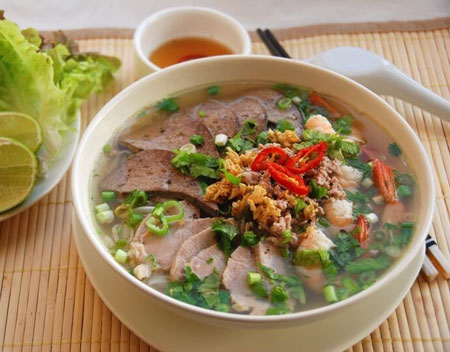
Hủ Tiếu Nam Vang
This Cambodian specialty (Nam Vang is the Vietnamese word for Phnom Penh) offers wider noodles with pork (ground pork, pork liver and pork loin), and shrimp. The broth, made from pork bone, is made fragrant with the addition of Chinese chive, Chinese celery, basil, fried garlic, and shallots.
Today’s Mekong River Delta was once the site of the Khmer Empire, prior to aggressive expansion by the Vietnamese in the 17th Century. This dish, popular in that deep south region, is borrowed from Cambodia (“Nam Vang” translates to Phnom Penh).
In the Vietnamese version of hủ tiếu, wider tapioca-based noodles are soaked in an umami-rich broth of pork bone and dried shrimp, then layered with several types of pork (ground pork, sliced liver, pork loin), as well as Chinese celery, basil, fried garlic and shallots. The sleeper hit of the dish is Chinese chive, which adds a slightly bitter, onion-y flavor that seeps into the hot soup. Optional toppings include quail eggs and shrimp.
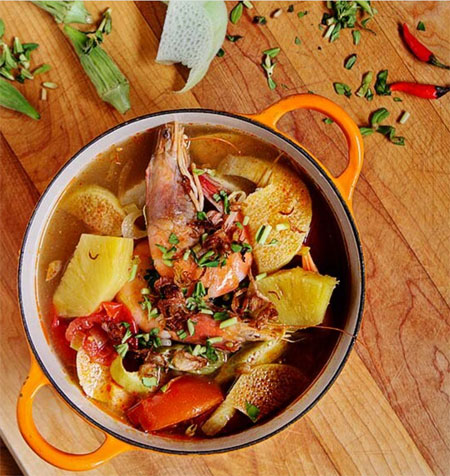
Canh Chua
Literally translated as sour soup, canh chua combines all the wonderful abundance of this region, incorporating seafood (such catfish, snakehead, eel, shrimp among others) along with colorful medley of tamarind, pineapple, tomatoes, okra, elephant ears, bean sprouts and a variety of herbs such as lemony ngo om. Enjoy canh chua with some steamed jasmine rice as part of a traditional Vietnamese meal or alone with some rice vermicelli noodles.
The key to this dish is to not over cook the veggies, adding them in the order of how long they take to cook.
Note: The spongy looking vegetable is elephant ears. See Vietnamese Fruits and Vegetables.
