Basque Cheesecake
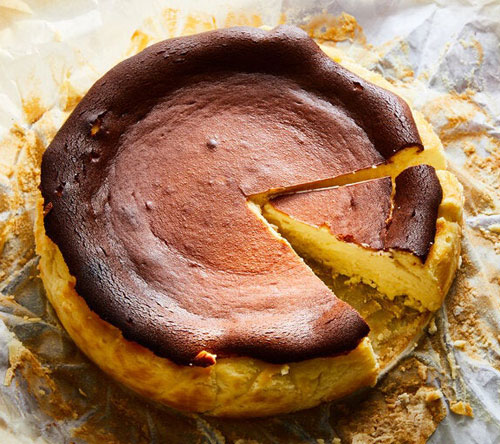
Generously burnished and with a velvety, custardy interior, this rustic, crustless cheesecake from the Basque region of northern Spain is the platonic ideal of a low-effort, high-reward dessert. It was invented at La Viña, a small pintxo bar located in San Sebastián by owner Santiago Rivera, where it is known simply as tarta de queso.
It’s baked at a higher temperature than a classic New York cheesecake and in the hot oven, the cheesecake dramatically inflates into a soufflé-like puff before sinking into itself, creating a cradle for fresh fruit, should you wish to serve it with some. But Basque cheesecake is perfect on its own, at its arguable prime the day after it’s made, enjoyed at room temperature.
The caramelized exterior evokes a toasty marshmallow, but the cake itself is not too sweet. The key is to bake the cake at a slightly higher temperature. This quickly bakes the top and the sides, creating a dark, caramelized layer that provides flavor and structure while the center remains smooth, custardy, and creamy.
The edges and the top are supposed to be dark and look almost burnt—hence the name—but this is what gives this now legendary cake its distinctive caramel-like flavor.
Burnt Basque Cheesecake
from https://www.tasteatlas.com/
Although there are several recipes for this trendy Spanish cake, this is the authentic version prepared at La Viña, the restaurant where it was invented. Only five ingredients are needed — cream cheese, eggs, sugar, heavy cream, and only a tablespoon of flour.
Most recipes for this oozy cake recommend using Philadelphia cream cheese, but it is more likely that the original recipe, which dates from the 1990s, used a Spanish brand such as San Millán. If you opt for Philadelphia cream cheese, it is recommended to add a pinch of salt to the mix.
Tweaks: The original recipe does not include any additional flavorings and allows cream-cheese and caramelized crust flavors to dominate. However, adding vanilla or lemon zest would be a welcome addition if you want to adapt the cake and add additional flavor components.
1 kg (2 ¼ pounds) cream cheese, at room temperature
7 medium-sized eggs, at room temperature
400g (2 cups) sugar
1 tbsp all-purpose flour
500 ml (2 cups) heavy cream
Preheat the oven to 200ºC (400°F).
Grease a 10-inch (25 cm) springform pan and line it with parchment paper. The paper should completely cover the sides and it needs to go above the sides of the pan.
In a large bowl, add the cream cheese, sugar, and eggs. Mix the ingredients with a wooden spoon or a whisk or use a hand or stand mixer.
Add a spoonful of flour, and mix thoroughly.
Then add heavy cream, and mix until the batter in smooth and creamy.
Pour the batter into the pan and bake for approximately 40 minutes until the cake attains the distinctive brown color. The center should remain jiggly.
It is best to chill the cake for several hours before it is served. This allows the center to set, though it will still remain creamy.
10 Servings
Basque Cheesecake
from https://cooking.nytimes.com/
Marti Buckley adapted this recipe from La Viña, a small bar in San Sebastián, for her cookbook, “Basque Country” (Artisan, 2018). This statement cake is achieved using only five primary ingredients.
Unsalted butter or nonstick spray, for greasing the pan
1 3/4 cups/350 grams granulated sugar
2 1/4 pounds/36 ounces cream cheese, at room temperature
1/4 teaspoon kosher salt (such as Diamond Crystal)
5 large eggs
2 cups/480 milliliters heavy cream
1/4 cup/30 grams all-purpose flour
Place a rack in the center of the oven and heat the oven to 400 degrees. Grease a 10-inch springform pan and line with parchment paper, leaving 2 to 3 inches overhanging the top of the pan. (You can trace and cut a circle to fit the base and then cut a band of paper to fit neatly around the sides, but the more rustic and simple method is to press an entire sheet into the pan, pleating the paper where it begins to crease. If you use multiple sheets of parchment, grease in between the layers so that they stick and lay flat.)
In a large bowl using a handheld mixer or in the bowl of a stand mixer fitted with the paddle attachment, cream the sugar and cream cheese until smooth. (This can be done by hand as well; beat with a wooden spoon for about 5 minutes.)
Add the salt and mix. Add the eggs one by one and beat until fully incorporated. Beat in the cream. Sift in the flour, then mix it in on low.
Pour the batter into the prepared pan and bake until browned and almost burnt on top, 50 to 60 minutes. The center will still be quite jiggly. Remove the cake from the oven and cool completely on a rack. It will have risen significantly, nearly past the top of the pan, but it will sink in the center as it cools.
Before serving, remove the rim of the springform and gently tug away the parchment paper. Serve at room temperature.
Yield: 12 servings
