Tips for Making Jell-O Desserts
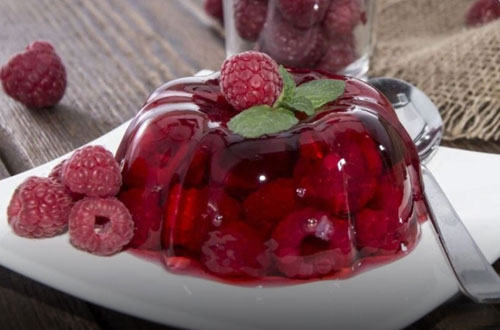
Today, Jell-O is popular because it's fun, easy, and inexpensive, but it's also been a sweet treat only the elite could once afford. In the 19th century, gelatin was as popular as it was time-consuming to make. History says the non-name-brand versions of Jell-O — gelatin and aspic — have been around for centuries.
The ancient Romans had a version made from fish (but they used it for glue), and starting in the Middle Ages, gelatin was made by boiling pigs' ears and feet. Before Cooper's invention, making gelatin and aspic was so time- and labor-intensive, it was reserved for the people who had a little extra cash laying around... and servants and chefs who needed something to do. Jell-O's clear, solid precursor was the perfect way to display a dish, and according to Vice, medieval chefs had a particular fondness for showing off their skills by using it to display fish as if they were still swimming.
But Jell-O cut out the time-consuming part, and the different flavors allowed Jell-O to stand alone as a dessert. It wasn't an overnight success. Thanks to a single ad in Ladies Home Journal, Jell-O became "America's Favorite Dessert," just like the ad said. The whole name was the work of May Wait, and she apparently used both the words "jelly" and "gelatin" as inspiration for the "Jell" part of the name. She tacked the "O" on because it was trendy, and also an easy way to trademark a well-known word.
Jell-O Basics
To prepare Jell-O Gelatin, dissolve the gelatin completely in boiling water or other liquid, such a fruit juice (be sure the liquid is boiling) -- for a clear, uniformly set mold, gelatin must be completely dissolved. Then add cold liquid.
To Speed-Set Jell-O Gelatin: substitute ice cubes for cold water in preparing gelatin to shorten the required chilling time. To use ice cubes, dissolve Jell-O Gelatin in boiling water as directed on package. For the amount of cold water needed, substitute a mixture of ice cubes or crushed ice and water for the cold water, stirring until ice melts completely.
For large molds, decrease the required liquid about 1/4 Cup for each 3 ounces of Jell-O Gelatin. The firmer consistency makes the mold less fragile and less likely to crack at the base after it is unmolded.
For soft-set Jell-O Gelatin, increase the required liquid about 1/2 Cup for each 3 ounces of Jell-O Gelatin -- this gelatin will be too soft to unmold, but will have excellent eating quality.
The art of unmolding gelatin is easy to learn -- it just takes a little practice. Before unmolding gelatin, make certain that gelatin is completely firm -- it should not feel sticky on top and should not sag toward side if mold is tilted.
If gelatin is firm, dip a small pointed knife in warm water and run tip of it around top edge of mold to loosen. Or moisten tips of fingers and gently pull gelatin from top edge of mold.
Moisten top of gelatin and a chilled plate -- the moist surfaces make it easier to slide the gelatin into the center of the plate after it has been unmolded.
Dip mold in warm water -- do not use hot water as it will melt the gelatin. Working quickly, dip the mold just to the rim in the warm water -- about 10 seconds. Lift from water, hold upright, and shake slightly to loosen the gelatin from mold. Invert moistened plate on mold. Always unmold gelatin on a chilled or cold plate or platter -- a warm plate will melt the gelatin. Then invert plate and mold together. Lift off mold carefully -- if gelatin doesn't release easily, dip the mold in warm water again.
Ideas for More Elaborate Desserts
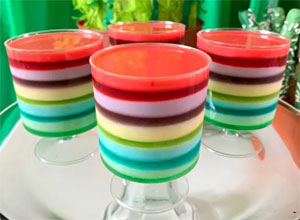
In this recipe, jello, made with water, was
set in a layer. Some of it was saved and
added to sweeten condensed milk bloomed
with gelatin to to add an opaque layer of
the same color above it.
Adding Dairy to Jell-O
Mix milk, cream, or evaporated milk with jello in place of water. This gives you an opaque jello with a slightly creamy flavor. Use the same amount of dairy as water. One recipe I saw mixed a 14-ounce evaporated milk, heated just to a simmer, with a 3-ounce package of jell-o that calls for 2 cups of water (16 ounces), 1 cup hot to dissolve the gelatin and 1 cold. Evaporated milk comes in 14-ounce cans so it makes sense to use just the one can. The result will be a little firmer due to the smaller amount of liquid.
You can even mix jello with whipped cream. Or almond or coconut milk.
Lemon Mousse Jello Cups - whipped cream mixed with lemon jello
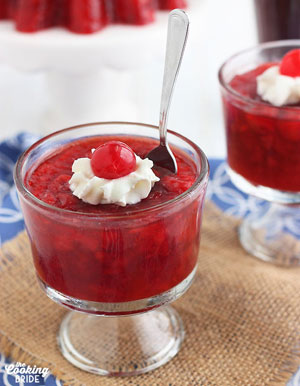
Add Fruit to Jell-O
To add fruits, chill the gelatin until very thick. not set, before adding the fruit. If the gelatin isn't thick enough, the fruits may float or sink.
Once thickened, fold in the fruits, then pour into dishes or molds. Chill until firm -- several hours or overnight, depending on size of mold. Many people like to add fruit cocktail that comes in a can. Add as much fruit or as little as you want. For instance, you may want to float a few raspberries in raspberry jello.
People have a hard time getting the gelatin to solidify when they add certain kinds of fruit, including pineapple, kiwi, mango, ginger root, papaya, figs and guava, although I have seen recipes that use pineapple.
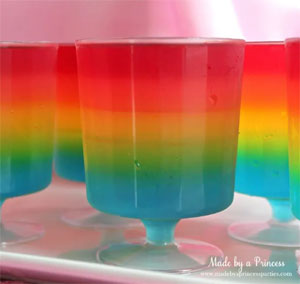
How to Layer Jell-O
To layer gelatin mixtures, chill each layer until set, but not firm, before adding the next layer -- if the first layer is too firm, the layers may slip apart when unmolded. Many layers may be built up in this way. Except for the first layer, the gelatin mixtures should be cool and slightly thickened before being poured into mold -- if mixture is warm, it may soften the layer beneath and mixtures may run or mix together.
You can sub any flavor (color) Jell-O in these recipes.
Red, White & Blue Layered Jello Dessert
Rainbow Jello Dessert
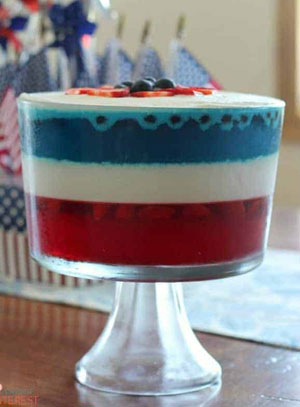
White layer made with gelatin and
cream. Raspberries and blueberries
are floated at the top of the respective layers.
Making White Layers
Most recipes calling for a white layer, make some form of panna cotta, a classic Italian dessert, or Mexican Milk Jello. Vanilla or white chocolate Jell-O pudding is used for the white layer in some recipes. If the dessert is to be served within a day, whipped cream could also be used.
Panna cotta (Italian for "cooked cream") is an Italian dessert of sweetened cream thickened with gelatin and molded. Sugar is dissolved in warm cream. The cream may be flavored by infusing spices and the like in it or by adding rum, coffee, vanilla, and so on. Gelatin is dissolved in a cold liquid (usually water), then added to the warm cream mixture. This is poured into molds and allowed to set. The molds may have caramel in the bottoms, giving a result similar to a crème caramel. After it solidifies, the panna cotta is usually unmolded onto a serving plate and is often topped with a fresh fruit sauce, berries being a favorite.
In Mexico, they make what is called Gelatina de Leche, or Milk Jello. This gelatin dessert is usually made sweetened condensed milk, with some milk or cream added, and a cinnamon stick or two for flavoring.
Strawberry Panna Cotta - uses panna cotta for one layer made with milk and heavy cream
Red, White & Blue Layered Jello Dessert - uses White Chocolate Jell-O pudding for white layers
Rainbow Jello Dessert - uses sweetened condensed milk for the white layers
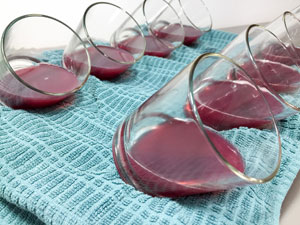
Set Jell-O at a Decorative Angle
To set jello on an angle, place a towel over a muffin tin, then lay glasses on their side in the pan and fill with jello. Place in the frig to set, then fill the glasses with another jello layer with the glasses sitting upright.
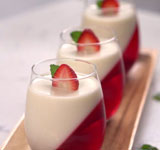
Strawberry Panna Cotta - layers set at angle
Lemon Mousse Jello Cups
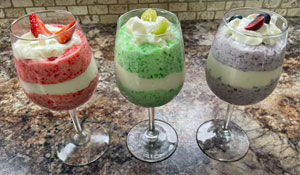
Whipped Jello Parfaits, mixed with,
then layered with whipped cream
Whipped Jell-O
One of the easiest things you can do to change the texture and appearance of Jell-O Gelatin -- just whip it until thick and fluffy. Prepare Jell-O Gelatin (any fruit flavor) as directed on package and chill until very thick. Then beat with rotary beater or electric mixer until mixture is fluffy and thick -- about double in volume results in the best eating quality and flavor. Once whipped, whipped cream is generally folded into the jello, and sometimes fruit.
Whipped Jello Mandarin Orange Mousse (can sub any flavor Jell-O and fruit)
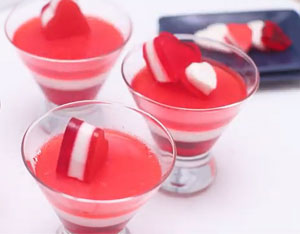
Jell-O Cutout Shapes and Cubes
To cut out Jell-O shapes for decorations, or for just cutting into cubes to serve in a glass dish or cup, decrease the required liquid about 1/4 Cup for each 3 ounces of Jell-O Gelatin for a firmer consistency. Let the jell-o firm in a flat baking pan. You can make layers of jello in the pan or just a single layer. Turn it out of the pan, cut into cubes or cut out shapes using cookie or other cutters.
You can make hearts for Valentine’s Day, 4-leaf clovers for Saint Paddy’s, trees and stars for Christmas, etc.
Rainbow Jello Dessert - cut into cubes and served in a glass dish or cup
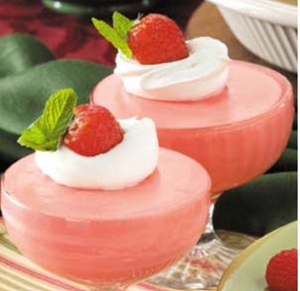
Jell-O Bavarian
Jell-O Bavarian is a dessert that combines the simplicity of Jell-O with the creamy texture of Bavarian cream, a classic dessert known for its smooth, creamy texture and ability to be molded. Jell-O Bavarian is a variation of Bavarian cream. Traditionally, Bavarian cream is made with a custard base thickened with gelatin and whipped cream. Jell-O Bavarian simplifies this process by using Jell-O gelatin as the thickening agent. It typically involves dissolving Jell-O in boiling water, adding cold water or juice, chilling until slightly thickened, and then folding in whipped topping. It's a quick and easy way to enjoy a light, fluffy dessert, often made with strawberry, lime, or orange Jell-O.
