French Shortcrust Pastry: Brisée, Sucrée, Sablée
There are three types of dough that French patisserie uses for tarts: pâte brisée, pâte sablée and pâte sucrée. Brisée means broken, Sucrée sweet and Sablée means sandy. Pâte Brisée, French for broken crust, is flaky-in terms of both texture and temperament and is the typical French pie crust. The added sugar in Pâte Sucrée makes it a little more forgiving to work with and is used for a sweet tart crust. Pâte Sablée, or sandy crust, can also be used in tart making - it is sandy like a shortbread, richer and crumblier and a little more delicate than a Pâte Sucrée.
American Flaky Pie Crust
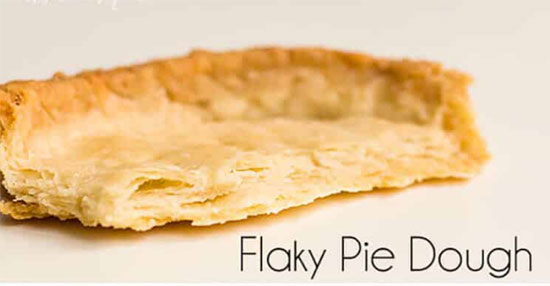
Here is a picture of the Flaky Pie Crust, called a short crust, for contrast, made most often in the United States.
Recipe for
Pâte Brisée (similar to American pie crust, butter mixed into flour before adding liquid)
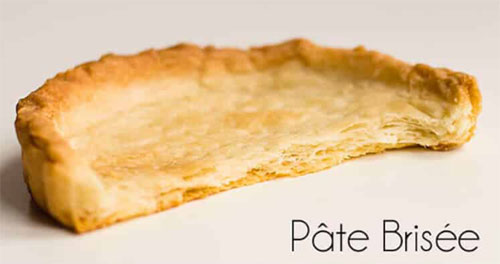
Use for: savory tarts and pies like quiche or pot pie, fruit pies, like apple and blueberry pies
Pâte brisée has the same ingredients as a typical American flaky pie dough, but utilizes a different technique. It’s roughly analogous to American pie crust, where the fat and flour are mixed together before adding water, though the French don’t worry about “cutting in” butter in the same way we do. They often make theirs with a mixer as they favor a much more even distribution of fat through the dough. With American flaky pie dough, pea-size lumps of fat remain which makes it flaky once baked . The French even go so far as to add egg yolk (at which point it’s known as pâte à foncer). Either way, the end result is a crust that is both finer of crumb and stronger than American pie crust, but that lacks a pie crust’s flakiness.
Pâte brisée is considered an all-purpose pastry dough. Because it doesn't usually have sugar, it works especially well in savory tarts and pies like quiche or pot pie. Its name in French means dough that breaks and refers to its fragility. Think of pâte brisée as your standard savory tart crust for chicken pot pie, meat pies, etc. When used for sweet preparations, pâte brisée is the dough generally used to make fruit pies, like apple and blueberry pies.
This type of dough consists of flour, butter, water and a bit of salt. The key to a successful dough is to have all ingredients very cold. The flour should come out of the freezer, the butter should come out of the refrigerator and the water should be ice water cold. Also do not overmix the dough, although you see small lumps of butter in the finished dough. The technique used to make this dough is the sablage method (after the verb sabler meaning "to make sandy").
The sablage process involves simply mixing flour and sugar together, then blending (or "sanding") in diced, cool butter with your finger tips until a coarse, sandy texture is reached. At that point the dough can be pressed firmly into a pan and baked. The finished product should rest in the refrigerator for at least an hour before baking.
Recipe for Pâte Brisée
Pâte à foncer (Pâte brisée w/ egg yolk)
Pâte à foncer is commonly used for the base of a tart, quiche or pie. This dough is primarily used as a crust to be filled with fresh or canned fruits, such as apples, cherries, pears, etc. The sablage and fraisage techniques are used to work the dough. This type of dough contains flour, butter, sugar, salt and water and/or eggs.
The fraisage technique is used to blend the dough after all the ingredients have been cut together. Traditionally, it is performed by using the heel of your hand to smear the dough little by little across a floured board. Blending the dough together in this way that creates long alternating strands of butter and dough. Then use a bench scraper to fold over the sides of the dough to create layers of dough. The important things to be aware of are not to overwork the dough (smear the dough just a few times) or let the butter get too warm and melt. Just work quickly and gather up the layers of dough into a disc (or two for a double pie crust) and wrap them in plastic. Refrigerate for at least 30 minutes before rolling.
The science behind pie dough is this: sheets of butter layer with sheets of water and flour. When the the dough hits the oven, the butter releases steam, which elevates the layer of dough above it. The more defined layers you have, the more flaky, puffy and layered your dough is. The key to getting these layers involves leaving big chunks of cold butter in the dough that can become sheets, and creating multiple, stacked layers of these butter sheets. Additionally, keeping the dough tender ensures a finished product that will flake delicately at the touch of a fork.
Recipe for Pâte à foncer
Pâte Sucrée (used for sweet tarts, uses creaming method of butter & sugar before flour added)
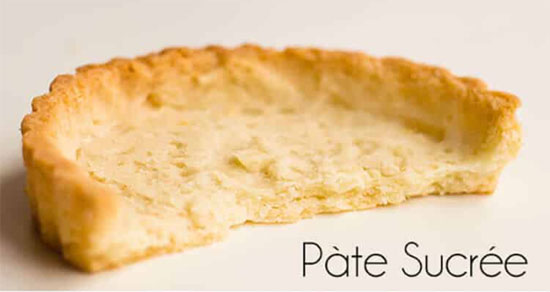
Use for: cream-filled tarts, such as, lemon or chocolate tarts, custard or cream pies like Pumpkin Custard Pie and Old Fashioned Coconut Cream Pie
Pâte sucrée, as the name implies, is used exclusively as a sweet tart crust, used most often with cream-filled tarts, such as, lemon or chocolate tarts. Fruit tarts with a cream base are also made using this dough. Pâte sucrée usually consists of flour, butter, sugar, water and/or eggs.
It contains many of the same ingredients as pâte à foncer, though the process is different. It’s normally made via the creaming method: the sugar and the butter are creamed together in a machine until fluffy, then yolk or whole egg is beaten in, and the the flour is added. The creaming method is why the butter must be softened at room temperature. By beating butter and sugar, air bubbles are created in the mixture. The moisture of the butter and eggs activates the gluten of the flour. The result is a stable dough with a flaky texture.
What you get is a light, fine, strong, cookie-like crumb that will hold liquid fillings without leaking. The sugar in the dough turns it golden brown as it bakes and makes it crisp making this dough perfect for liquid fillings like custards. It is usually pre-baked, and. after it has cooled, is filled with numerous creams and fruits. Or blind bake the crust (partially bake without any filling) first, and cool. Add filling and continue to bake until set. Try with custard or cream pies like Pumpkin Custard Pie and Old Fashioned Coconut Cream Pie.
Recipe for Pâte Sucrée
Pâte à linzer
Pâte à linzer is used to make tarts with filling and covered with lattice design dough. Pâte à linzer is very similar to pâte sucrée. It is more flavorful than pâte sucrée due to the almond powder and higher quantity of sugar and eggs. This dough usually consists of flour, almond powder, butter, sugar, and eggs.
Recipe for Pâte à linzer
Pâte Sablée
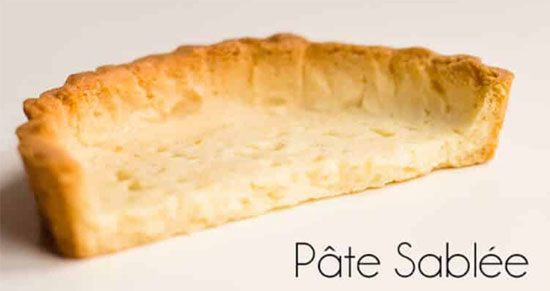
Use for: fresh fruit tarts, lighter fillings like curd, mousse, or meringue, try with a Fresh Fruit and Mascarpone Tart or a classic Grandma's Lemon Meringue Pie
Pâte sablée is a very different creature. Sometimes the term is used interchangeably with pâte sucrée (the method is similar to a pâte sucrée's, with the sugar and butter creamed together first), though in truth it’s meant to have a crumbly, “sandy” (“sablée”) texture. Often that’s achieved with more egg, but frequently with the addition of almond flour, which further undermines the gluten formation, makes the crust more delicate and gives it that slightly rough-on-the-tongue texture.
Pâte sablée is dough that is very flaky and crumbly, and usually consists of flour, butter, sugar, and eggs. Pâté Sablé uses the same ingredients as pâté sucrée, but with a higher content of butter and yolks. The butter is creamed with the sugar and the eggs before the flour is folded in, which results in a more crumbly texture. This mixes the butter more evenly, which makes the dough puff much less, creating a more "snappy" and dry pastry, instead of the crumbly texture of the previous doughs. This type of dough is usually used to make cookies. The equivalent name in English is shortbread dough.
Sablés work better for sweet tarts, tea biscuits, and piped shapes than other short doughs, as they hold their shape much more efficiently, and they are the basis for gingerbread and sandwich biscuits. No water is needed, neither is the dough particularly temperature-sensitive. If powdered sugar and almond flour are used to make this dough, it is quite delicate, so it's better to press into a pie or tart pan rather than roll out with a rolling pin. Once baked, it will have a crumbly texture just like great shortbread.
This dough is traditionally used in French pastry for fresh fruit tarts. Lighter fillings like curd, mousse, or meringue are also a great match for the delicate crust. Try with a Fresh Fruit and Mascarpone Tart or a classic Grandma's Lemon Meringue Pie.
Recipe for Pâte Sablée
Also see recipe for Sables cookies (same type of dough)
