How to Unclog a Toilet (without an auger)
Warning: Never pour boiling water into a toilet as it could cause the porcelain to crack.
Note: If you see (or hear) water backing up in the sinks or showers whenever you flush, that means there's a deep clog that will eventually stop your toilet from working properly. Don't bother with the below methods. Call a plumber.
You can also try a length of garden hose. It is flexible yet strong enough to break up many blockages with almost no risk of damaging the porcelain. This will only work if the clog is in the first few inches of the drain.
Foreign items are best removed with the help of a closet type of auger. Pushing foreign objects deeper into the drain may block it further and create a bigger problem.
Plunger Alternatives
1. Baking Soda and Vinegar Mixture
As an alternative to using a plunger, try this all-natural solution.
Pour one cup baking soda and two cups vinegar into the toilet. The baking soda and vinegar create a chemical process that help to dissolve clogs. Distilled white vinegar is commonly used, but any type of vinegar will work. The mixture will fizz a great deal. Allow it fizz for a half hour or overnight. If clog doesn’t dissipate, try pouring hot water (not boiling) down the toilet.
Pour the hot water into the bowl. Pour it from waist level, rather than right near the rim. The force of the water falling into the bowl can help to clear the clog.
This method isn't likely to work for clogs caused by a hard obstruction, such as a toy.
2. Dish Soap and Hot Water
Sometimes pouring hot, not boiling, water down the toilet will be enough to break up a clog to clear the toilet drain, but just like hot water and dish soap help break up food particles that are stuck to your dishes in the sink, the combination of hot water and dish soap can help to dissolve and break up whatever it may be that is lodged in the toilet causing a clog.
Pour at least a half cup of dish soap into the toilet bowl. Carefully pour the gallon of very hot (not boiling) water into the toilet bowl and let it sit. You may have to wait up to 15 minutes for the clog to work loose.
3. Using an Enzyme Product
Purchase an enzyme waste removal product. Look for a product that contains a mixture of enzymes that liquify waste materials. These enzymes are used in septic systems to break down waste.
Products of this sort can be usually be purchased at home improvement stores in or near the plumbing aisle. Enzyme waste removal is preferable to using a drain-clearing chemical because it will not harm your pipes or the environment.
This method will only work on organic waste, not toys or other objects.
Follow the instructions on the container. Pour the recommended amount of the enzyme product into the toilet bowl. You will typically be instructed to wait overnight for the enzymes to go to work on the clog. The toilet should drain once the clog has cleared.
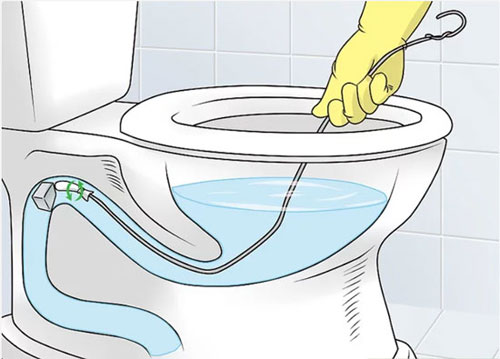
4. Using a Wire Coat Hanger
A wire coat hanger is sometimes fashioned as a substitute for an auger.
Unravel and straighten a wire coat hanger. The end of the coat hanger you are going to introduce in the toilet to "fish" the clog, should be given a v-shaped hook by using some appropriate pliers. Then wrap the end of the wire with a rag. Use duct tape to keep the rag in place. This will prevent the sharp end from damaging the porcelain in your toilet.
Stick the wrapped end of the wire into the drain. Once the wire is in the drain, twist it, push it, and maneuver it in a circular motion to clear the drain. If you can feel the obstruction, push against it. Keep going until the water begins to drain. Proceed with greatest caution if trying to engage the hook onto the clog/toy and then softly pull it out in a continuous motion.
Make sure you're wearing rubber gloves as you do this. You may get splashed as you move the wire around.
If you can't feel an obstruction, and the toilet won't drain, the clog must be out of reach of the hanger. The wire hanger method will generally work only if there is an obstruction in the first few inches of the drain.
Flush the toilet once the water has drained. The obstruction and dirty water should now be able to flow through the drain like normal. If the toilet is still slow to drain, the obstruction may have gotten pushed further back, out of reach of the hanger. In this case you'll need to use a plumbing snake to clear it.
5. Using a Chemical Drain Cleaner
Use this method only as a last resort. The chemicals used in drain cleaners are toxic to people and pets, corrosive to pipes. Also, chlorinated drain cleaner are very damaging to the environment.
If you suspect that there is a hard obstruction, do not use a chemical solution. Instead, use a snake or call a plumber. Only use chemicals that are specifically made for toilets. Using other drain cleaners may damage your toilet.
Pour the specified amount into the toilet. Be sure you follow the manufacturer's instructions. Keep the lid down to prevent toxic fumes from filling your bathroom.
Never use a plunger right after adding the drain-cleaning chemicals. The chemicals could possibly shoot back up onto your skin. Make sure the bathroom is well ventilated so you won't inhale the chemicals.
